Over the past few months, the Iranian regime has been engulfed by an escalating series of crises, both internal and external. To these, a critical international crisis must also be added, further intensifying the regime’s instability.
Women’s Resistance and the Hijab Controversy
One of the most persistent challenges facing the regime is the issue of women’s rights. Women’s resistance has not only persisted but has also infiltrated the governance structure, sparking fierce disputes within the ruling establishment.
Recently, 209 members of the regime’s parliament signed a letter urging the government to enforce the controversial chastity and hijab bill. Just three months ago, this bill had created such turmoil that the regime was forced into silence on the matter. However, despite slightly easing dress code restrictions, parliament has reignited the debate, fearing the security consequences of further concessions.
Even some state-controlled media outlets have warned that now is not the time to push this bill forward, as it could endanger the regime itself. Meanwhile, President Masoud Pezeshkian has openly stated that he will not enforce the legislation, setting the stage for an unprecedented standoff between the government and parliament.
A Deepening Political Crisis
Will this open confrontation between parliament and the government—centered on issues like compulsory hijab and ministerial impeachments—escalate further? Several parallel events suggest that the crisis is rapidly accelerating.
Last week, Iran witnessed the swiftest impeachment of a minister in the regime’s history, with Supreme Leader Ali Khamenei’s direct approval. Additionally, the forced resignation of Mohammad Javad Zarif as the vice president for strategic affairs underscored the widening fractures within the ruling elite. Khamenei himself has ruled out negotiations with the U.S. on critical issues such as the nuclear program, missile development, and Iran’s destabilizing activities in the Middle East, further cementing the regime’s isolation.
Parliament’s suspension of several ministerial impeachments, alongside demands from some lawmakers to expedite them, highlights the growing political turmoil. The state-run Iran newspaper starkly reflected this crisis in its March 6 edition, declaring: “There is no government!”
Escalating Repression and Public Dissent
In an attempt to maintain control, the regime’s think tanks have advocated for increased executions and hostage-taking, using repression as a means of survival. However, even this brutal strategy has failed to contain the crisis.
Beyond the ruling establishment, widespread protests by retirees—who chant radical slogans condemning systemic corruption—are gaining momentum. These protests are increasingly resonating with broader segments of society.
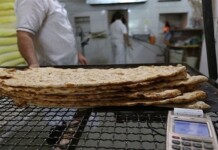
Meanwhile, soaring inflation and the shrinking purchasing power of citizens, especially on the eve of Nowruz, have exacerbated public despair. The people of Iran are no longer merely struggling with economic hardship; they are now fighting for their very survival.
The Exodus of Iran’s Professionals
A mass exodus of Iranians from all walks of life is accelerating. At the forefront of this wave are academics, nurses, and medical professionals—individuals who, having lost hope in any possibility of reform under the regime’s monopolistic and totalitarian rule, are left with no choice but to leave their homeland. Their departure represents not just a personal tragedy but a national catastrophe, as Iran’s intellectual, professional, and economic capital is being drained to serve the interests of the Supreme Leader and his government.
The Looming Social Explosion
To make matters worse, frequent power outages have added to the regime’s self-inflicted crises, even as it continues to claim that its nuclear program is solely for peaceful energy production.
All signs now point to an impending social explosion and a potential revolution in Iran. The regime’s own state-run media has issued stark warnings to Khamenei, parliament, and the government, cautioning, “What if the fuse is lit?”
As the crises multiply, the regime faces an increasingly volatile situation—one that may soon spiral beyond its control.