


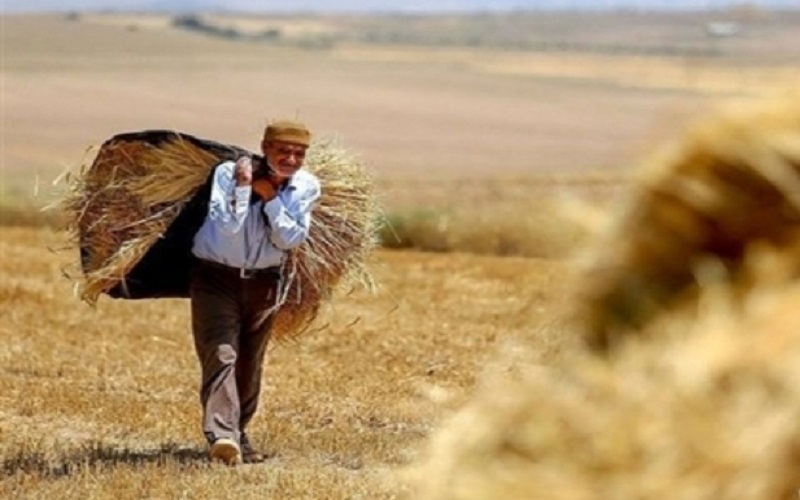

Iran’s agricultural sector is teetering on the brink of collapse. Beset by soaring input prices, chronic water shortages, land degradation, unregulated brokerage networks, and broken government promises, farmers across the country are abandoning their fields. What was once a cornerstone of national food security is now a battleground of mismanagement, environmental decay, and deepening economic despair.
Presidential Visit Amid Escalating Crisis
On May 10, the regime’s president Masoud Pezeshkian visited the Ministry of Agricultural Jihad, claiming to address the growing concerns of farmers. However, many view the visit as symbolic rather than substantive. For years, Iran’s agricultural sector has suffered a series of cascading crises that not only threaten the livelihoods of millions but also endanger the country’s food sovereignty.
Climate Change and Water Scarcity
One of the most pressing issues facing Iranian agriculture is inefficient water management, exacerbated by prolonged droughts and climate change. According to the Winter 2024 report by the Research Center of the Iranian Chamber of Commerce, climate-related damage to agriculture exceeds 15 trillion tomans annually. If current trends continue, losses could double to 30 trillion tomans by 2031.
A 35% drop in surface water resources in key provinces such as Khuzestan and Fars has slashed productivity by nearly 18%, while the cost of rehabilitating degraded farmland is now estimated at 10 trillion tomans per year.
Modernization Without Means
Despite repeated government pledges to promote mechanized and modern farming, farmers say the state has failed to provide even the most basic infrastructure, such as irrigation systems, machinery, or credit facilities. Officials continue to urge adoption of new technologies while ignoring the fact that many farmers can no longer afford seeds, fertilizers, or pesticides.
As one farmer remarked:
“I used to get results with one unit of urea. Now I use five and still see no improvement. The quality has dropped drastically.”
Such comments highlight not only the sharp rise in input costs but also declining quality, sparking suspicions that systemic neglect—or even intentional sabotage—is discouraging domestic production in favor of imports.
The Rise of Intermediaries and Market Manipulation
One of the most corrosive elements within Iran’s agricultural economy is the unchecked role of brokers and rent-seeking intermediaries. These actors purchase produce from farmers at rock-bottom prices and re-sell it at exorbitant rates, profiting from the absence of:
- Transparent pricing mechanisms
- Efficient distribution networks
- Government policies to eliminate middlemen
Reports suggest that some agricultural products, including potatoes and legumes, are bought cheaply from farmers and either hoarded in warehouses or exported to neighboring countries. Later, under the guise of a “domestic shortage,” the same products are re-imported at inflated prices.
This manipulation benefits a small circle of profiteers while leaving farmers in financial ruin. Power outages have also added to the hardship: in just the first nine months of 2024, damages to the agricultural sector from electricity disruptions amounted to over 35 trillion rials, with no meaningful compensation offered by state institutions.
Structural Weaknesses: Smallholders and Fragmented Land
Iran’s landholding system is dominated by smallholder farmers with limited access to modern tools, economies of scale, or government support. The fragmentation of land—combined with a lack of policies to promote land consolidation—has kept productivity low and mechanization out of reach.
The result is a structural trap: farmers operate on inefficient plots without resources, trapped in a cycle of poverty, debt, and declining yields.
Broken Promises and Deepening Distrust
Farmers have long voiced frustration over unfulfilled government commitments—from delayed payments for guaranteed crop purchases to the non-payment of subsidies and loans. The absence of investment in processing industries and failure to support the export of surplus goods have further undermined confidence in public institutions.
The gap between state rhetoric and on-the-ground realities has bred widespread distrust among the agricultural community, severely weakening cooperation and making policy reform increasingly difficult.
Environmental Degradation: Soil Erosion and Land Subsidence
Beyond economic mismanagement, Iran’s agricultural lands are under severe environmental stress. Soil erosion, land subsidence, and groundwater depletion have reached alarming levels in many regions, prompting the abandonment of previously fertile lands.
Yet despite the urgency, policy responses remain fragmented, underfunded, and poorly coordinated. Many believe the government has effectively abandoned its responsibilities in this area due to lack of capacity and will.
The Path Forward: From Crisis to Reform
Experts agree that Iran’s agriculture cannot be modernized without comprehensive support, including:
- Financial facilities for farmers
- Affordable access to modern equipment
- Training programs and technical education
- Guaranteed purchase mechanisms
- Transparent pricing systems
- Elimination of exploitative intermediaries
Merely calling for changes in farming patterns or promoting modernization is insufficient. Unless the necessary infrastructure, economic incentives, and trust-building measures are implemented, reform will remain out of reach.
A Vanishing Way of Life
Faced with a broken system, many farmers—especially the younger generation—are leaving agriculture altogether. Some are selling off or repurposing their ancestral lands, seeing no future in farming under current conditions.
If Iranian authorities fail to recognize the urgency of this crisis, the country risks becoming increasingly dependent on imported food, with devastating implications for national food security, rural livelihoods, and economic stability.
Rebuilding Iran’s agricultural sector will require more than policy promises—it demands an open dialogue with farmers, long-term investment, and a radical rethinking of current practices. Without this, the decline will continue, deepening rural poverty and hollowing out one of the country’s most vital sectors.