


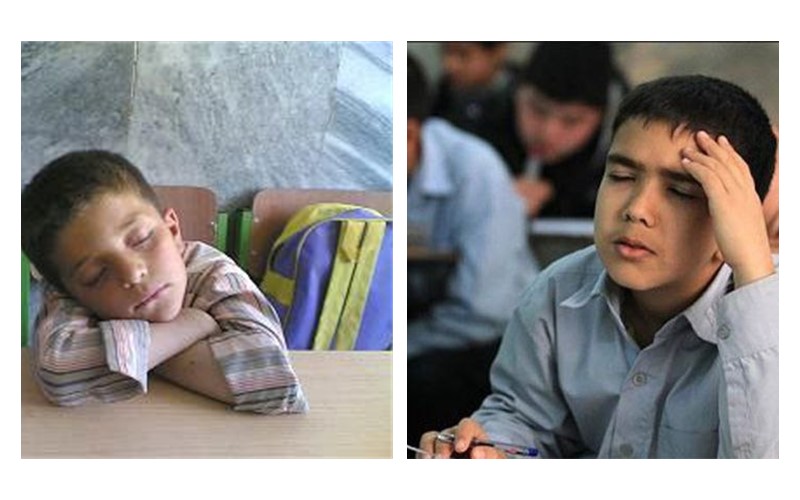

In a controversial move that has ignited widespread criticism, the Iranian regime mandated a 6 a.m. start time for public offices and later extended this requirement to schools across the country. The policy, implemented without thorough public consultation or consideration of its broader consequences, has raised serious concerns among families, educators, and health experts.
Government Pushes Early Start to “Save Energy”
The directive was first issued on May 7 by Mohammad Reza Aref, First Deputy to the Iranian president. The Ministry of Interior quickly circulated a formal notification mandating that from May 10 to September 22, the working hours for all administrative offices, public and private institutions, banks, insurance companies, and municipalities would run from 6:00 a.m. to 1:00 p.m. Additionally, all offices would be closed on Thursdays during this period.
Officials claimed the earlier working hours were intended to reduce national energy consumption amid ongoing power shortages, rising temperatures, and declining rainfall—all of which have placed a strain on electricity production. However, critics argue that this measure is a poorly conceived substitute for the country’s former daylight saving time policy, which was repealed on religious grounds.
Extension to Schools Prompts Outcry
Facing criticism from working families struggling to manage childcare under the new schedule, the government announced it would adjust school hours to align with the new workday. Ali Farhadi, Deputy Minister of Planning and Resource Development at the Ministry of Education, claimed that the move was made in response to public demand:
“After the cabinet’s resolution on May 7 to start offices at 6 a.m., there was a lot of demand from working parents to change school hours,” he said in a statement to ISNA.
A circular issued on May 12 confirmed the change. Starting May 13, all single-shift schools would operate from 6 a.m. to 1 p.m. Double-shift schools would run in two sessions: 6:00–9:30 a.m. and 9:30 a.m.–1:30 p.m.
However, this announcement only intensified the public backlash. Social media erupted with criticism from parents, teachers, and health professionals who warned of the negative impact on children’s well-being.
Health Experts Raise Alarm Over Early Start Times
Experts have long emphasized the importance of adequate sleep for children and adolescents. Forcing students to wake up as early as 4:30 or 5 a.m. to make it to school by 6 a.m. disrupts natural sleep cycles and can lead to chronic fatigue, impaired concentration, mood disorders, and a weakened immune system.
“Sleep deprivation during adolescence doesn’t just affect academic performance—it also has long-term consequences for mental and physical health,” one Tehran-based pediatrician warned.
This shift also creates logistical chaos for families, particularly those with younger children in kindergartens that previously opened around 8 a.m. Rather than revisiting its work schedule decision, the government has doubled down by dragging students into the same framework.
A Global Comparison: Iran’s Schedule an Outlier
In contrast to Iran’s move, many developed countries have adjusted school hours based on scientific research into adolescent sleep patterns. In Finland—home to one of the world’s most respected education systems—schools typically begin between 8:30 and 9:00 a.m., with a focus on shorter, high-quality instructional days.
Similarly, schools in France and Germany often start no earlier than 8 a.m., and many U.S. states have moved high school start times to after 8 a.m. in response to expert recommendations from pediatric and mental health associations.
These nations recognize that aligning school schedules with children’s biological rhythms improves learning outcomes and supports mental health—a lesson Iranian authorities appear to have overlooked.
A Crisis of Policy, Not Just Energy
While the government insists that the new schedule is a response to the country’s energy crisis, critics see it as yet another top-down policy imposed without sufficient planning or regard for public welfare. Farhadi acknowledged that the school schedule change was originally intended to coincide with the workday shift, but was delayed due to the nearing end of the academic year and public pressure.
He added that the government hopes to resolve the energy crisis by October—with the cooperation of the people—suggesting that this controversial policy may only be temporary. Yet, many worries that the damage to students’ health and educational experience may be lasting.