



Two months after war and leadership upheaval, the Iranian regime’s reliance on intimidation and psychological pressure signals not strength—but deepening fear of its own society.
Two months have passed since the outbreak of war between the United States and Israel and the Iranian regime—a conflict that culminated in the death of Ali Khamenei. The war began shortly after the bloody January 2026 crackdown, at a time when public anger in Iran had already reached a boiling point. In the weeks since, the regime’s security apparatus has moved aggressively to prevent a resurgence of nationwide protests.
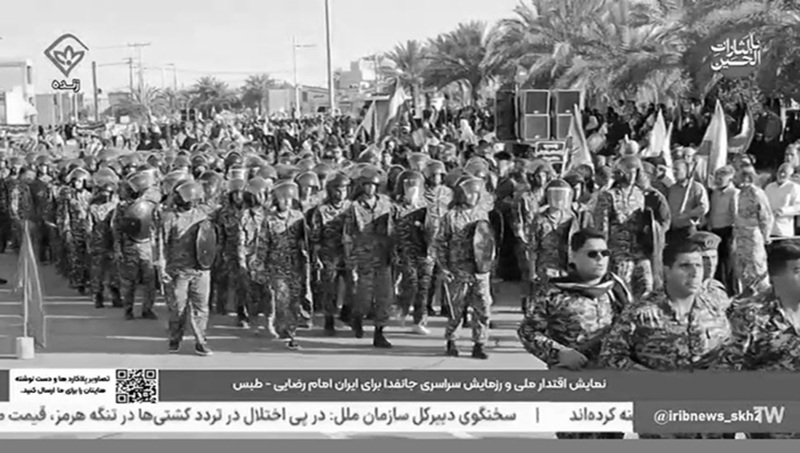
The strategy has been multi-layered. Authorities have deployed individuals equipped with so-called “white SIM cards” to operate across social media platforms as part of a coordinated “soft war.” At the same time, they have organized pro-regime nighttime gatherings and established widespread checkpoints across urban centers.
These measures serve distinct but complementary purposes. The first two—digital operatives and staged gatherings—are designed to manufacture legitimacy and project an image of popular support. The checkpoints, by contrast, are instruments of direct coercion, relying on intimidation, humiliation, and intrusive surveillance.
When a 17-year-old is handed a weapon and empowered to forcibly inspect the phone and vehicle of a 60-year-old citizen, the objective goes beyond deterrence. This is not merely about suppressing dissent before it emerges—it is about degradation. The regime is acutely aware of the depth of public resentment it faces, and it responds by attempting to invert that dynamic through systematic humiliation.
The cumulative effect of these policies is increasingly visible. Nighttime rallies—often involving foreign-backed militias—combined with checkpoints at nearly every major intersection have severely strained the public’s psychological resilience. Social tolerance is eroding, and concerns are mounting that prolonged exposure to such conditions could further destabilize public security.
Families now routinely advise their young sons and daughters to avoid any form of confrontation with checkpoint forces. Reports have circulated of arbitrary arrests carried out under vague pretexts, frequently accompanied by excessive violence.
Users on the social platform X have also reported instances of checkpoint forces opening fire on civilians and vehicles. These accounts align with earlier statements by Ahmadreza Radan, Tehran’s police chief, who explicitly confirmed in an interview that security forces are authorized to shoot.
More recently, reports emerged of gunfire at a checkpoint in Malard, with several injured individuals allegedly transferred to nearby hospitals. Domestic news agencies swiftly denied the incident, citing local law enforcement officials—reflecting a familiar pattern of rapid official denial without transparent investigation.
Despite these denials, accounts from citizens suggest a consistent operational pattern. Checkpoint forces frequently target young, physically fit, and well-dressed individuals. These citizens are subjected to degrading treatment, invasive phone searches, and immediate violence in response to any form of protest.
This pattern is not new. During the January crackdown, security forces similarly focused on young people and athletes, many of whom made up a significant portion of those killed. The continuity is telling: the regime is not merely reacting—it is following a deliberate doctrine of intimidation aimed at demographics it perceives as socially influential and symbolically threatening.
There is little doubt that such sustained humiliation and abuse cannot be endured indefinitely. Public tolerance has limits, and the current trajectory suggests those limits are being tested with increasing intensity.
Regime officials insist these measures are necessary to maintain security. In practice, however, they reveal something more fundamental: a system gripped by structural fear. The state is confronting a society that is now far more volatile than it was even in January.
Economic conditions have only intensified this volatility. Runaway inflation, severe shortages of medicine and healthcare services, rising unemployment, the collapse of businesses, and persistent internet disruptions have pushed society toward psychological exhaustion.
Under such pressure, the likelihood of a large-scale reaction is not speculative—it is structurally embedded. The regime’s actions suggest it understands this reality all too well.
As one user on X starkly observed, the Iranian regime fears its own angry and protesting people far more than it fears the bombs and missiles of the United States and Israel.
That observation captures a critical truth: the greatest threat to the system may not come from external war—but from the society it has spent decades trying to control.