


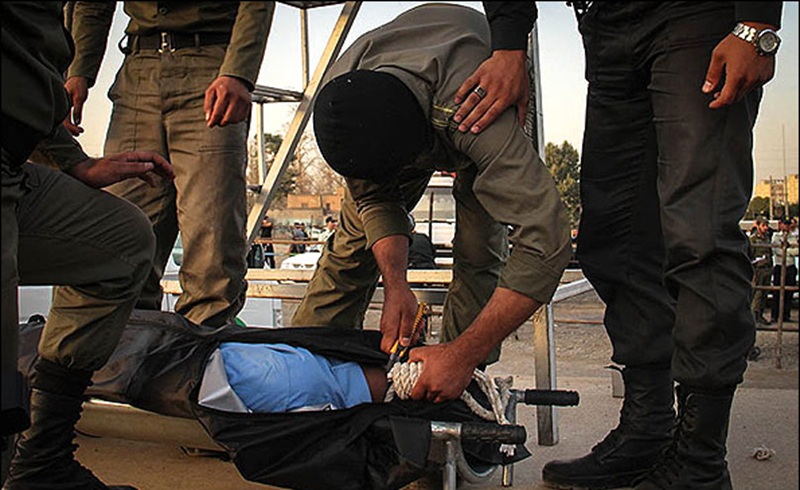

From mass death sentences in Shiraz to alleged custodial killings and secret executions, Iranian authorities intensify efforts to crush dissent following nationwide protests
In a sharp escalation of repression following the January 2026 protests, Iranian regime authorities have issued multiple death sentences, carried out executions, and stand accused of torture and extrajudicial killings—underscoring a systematic effort to silence dissent through fear and force.
At the center of these developments is a ruling by Branch 1 of the Revolutionary Court in Shiraz, where Judge Mahmoud Sadati sentenced four protesters from Marvdasht—Hamidreza Sabet-Raei, Hamidreza Fathi, Abdolreza Fathi, and Saeed Zarei Kordshouli—to death on charges of “enmity against God” (efsad-e fel-arz).
The charges stem from alleged involvement in the killing of a Basij member and the destruction of public property during the January 2026 protests.
Reports from human rights monitors indicate that the convictions were secured under severe coercion. The defendants were reportedly subjected to prolonged physical and psychological torture to extract forced confessions.
One of the accused, Hamidreza Fathi, is said to have suffered a broken arm under torture. Saeed Zarei Kordshouli reportedly sustained serious eye injuries and was forced to confess under electric shock torture, with a device attached to his head. These confessions were later broadcast on state television—a pattern consistent with past politically charged cases.
Testimony from within the prison system reinforces these accounts. Political prisoner Abuzar Barahoei previously released an audio recording describing the “brutal torture” of the defendants in solitary confinement, alleging that interrogators used electric shocks to force them to accept responsibility for a range of protest-related incidents, including arson attacks.
The four men are currently held in Adelabad Prison in Shiraz. Their sentences remain preliminary and are subject to appeal before Iran’s Supreme Court. However, concerns about due process are acute, particularly given the public stance of Judiciary Chief Gholamhossein Mohseni-Eje’i, who has called for the swift execution of protest detainees.
Parallel to these judicial developments, reports have emerged of a custodial death that further deepens concerns about the regime’s conduct.
Hesam Alaeeddin, a 40-year-old businessman and co-owner of a pizza chain linked to Tehran’s Alaeeddin commercial complex, reportedly died under torture after being detained by security forces.
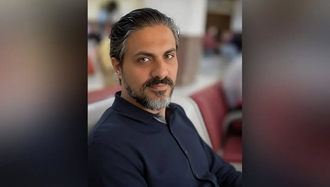
He was accused of selling mobile phones and possessing Starlink satellite internet equipment—an increasingly sensitive issue for the regime authorities attempting to control information flows.
According to sources, Alaeeddin was arrested alongside his brother and subjected to severe beatings while in custody. His death has not been officially acknowledged by authorities. His body was buried under tight security restrictions on April 29, with limited public information about the burial location. Alaeeddin was a father of two.
These developments coincide with the reported execution of two individuals in Urmia on charges of espionage for Israel. Iranian regime judiciary officials announced that Yaghoub Karimpour and Naser Bakarzadeh were executed on Saturday, May 2.
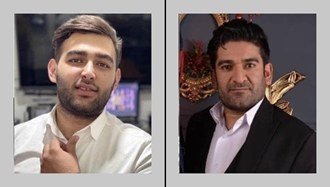
According to available information, both were denied access to legal counsel of their choosing and did not receive fair trials—raising further concerns about the integrity of the judicial process in politically sensitive cases.
Calls for international scrutiny are intensifying. Opposition groups and human rights advocates have urged the establishment of an independent international investigation into these executions and broader patterns of abuse, including allegations of torture, forced confessions, and extrajudicial killings.
Taken together, these cases point to a coordinated escalation by Iranian authorities to deter further unrest. The use of capital punishment, particularly following contested trials and allegations of torture, signals a strategy aimed not only at punishment but at projecting control amid persistent social and political tensions.