
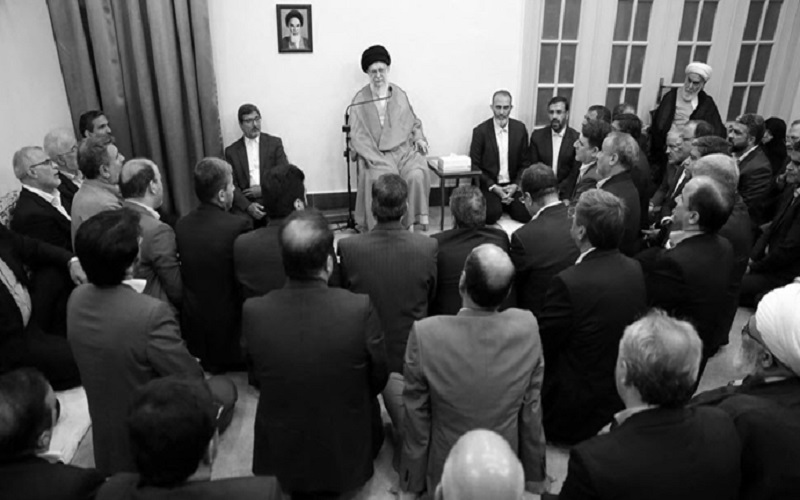

In a recent meeting with Iran regime’s Minister of Interior and provincial governors, Supreme Leader Ali Khamenei made a stunningly tone-deaf declaration: “There is no problem in the country.” He went on to claim that Iran’s public atmosphere is full of “opportunity” and optimism. These comments, made while widespread livelihood protests rock the country and truck drivers in 135 cities are on strike, reveal the staggering disconnect between the regime’s leadership and the brutal reality faced by ordinary Iranians.
Khamenei’s remarks are not just misleading—they are a deliberate insult to the intelligence and suffering of the Iranian people. To speak of “no problem” in a country drowning in economic crisis, systemic corruption, and social repression is either a demonstration of dangerous ignorance or a calculated attempt to distort reality. It is a classic case of authoritarian delusion: deny the crisis, dismiss the pain, and discredit the protest.
If Khamenei truly believes his own words—that Iran is full of opportunity and free of crisis—then he is not just out of touch; he is delusional. More likely, however, this is an intentional strategy to deflect blame and suppress dissent. Like many autocrats before him, Khamenei has retreated into a self-created bubble of flattery, fear, and falsehoods—unwilling or unable to see the collapse unfolding beneath his feet.
At the very moment that thousands of truck drivers across the country are on strike due to unbearable working conditions, Khamenei stood before officials and declared: “There is no particular problem,” adding insult to injury by claiming that the protesters are speaking on matters they “have no expertise in.” In one stroke, he dismissed the suffering of millions and belittled their right to speak out.
This is not just denial—it is contempt. Contempt for the truck drivers who face bankruptcy, for the youth who see no future but unemployment or exile, for families crushed by inflation and hopelessness, and for a nation demanding change.
When dictators begin to believe their own propaganda, the consequences are dire. Denial does not resolve a crisis—it delays its explosion. The regime may preserve the illusion of control for a time, but the pressure beneath the surface continues to build. And when it erupts, it is often beyond containment.
The reality Khamenei refuses to acknowledge is painfully evident. Poverty is not theoretical—it is the daily reality of millions. The regime’s spiraling executions, suppression of dissent, and violations of human rights are well-documented and growing. The anger of the people is real—and it is rising.
Even if the current strikes were to end tomorrow, the systemic rot at the heart of the Islamic Republic would remain. Khamenei has claimed: “We have neither war, nor disease. We don’t have a serious security problem. No factional or political disputes. So the overall atmosphere in the country is a good one right now.” But this hollow rhetoric changes nothing. The misery of the Iranian people continues unabated.
From Bandar Abbas to Mashhad, from Sanandaj to Ahvaz, truckers are standing up—not out of ignorance, but out of desperation. The Truckers’ Union reports that the movement continues in the face of arrests and threats. In Kermanshah alone, at least 11 truck drivers have been detained. These brave individuals are not enemies of the state—they are the beating heart of a society that has been abandoned by its rulers.
And what is Khamenei’s response? Rather than offering solutions, he gives his governors instructions for managing appearances. He urges them to go among the people, “speak with love,” and let them complain—before ignoring them completely. Why? Because in his worldview, the people’s suffering is not real; it is the product of ignorance. In his twisted logic, if the people do not appreciate the regime, it is because they simply don’t understand it.
But the people do understand. They understand inflation. They understand joblessness. They understand the despair that comes from a regime that crushes every form of dissent, criminalizes hope, and rewards loyalty over competence.
If there is no crisis, then why are there strikes in every corner of the country? If there is opportunity, why do so many Iranians live below the poverty line? If the protests are baseless, where does all the rage and sorrow come from?
The regime can silence the truckers. It can arrest the students. It can censor the journalists. But it cannot erase the truth: the Islamic Republic has lost its legitimacy, and its Supreme Leader no longer speaks for the people—he rules in spite of them.
The people of Iran deserve more than denial and deception. They deserve justice. They deserve freedom. They deserve a future. Khamenei may refuse to see the fire rising beneath him—but that does not mean it isn’t burning.