



Mounting economic woes, looming UN sanctions, and growing public discontent signal an impending explosion
The Iranian regime is on a collision course with a multifaceted crisis that could erupt in the coming months, shaking its political and economic foundations. Widespread power and water shortages, economic freefall, increasing international isolation, and the ever-present threat of military conflict are converging into what observers are calling a looming “super crisis.”
A Nation in the Dark: Power, Water, and Public Rage
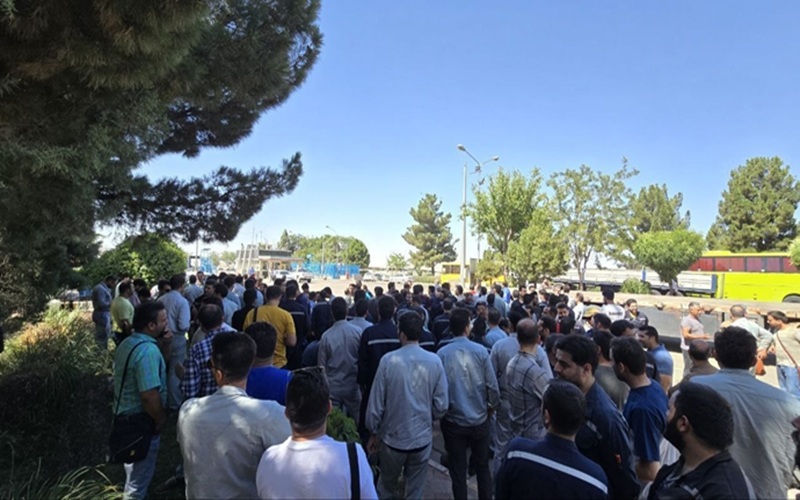
The situation in Iranian cities has become dire. Power outages have become routine, disrupting not only everyday life but also critical infrastructure. Hospitals face equipment failures, elevators and air conditioners cease functioning, and internet blackouts leave millions disconnected. The regime’s response — blaming high public consumption and deploying euphemisms like “blackout management” or “water pressure regulation” — has only deepened public resentment.
These outages are no longer seasonal. For the past two years, Iranians have endured blackouts year-round, signaling a systemic failure rather than a temporary challenge. Businesses have been paralyzed, and citizens, already burdened by inflation and poverty, are told to buy water pumps, tanks, or install solar panels — solutions far beyond the reach of most families.
Unlike responsible governments that invest in infrastructure and protect citizens, the regime has instead normalized a culture of blame-shifting. Rather than accepting accountability, it scapegoats the public for crises created by decades of corruption, mismanagement, and misallocation of resources.
Economic Breakdown: A Crisis Without End
Water and electricity shortages are only symptoms of deeper economic decay. Iran’s pension funds are bankrupt, the government runs chronic budget deficits, liquidity continues to balloon, and the stock market is in free fall. Meanwhile, food prices are surging. Basic goods such as bread, dairy, and meat have seen sharp increases in recent weeks, made worse by the instability following the recent war.
Even essential sectors like agriculture are collapsing. The regime has failed to pay wheat farmers on time, with one parliamentarian revealing that Zanjan farmers delivered over two trillion tomans of wheat this year without receiving a single rial in return. Such negligence destroys incentives for production and threatens the survival of countless rural families.
The International Trap: Snapback Sanctions and Diplomatic Isolation
On the global stage, the regime’s situation is just as precarious. There is no visible path toward an agreement with the United States or European powers. Talks remain stalled over Tehran’s refusal to halt uranium enrichment and curb its missile program — two non-negotiable demands from the West. The regime views these concessions as tantamount to disarmament.
With time running out, the E3 (UK, France, Germany) is threatening to trigger the JCPOA’s “snapback” mechanism, which would reinstate UN Security Council sanctions. If activated, these multilateral sanctions — binding for all 193 UN member states — would return Iran to an even deeper level of isolation. The window to prevent this outcome closes by early September.
Contrary to some assumptions, the absence of a deal would not preserve the current status quo. Rather, it could escalate tensions toward another military confrontation. Many Western officials now view the regime as a destabilizing threat and are preparing to contain it under the most vulnerable conditions.
Post-War Denial: Repression Over Reform
Despite suffering significant losses in the recent war, regime officials have shown no signs of reevaluating their trajectory. In his latest speech, Supreme Leader Ali Khamenei offered no hint of retreat, dialogue, or reform. His actions reinforce this hardline stance: reinstating ultraconservative cleric Kazem Seddiqi to Friday prayers, expanding internet censorship, issuing heavy prison sentences to political dissidents, and ignoring a growing chorus of public demands.
Even within the regime’s own circles, no senior figure advocates reconciliation with the West or engagement with the public. The few so-called “reformists” who attempt to blame “extremist factions” ignore the reality that all major decisions stem from Khamenei himself. He has the authority to dismiss the heads of the judiciary or the state broadcaster, yet he has done nothing — signaling his full endorsement of the ongoing repression.
A Crisis with No Escape
Taken together, these internal and external failures are forming the pillars of a super crisis. Its components are unmistakable:
- Economic collapse — driven by chronic mismanagement and social inequality.
- Diplomatic isolation — as snapback sanctions loom and the nuclear stalemate continues.
- Military risk — with the specter of conflict rising in the absence of diplomatic resolution.
The regime’s illusion of victory in the recent war has masked the deepening instability at home. While officials may trumpet resistance and self-reliance, the conditions on the ground suggest an approaching breakdown — one that could trigger a popular uprising and the collapse of the current power structure.
Iran’s regime stands at a dangerous crossroads. Refusing to engage with its own people and rejecting compromise abroad, the regime is sealing itself off — politically, economically, and morally — from the forces that could prevent its downfall. The super crisis is no longer hypothetical. It is unfolding now, and the regime’s own policies are accelerating its arrival.