Regime media hails Larijani’s comeback as a “political opening,” but Iran’s deep structural crisis leaves no room for real reform.
Regime-affiliated media in Iran have launched a new narrative around the return of Ali Larijani to the Supreme National Security Council, portraying it as a sign of “political opening” and the resurgence of moderate forces. Arman-e Melli newspaper went so far as to declare that Larijani’s comeback could mark “the beginning of reforms,” claiming such a shift would be welcomed by a broad segment of society.
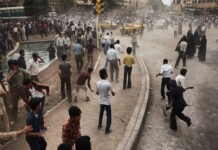
However, this narrative ignores a fundamental reality: the Iranian public has long moved beyond both ruling factions—conservatives and reformists alike. Since the nationwide protests of December 2017, when the slogan “Reformist, Principalist – the game is over” echoed across the country, distrust toward the entire governing system has only deepened. There has been no sign of legitimacy restoration since.
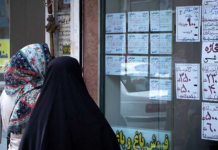
The core problem is not the absence of so-called moderates in power but a deep structural deadlock. Iran’s political and economic system is mired in accumulated crises the regime is incapable of solving. The ongoing economic collapse is a stark example. According to the state-run Fararu (August 5, 2025), for the first time in fifty years Iran’s economy is entering a period of infrastructure erosion. Water, electricity, and gas shortages, bankrupt pension funds, dust storms, land subsidence, and fuel imbalances are described as merely “the tip of the iceberg” of the crisis.
The same outlet admits that overcoming these challenges would require “structural and institutional reforms,” meaning curbing the dominance of the Supreme Leader’s institutions and the Islamic Revolutionary Guard Corps (IRGC) over the economy. But these reforms strike at the regime’s core red lines. Dismantling the IRGC’s economic empire would undermine the very foundations of the system’s political and financial power—making such change virtually impossible under the current order.
In this light, Larijani’s return is nothing more than a reshuffling of the regime’s political façade. Even regime insiders concede that rooting out corruption requires a strong, independent government willing to confront entrenched economic beneficiaries. Yet, in a system built on corruption and rent-seeking, such a government cannot exist.
For the Iranian people, the return of figures like Larijani offers no real prospect of change. These moves are cosmetic adjustments to the regime’s shop window, while society itself is seeking fundamental transformation. The path to Iran’s future will not be found in rearranging the regime’s political pieces but in rejecting an unreformable system in its entirety.