


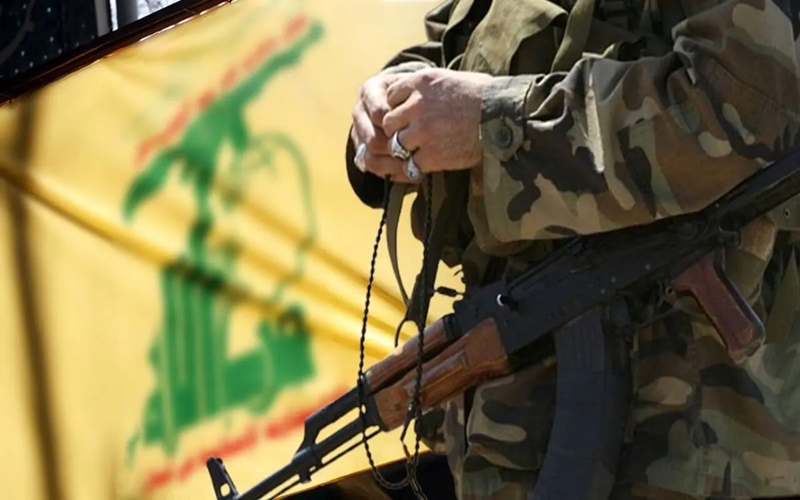

Beirut’s acceptance of a U.S. framework to disarm Hezbollah draws fierce opposition from Hezbollah and Tehran, and could sharply curtail the regime’s military reach in the Mediterranean.
The Lebanese cabinet’s recent endorsement of a U.S. framework to disarm Hezbollah marks one of the most consequential developments for Lebanon’s internal balance of power and for the Iranian regime’s network of regional influence. Backed publicly by Washington and Paris, the plan has provoked sharp denunciations from Hezbollah and direct interventions from Tehran-aligned officials, setting the stage for a high-stakes political and security confrontation.
The cabinet decision, announced following a meeting chaired by President Joseph Aoun, accepted the American proposal in principle while postponing precise timing for further deliberation. Lebanon’s information minister confirmed the cabinet’s acceptance, even as four Shiite ministers — aligned with Hezbollah and its ally Amal, plus one independent — staged a walkout in protest before the session ended.
A phased blueprint
The U.S. proposal, presented by Tom Barrack, the U.S. special envoy to the Middle East, is structured as a four-phase roadmap:
- Phase one (15 days): The Lebanese government would issue a decree calling for Hezbollah’s full disarmament by December 31, 2025; in parallel, a halt to active military operations would be required.
- Phase two (60 days): Beirut would approve an operational plan for deploying the Lebanese Army in the south so that weapons and security fall under central government control; during this period, a partial withdrawal from certain positions and the release of Lebanese detainees would occur.
- Phase three (90 days): Remaining foreign military positions in specified areas would be vacated, and debris removal and infrastructure reconstruction across affected areas would begin.
- Phase four (120 days): Hezbollah’s last heavy weapon systems — including missiles and drones — would be dismantled, followed by an international economic conference to mobilize reconstruction funding from the United States, Saudi Arabia, France, Qatar and other partners.
Tom Barrack hailed the acceptance as “historic, courageous and correct,” and France described it as “an important step toward the restoration of full sovereignty” in Lebanon.
Hezbollah and Tehran’s immediate backlash
Hezbollah — weakened by last year’s conflict yet still politically potent — condemned the cabinet decision as a “grave sin” and vowed to ignore the move. The group accused the government of capitulating to foreign demands and warned that unilateral disarmament would undermine Lebanon’s sovereignty and leave the country vulnerable to aggression.
Senior figures of the Iranian regime likewise rejected the plan. Iraj Masjedi, the Quds Force coordinator, called the proposition “impossible.” State-affiliated media reported telephone consultations between Ali Velayati, an adviser to the regime’s supreme leadership, and former Iraqi prime minister Nouri al-Maliki about coordinating regional opposition to the U.S. initiative. Officials linked to Tehran and its partners have signaled their readiness to mobilize diplomatically and politically against any steps they view as dismantling a core element of the regime’s strategic posture in the Levant.
Origins in a ceasefire and high hurdles ahead
The disarmament roadmap stems from elements of the ceasefire agreement brokered last November, which aimed to end sustained cross-border clashes and included provisions for withdrawing armed presences south of the Litani River. Yet moving from ceasefire terms to the wholesale disarmament of an entrenched militia presents fraught political and operational challenges.
Obstacles are immediate and acute: entrenched opposition from Hezbollah and allied ministers inside Lebanon’s government; direct threats and diplomatic pressure from the Iranian regime and allied actors; and the complex logistics and security arrangements required to bring the Lebanese state’s institutions into full control of contested areas. Even proponents acknowledge these risks but argue that the phased plan is the only viable route to restoring a monopoly of force by the central state and dismantling the “state-within-a-state” dynamic that has defined Lebanon’s security landscape for decades.
Strategic consequences for the Iranian regime
For the Iranian regime, the implications are profound. Hezbollah has long been Tehran’s most capable and geopolitically consequential proxy in the Mediterranean — a principal instrument of deterrence and influence. Disarmament would truncate the regime’s ability to project military power through proxy networks across Lebanon, Syria, Iraq and Yemen, degrading established supply lines for weapons and missile technology and narrowing Tehran’s strategic depth.
The political fallout would extend beyond material loss: undermine the regime’s narrative of deterrence, reduce its leverage in Lebanese politics, and deliver a blow to an element of its regional strategy that has long been central to Tehran’s approach to expand its warmongering in the Middle East. The pledge to disarm Hezbollah places the Iranian regime squarely on the defensive — testing the resilience of its regional strategy and the coherence of its political responses.