


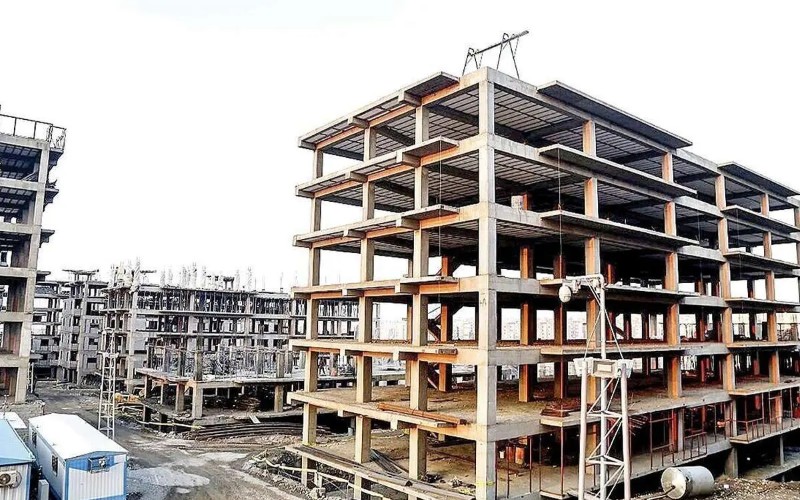

Workers in Iran face a housing affordability crisis, with rents consuming up to 85% of wages and official data showing decades of worsening inequality.
Up to 85% of workers’ wages consumed by rent
The housing crisis in Iran has reached an alarming level, with new reports showing that the majority of working-class households are unable to afford adequate shelter. According to Hamidreza Emam Gholitabar, inspector of the Supreme Assembly of Workers’ Representatives, between 70 and 85 percent of workers’ income is spent on housing-related expenses.
“For workers living in substandard housing conditions, the housing share is at least 70 percent, and for those seeking non-slum housing, this figure reaches about 85 percent,” Emam Gholitabar warned.
Globally, housing costs are expected to account for only 18 to 20 percent of household expenses. In Iran, the figure is three to four times higher for workers, exposing a massive gap between wages and basic living costs.
Urban–Rural Divide and Regional Disparities
The problem is most acute in cities. Official figures show that in 2023, housing costs consumed 43.7 percent of urban household budgets, while rural households spent around 21.6 percent. Even so, the rural ratio has risen compared to the past, eroding families’ already fragile economic security.
Regional comparisons highlight stark disparities. Tehran tops the list with housing costs consuming over 55 percent of household budgets. Fars province follows at 48.8 percent, Alborz at 44.7 percent, and Isfahan at 38.9 percent. Isfahan’s housing market has been further distorted by land subsidence, water shortages, and rising internal migration.
Even in Iran’s most deprived province, Kohgiluyeh and Boyer-Ahmad, where costs are lowest, the housing share exceeds 18 percent—still higher than global standards.
A Structural National Crisis
Despite decades of promises and policy interventions, government housing programs have failed to ease the burden. Large volumes of bank credit have been allocated to housing construction, yet the sector remains stagnant, financing inefficient, and purchasing power in decline.
Masoud Bayatmanesh, Deputy Minister of Housing and Buildings, confirmed in late 2024 that housing costs in some provinces now account for more than 50 percent of household budgets.
Historical data underscores the scale of the crisis: from 2001 to 2021, housing’s share of household expenses rose from 29.2 percent to 38.1 percent. Over the same period, average housing costs for urban households surged by 5,747 percent.
Inequality and Decile Gaps
The housing crisis has magnified social inequalities. A 2021 report showed that the wealthiest tenth of society spent 8.4 times more on housing than the poorest tenth. The divide reflects the concentration of wealth in metropolitan centers compared to impoverished suburbs and slums, where the bottom three deciles live.
Even among the wealthy, however, housing costs remain excessive. The top decile in Tehran spends nearly half (48 percent) of household income on housing, underlining how uncontrolled rent inflation has affected all social groups.
Household composition also plays a role: the heaviest burden falls on families of two to three members, followed by single-person households.
Escalating Rent Inflation
Experts identify skyrocketing rents as the main driver of the crisis. In Tehran, rent prices have increased sixfold over the past decade, compared to threefold growth in other provinces.
The trend accelerated after 2012, when the average rent per square meter in Tehran rose from 4,600 tomans to 21,600 tomans by 2020. By 2024, the figure had soared to 370,000 tomans per square meter, with 55 percent paid in cash rent and 45 percent in deposits or advance payments.
From Homeownership to Permanent Rentership
Housing, once considered a basic right and a cornerstone of family life, has increasingly become unattainable. The 2020 census revealed that over 55 percent of urban households and about 25 percent of rural households are renters. Experts warn that, if current trends persist, the average waiting time for homeownership will exceed 100 years.
The traditional ideal of owning a family home has been replaced by a harsh reality in which families are forced to relocate every few years, moving into smaller units or more distant neighborhoods as rents spiral upward. What was once a symbol of stability and memory-making has become a temporary shelter for millions.