


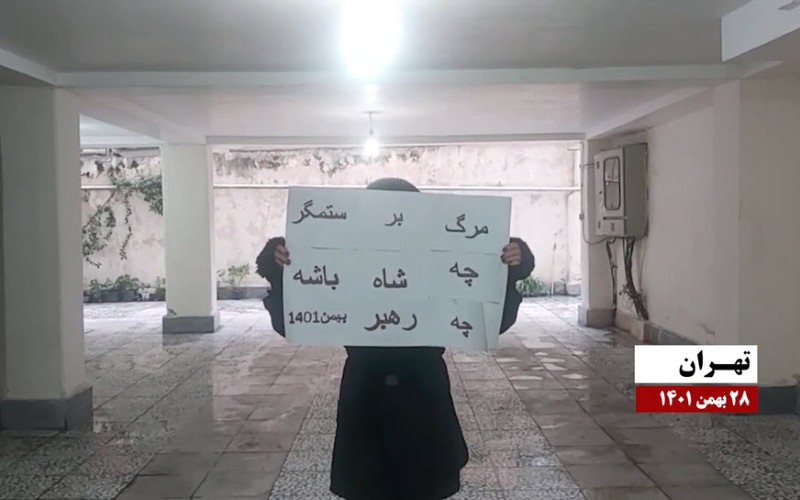

From the Constitutional Revolution to the 2022 uprising, Iranians have consistently rejected authoritarian rule—whether under monarchy or theocracy—through the radical and unifying slogan “Death to the tyrant, whether Shah or [supreme] leader.”
A Slogan Beyond Time and Regimes
The slogan “Death to the tyrant, whether Shah or [supreme] leader” represents one of the most radical and conscious collective expressions in modern Iranian history. During the 2022 nationwide uprising, it resonated in the streets of Iran’s cities and in large demonstrations of Iranians abroad, becoming a global symbol of resistance to tyranny.
What makes this slogan particularly significant is its rejection of all forms of authoritarianism. It dismantles both the legacy of monarchy and theocracy, declaring that dictatorship in any form—whether under the crown of a king or the turban of a mullah—is unacceptable.
Regime Propaganda and the Attempt to Rewrite History
Before the 2022 uprising, the regime’s propaganda machine attempted to divert popular anger toward nostalgic monarchy slogans such as “Reza Shah, may your soul rest in peace.” This was a calculated effort to derail the movement, to obscure the goal of overthrowing the theocracy, and to steer public discontent into a dead end that ultimately preserved the status quo.
However, the uprising’s radical nature, fueled by the influence of the Iranian Resistance and Resistance Units, dismantled this narrative. The slogan “Death to the tyrant, whether Shah or [supreme] leader” sent a clear message: Iranian society would not trade one dictatorship for another.
A Historical Trajectory Toward Radicalism
Iran’s protest movement has undergone a clear process of radicalization over the past two decades:
- 2009: The call of “My vote is mine” quickly transformed into “Death to the dictator,” marking a shift from reformist illusions to systemic rejection.
- 2017: The slogan “Reformist, Principlist—the game is over” exposed the futility of factional rivalries within the ruling elite.
- 2019: Demonstrators directly challenged the regime’s foundations, despite brutal repression that claimed 1,500 lives.
- 2022: A decisive turning point, when slogans like “Death to the tyrant, whether Shah or [supreme] leader” and “Death to Khamenei” highlighted the people’s determination to uproot all forms of despotism.
Each uprising marked a transition to a more radical and uncompromising stage, with the 2022 revolt crystallizing decades of collective experience.
A Century-Long Struggle Condensed in Four Words
The phrase “whether Shah or leader” embodies over a hundred years of struggle against centralized power in Iran. From the Constitutional Revolution of 1906 to today’s uprisings, the Iranian people have consistently fought for freedom, justice, independence, and republicanism.
By rejecting both monarchy and clerical rule, this slogan serves as a historical manifesto. It does not merely reflect today’s anger but summarizes generations of resistance to tyranny, ensuring that the Iranian people’s struggle is not confined to cyclical returns to authoritarianism.
Blocking the Path to Regression
During the coronavirus pandemic, the regime’s supreme leader Ali Khamenei used the crisis to delay uprisings while state media promoted fabricated monarchist slogans. But by 2022, social radicalism had outgrown such diversions. Slogans like “This month is the month of blood—Seyyed Ali will be overthrown” left no doubt that the people’s movement had entered a new stage of revolutionary consciousness.
The rejection of both monarchy and Velayat-e Faqih ensures that Iran’s democratic movement cannot be hijacked by opportunistic projects or nostalgic regressions. “Death to the tyrant” has become a safeguard against future authoritarianism, affirming that the people will not be trapped in another cycle of despotism.
A Declaration of Maturity and Resolve
The slogan “Death to the tyrant, whether Shah or [supreme] leader” is more than a chant of defiance. It is the crystallization of a historical will—the product of a century of struggle and sacrifice. It expresses the political maturity of a generation that has moved beyond power games, declaring: Iran will not go backward.
This slogan, forged in blood and perseverance, is a guiding principle for Iran’s democratic future—a promise that the people will settle for nothing less than a republic based on freedom, justice, and popular sovereignty.