
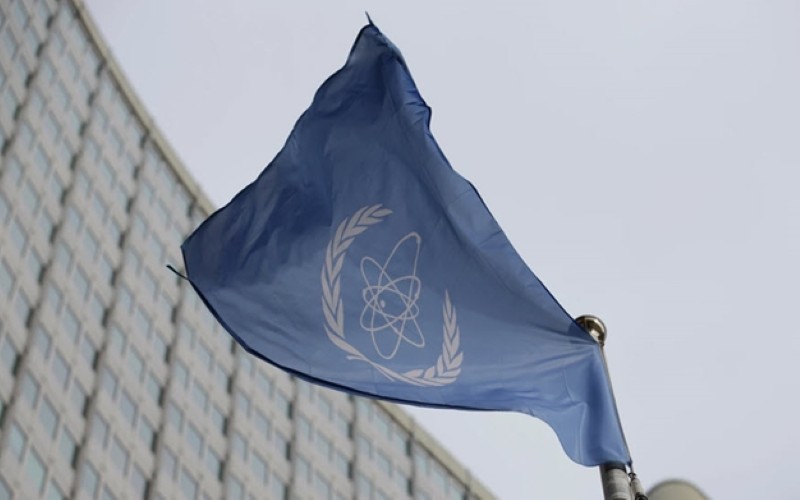

International pressure rises as Iran continues to block IAEA access to enriched uranium stockpiles and damaged nuclear facilities.
IAEA Rejects Tehran’s Excuses, Calls for Full Restoration of Inspections
The International Atomic Energy Agency (IAEA) has once again urged Iran regime’s authorities to allow its nuclear inspectors to resume their mandated work inside the country. According to public remarks referenced by international media, IAEA Director General Rafael Grossi stated that the nuclear sites struck earlier this year in attacks attributed to Israel and the United States are sufficiently safe for inspections to proceed. Tehran has attempted to argue that a “post-attack exceptional situation” prevents the resumption of inspections, an argument the Agency has firmly dismissed.
A report circulated among members of the IAEA Board of Governors emphasized that no wartime exemptions exist that would justify Iran’s continued refusal to cooperate. The report underscores growing concerns that the regime is using the recent military strikes as a pretext to obstruct oversight of its nuclear activities.
Board of Governors Passes Resolution Demanding Immediate Disclosure
On Thursday, the IAEA Board of Governors adopted a resolution—introduced by the United Kingdom, France, Germany, and the United States—requiring Iran to immediately provide detailed information about its enriched-uranium stockpiles and the condition of nuclear sites damaged during the recent 12-day conflict. The measure, aimed at extending and revising the Agency’s monitoring mandate, reiterates that Tehran must deliver all requested answers and grant full access to its inspectors without delay.
Media reports referencing the closed-door vote noted that 19 of the 35 member states supported the resolution, while Russia, China, and Niger opposed it. Twelve countries abstained, and one did not vote.
The resolution directs Grossi to report back on Iran’s adherence to monitoring limitations and verify critical information on Tehran’s nuclear activities, including the location and quantity of enriched uranium, chemical forms, enrichment levels, centrifuge inventory, and related equipment.
Calls for Compliance with the Additional Protocol
The Board’s resolution urges Iran to comply fully with the Additional Protocol, which Tehran signed in 2003 but never ratified. The Protocol would grant the IAEA broader inspection authority, including access to undeclared nuclear sites—an essential tool for detecting clandestine nuclear work. Iran’s refusal to implement it has long been viewed as a major obstacle to transparency.
By insisting on rapid cooperation and complete disclosure, the Board has reinforced international concerns that Tehran may be exploiting the conflict to obscure sensitive aspects of its nuclear program. Such moves deepen longstanding suspicions about the regime’s intentions and the possible military dimensions of its nuclear activities.
Global Concerns Intensify as Iran Withholds Access
International news agencies reporting on the resolution have highlighted that Iran’s continued obstruction comes five months after Israeli and U.S. strikes targeted elements of its nuclear infrastructure. Despite Tehran’s claims of insecurity, the IAEA maintains that sufficient safety conditions exist to allow for the resumption of inspections.
Member states supporting the resolution argue that full transparency is essential at a moment when Iran’s regime is believed to have amassed enriched-uranium quantities dangerously close to weapons-grade levels. The regime’s refusal to permit inspectors into damaged sites only heightens fears that critical information is being concealed.
A Setback for Non-Proliferation Efforts
The Board’s decision reflects mounting frustration with Tehran’s pattern of non-compliance and delay. While Iran attempts to blame external conflict for its obstruction, the IAEA and a majority of its member states have made clear that the regime’s explanations are neither credible nor acceptable.
With the new resolution in place, the burden is now squarely on Tehran to restore transparency and allow inspectors to verify its nuclear commitments. Failure to do so will likely deepen Iran regime’s international isolation and strengthen calls for further diplomatic and economic pressure.