Lawmakers, jurists, and human rights advocates reject war and appeasement, emphasizing organized resistance as the only viable path forward.
A conference titled Iran’s Current Crisis: A Possible Way Out was held at the French National Assembly on Monday, December 15, at the initiative of the Parliamentary Committee for a Democratic Iran. The meeting was chaired by Christine Arrighi, President of the committee, and brought together lawmakers from multiple political parties alongside legal experts and human rights figures. The event underscored growing concern in France over Iran regime’s escalating repression and the absence of any viable solution within the framework of the ruling system.
Maryam Rajavi, President-elect of the National Council of Resistance of Iran (NCRI), was the main speaker. Other participants included Hervé Saulignac, Vice President of the Parliamentary Committee for a Democratic Iran; Patrick Hetzel, a Member of Parliament from the Republican Party; Alain Vivien, former minister and the first head of the Prime Minister’s interministerial mission on sects; Gilbert Mitterrand, President of the France Libertés–Danielle Mitterrand Foundation; Dominique Attias, former President of the European Bar Federation; Jean-Pierre Brard, former MP and co-founder of the Parliamentary Committee for a Democratic Iran; Jean-François Legaret, former Mayor of Paris’s 1st arrondissement; Sara Nouri, lawyer and legal scholar; and Dr. Hamid Reza Taherzadeh, member of the NCRI.
Executions as a Tool of Fear, Not Strength
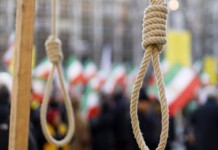
In her address, Maryam Rajavi referred to resistance reports indicating that more than 2,000 prisoners were executed in Iran in 2025 alone, including at least 60 women. She argued that the regime is deliberately cultivating a climate of terror to prevent the emergence of a nationwide uprising. According to her assessment, the regime’s focus has increasingly shifted toward arresting and sentencing to death women and men accused of supporting the People’s Mojahedin Organization of Iran (PMOI/MEK), with at least 18 political prisoners currently facing imminent execution. The objective, she said, is to deter young people from joining the resistance.
Despite this strategy, Rajavi maintained that fear is not what is expanding inside Iran. Instead, she pointed to the continued growth of resistance, including protests inside prisons and across diverse social groups. She linked the surge in social unrest to rampant inflation, widespread poverty, and the plundering of national wealth to fund missile programs, militarization, regional wars, and internal repression.
Referring to the twelve-day conflict in June, she argued that recent events have validated what the resistance describes as a third option for Iran: neither foreign war nor appeasement, but regime change carried out by the Iranian people and their organized resistance.
A Democratic Alternative, Not a Power Grab
Rajavi stressed that the Iranian resistance does not seek to seize power, but to establish a democratic, pluralistic, non-nuclear republic based on the separation of religion and state, full gender equality, abolition of clerical Sharia laws, and autonomy for Iranian Kurdistan. She emphasized that recognition of the Iranian people’s struggle and of the role played by rebellious youth confronting the Islamic Revolutionary Guard Corps (IRGC) is now more urgent than ever, not only for Iran’s freedom but also for global peace and security.
French Lawmakers Reject War, Appeasement, and Illusions
Christine Arrighi highlighted what she described as an unprecedented wave of executions, noting that 336 people were executed in November alone—the highest monthly figure in 37 years. She argued that this surge reflects not strength, but the growing weakness and brutality of a regime rejected by its own people and fearful of expanding protests.
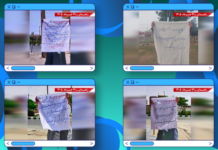
Arrighi cited cases such as Zahra Tabari, a 67-year-old political prisoner and electrical engineer sentenced to death for supporting the MEK and possessing a banner bearing the words Women, Resistance, Freedom. Such cases, she said, demonstrate that the struggle in Iran is not merely political or ideological, but a fundamental moral and human necessity.
She explained that over the past 16 years, the Parliamentary Committee for a Democratic Iran has consistently stood with the Iranian people and their organized resistance, securing majority support in the National Assembly on four occasions. Following the June conflict, she said, it has become clear that neither war, foreign intervention, monarchist alternatives, nor appeasement can resolve Iran’s deadlock. Only the path of change driven by the people and their long-standing organized resistance remains credible.
The Ten-Point Plan as a Concrete Roadmap
Several speakers emphasized that Maryam Rajavi’s ten-point plan offers not only opposition to dictatorship, but a concrete and implementable vision for a free and democratic Iran. According to Arrighi and others, the expansion of resistance units across Tehran and other cities—now acknowledged even by the regime—demonstrates the practical relevance of this alternative.
At the same time, speakers warned that the resistance faces a dual assault: brutal repression inside Iran and a sustained campaign of demonization and disinformation abroad, driven both by the ruling authorities and by proponents of a return to monarchy. Despite this, they argued, the alternative presented by the resistance remains clear, structured, and credible.
Human Rights, Women, and International Responsibility
Alain Vivien criticized Iran regime’s political system for systematically violating fundamental freedoms enshrined in international conventions, calling for a firmer stance from France and Europe. He stressed that the correct approach is not to search for a new leader for Iran from abroad, but to enable the Iranian people to determine their own destiny by supporting their resistance.
Hervé Saulignac described the defense of human rights and freedom as a moral duty for any republic, noting that French parliamentarians of all political backgrounds have upheld this responsibility for nearly two decades. He warned that the regime’s failure to crush the resistance has led it to intensify demonization campaigns abroad, sometimes targeting the parliamentary committee itself.
Dominique Attias linked the resistance’s platform to the values of the Universal Declaration of Human Rights, emphasizing its commitment to freedom of conscience, separation of religion and state, gender equality, the prohibition of torture, and the right to a fair trial—principles systematically violated by the current regime. She highlighted the central role of women in leading resistance units and recalled cases such as Somayeh Rashidi, who died after arrest and torture for opposing the regime.
Terrorism Abroad and Hostage Diplomacy
Patrick Hetzel warned that the regime’s repression is not confined to Iran, citing destabilizing activities and security threats in Europe. He pointed to diplomatic actions by countries such as the Netherlands and Australia as evidence of growing international recognition of the regime’s global threat, particularly through the IRGC.
Jean-François Legaret condemned the IRGC’s terrorist operations and espionage activities across Europe and criticized the regime’s reliance on hostage diplomacy and political blackmail to ensure its survival—an approach he said many governments have mistakenly tolerated.
Jean-Pierre Brard concluded that executions are a sign of weakness, not power, and argued for intensified support for the resistance. He cited the attempted assassination of Alejo Vidal-Quadras, former Vice President of the European Parliament, as a stark reminder that state-sponsored terrorism remains a central tool of the Iranian regime.
A Passing Regime, a Persistent Resistance
Across the conference, participants converged on a single conclusion: Iran’s ruling system represents a temporary and destructive chapter in the country’s long history. The organized resistance, despite decades of repression, continues to grow in strength and legitimacy. For the speakers at the French National Assembly, supporting this resistance is not only a political stance, but an ethical obligation rooted in universal values of freedom, justice, and human dignity.