



The exposure of coordinated fake accounts reveals a joint strategy by remnants of the Shah era and the ruling clerical regime to undermine Iran’s democratic alternative and derail popular sovereignty
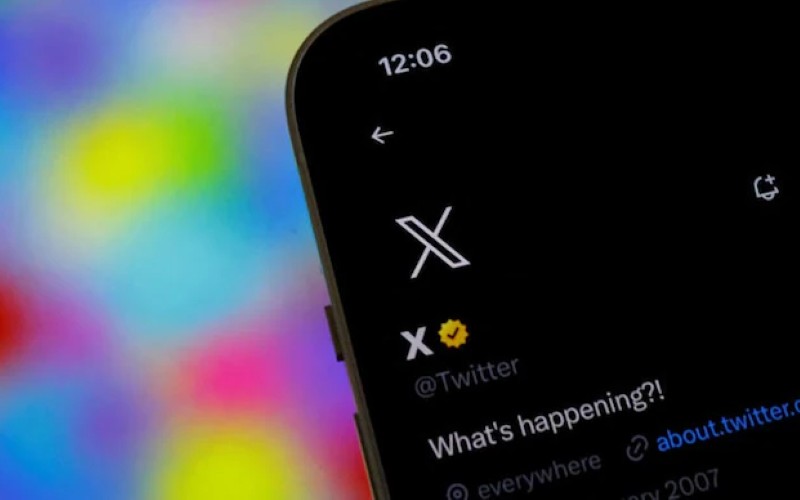
The recent exposure of a vast, coordinated network of fake X media accounts after X activated its new location feature promoting the restoration of monarchy while attacking democratic forces was not merely a media scandal. It constituted the unmasking of one of the most sophisticated and organized efforts at public opinion engineering in Iran’s contemporary history.
The findings revealed a coherent security-oriented structure, equipped with advanced technological tools and a cyber army, working to artificially revive a political past that has long lost its social legitimacy. This project did not aim to build a genuine political alternative. Rather, it sought to present a fabricated substitute against a movement grounded in popular sovereignty, the separation of religion from the state, and democratic governance.
A Timed Intervention Against a Nation in Motion
The defining feature of this operation was its timing. It became fully active at the height of nationwide protests following the 2022 uprising, precisely when Iranian society was transitioning from political passivity to active resistance. The objective was not to strengthen monarchism as a viable political current, but to divert social energy away from fundamental transformation and channel it toward a “safe” and controllable option—one that would ultimately preserve the core architecture of authoritarian power.
Thousands of fake accounts, displaying identical behavioral patterns, synchronized activity, shared locations, and coordinated messaging, created an exaggerated illusion of a “monarchist resurgence.” Simultaneously, these accounts worked systematically to portray Iran’s organized resistance and democratic forces as lacking social legitimacy. More than anything, this exposed the ruling structure’s fear of a real alternative—an anxiety so deep that it resorted to fabrication, distortion, and the artificial reproduction of history.
Monarchism as a Tool, Not an Alternative
The significance of this exposure extends far beyond psychological or media warfare. It signals a profound legitimacy crisis within the ruling system. A power structure without genuine social backing is compelled to reconstruct the past, manipulate collective memory, and instill the belief that no real alternative exists.
Within this framework, the artificial revival of monarchy is not an independent political project. It functions as an instrument to block the emergence of historical consciousness and to undermine the very principle of popular sovereignty. The ultimate target is not merely a particular organization or political current, but the foundational idea that power should belong to the people.
From the perspective of political philosophy, monarchy and clerical rule—despite their superficial differences—rest on the same core logic: power from above. In monarchy, legitimacy is derived from bloodline; in the doctrine of velayat-e faqih, it stems from claimed divine authority and exclusive religious interpretation. In both systems, people are not the source of power but its subjects. They are expected to obey, not to decide.
Thus, the return of monarchy would not replace religious despotism; it would reproduce the same philosophy that strips people of their right to govern their own destiny.
Monarchy Versus Modern Political Reason
Modern political philosophy stands in direct opposition to hereditary rule. From social contract theorists such as John Locke and Jean-Jacques Rousseau to Immanuel Kant, human beings are understood as rational agents with the right and capacity to participate in determining their collective future. Monarchy, as a hereditary institution, suspends this rationality and subordinates the collective will to the accident of lineage.
In this sense, monarchy is not merely a form of governance; it is a denial of modern political maturity. It reduces citizens from political agents to passive subjects, transforming holders of rights into dependents of power.
The 2022 Uprising and the End of False Choices
The nationwide uprising of 2022 fundamentally disrupted this equation. A new generation entered the political arena—one that neither yearned for the return of the Shah nor believed in reforming the religious dictatorship from within. The slogans, actions, and sacrifices of this movement demonstrated that Iranian society had moved beyond elite power shifts and now demanded a transformation in the very nature of power itself.
This moment marked the end of an era in which a nation’s fate oscillated between two forms of domination without genuine popular choice.
Legal and Ethical Dead Ends
From a legal standpoint, monarchy and religious authoritarianism converge at a critical point: both violate the right to self-determination. Contemporary international law recognizes sovereignty as belonging to the people—not to families, dynasties, or sacred claims. Any political structure founded on hereditary or divine entitlement is incompatible with equal political participation.
Attempts to rebrand monarchy as a “transitional phase” or “option” are therefore not pragmatic solutions but theoretical and political regressions.
Some argue that monarchy could be placed on a referendum ballot alongside republicanism. While superficially democratic, this argument is fundamentally misleading. Democracy is not merely a voting procedure; it is a legitimacy framework grounded in equality, the rejection of inherited privilege, and accountability of power. No system can preemptively grant itself lifelong, structural advantage and still claim democratic validity.
A Society That No Longer Accepts Fabrication
After the 2022 uprising, certain currents attempted to reintroduce monarchy under labels such as “national salvation” or “transition.” Whether consciously or not, these efforts aligned with the regime’s objective: reducing freedom to symbolic change rather than structural transformation. Iran’s modern history has repeatedly shown that without changing the philosophy of power, every political shift merely reproduces a new form of despotism.
The exposure of fake monarchist networks was therefore not just the disgrace of a security project. It was evidence of Iranian society entering a new stage of historical maturity. A regime forced to play the monarchy card to survive is one that has hollowed itself out. A society capable of identifying and exposing such fabrication is no longer easily deceived by artificial reconstructions of history.
Beyond Crown and Turban
Iran today stands on the threshold of exiting a historical cycle in which the people’s fate was exchanged between two forms of tyranny. Neither monarchy can impose itself on society, nor can religious rule normalize repression indefinitely. What remains is the will of a people who refuse to be subjects—neither subjects of a crown nor of a turban.
The future of Iran lies in a long-suppressed idea: genuine popular sovereignty. A system in which power originates neither from inheritance nor from sanctity, but from the free will of citizens—and derives meaning only through accountability to them.
The Iranian people’s insistence on national sovereignty is not a fleeting slogan. It reflects a deep historical conviction in the fundamental right to self-determination. This awareness will consign projects of artificial monarchist revival to the dead ends of history, and Iran’s path toward freedom will be paved not by nostalgia, but by the logic of history itself.