



Post-war intelligence assessments deny formal authorization, but shifting rhetoric and unverified reports point to growing pressure inside Iran’s regime.
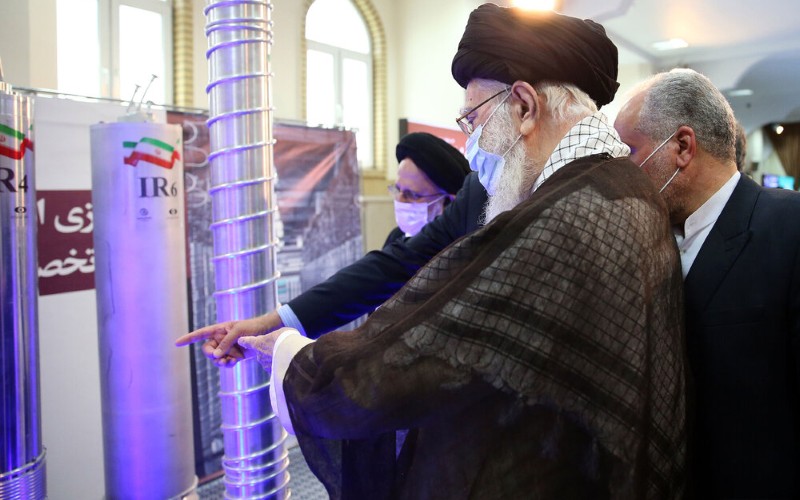
In the aftermath of the June conflict with Israel, renewed scrutiny has focused on whether Ali Khamenei, the supreme leader of Iran’s regime, has authorized a shift toward nuclear weapons development. While US intelligence agencies continue to assess that no formal approval has been granted, mounting internal debate, accelerated nuclear capabilities, and unverified external reports suggest that the regime’s strategic posture may be under strain.
According to Euronews, which reported on December 24, 2025, the question has gained urgency following the 12-day war that severely damaged Iran’s nuclear infrastructure and altered regional deterrence dynamics.
Intelligence assessments: restraint still intact
US intelligence agencies maintain that Iran’s regime has not resumed a structured nuclear weapons program. As recently as August, assessments continued to conclude that Khamenei has not authorized weaponization.
Director of National Intelligence Tulsi Gabbard told the US Senate Intelligence Committee earlier this year that Iran was not building a nuclear weapon and that the nuclear weapons program suspended in 2003 had not been reactivated. At the same time, she warned that public discussion of nuclear weapons inside Iran has increased, eroding a long-standing taboo and potentially empowering hardline factions within the regime.
In October 2024, CIA Director William Burns stated he was “reasonably confident” that US intelligence would detect early signs of weaponization if Iran’s regime chose to proceed.
Conflicting claims and unverified reports
Despite official intelligence positions, alternative claims continue to circulate. In October 2024, the exiled National Council of Resistance of Iran alleged that Khamenei had instructed the Revolutionary Guards to accelerate efforts toward nuclear bomb development. These claims have not been corroborated by international intelligence bodies or the International Atomic Energy Agency (IAEA).
More recently, the Italian think tank ISPI reported that sources inside Tehran suggested Khamenei authorized work on compact nuclear warheads for ballistic missiles in October, while stopping short of approving uranium enrichment beyond 60 percent. ISPI noted that such a decision would mark a significant departure from Khamenei’s long-standing resistance to warhead miniaturization, despite persistent pressure from the Revolutionary Guards.
ISPI attributed this reported shift to lessons drawn from the June conflict, during which Iran’s defensive systems proved largely ineffective, leaving missile forces as the regime’s primary operational deterrent.
Enrichment progress and technical constraints
What remains undisputed is the scale of Iran’s nuclear advancement prior to the war. The IAEA confirmed that by June 13, 2025, Iran possessed 441 kilograms of uranium enriched to 60 percent—an unprecedented level for a non-nuclear-weapon state.
Uranium enriched to 60 percent is technically close to weapons-grade material. A US intelligence report from November 2024 assessed that Iran had accumulated enough fissile material that, if further enriched, could be sufficient for more than a dozen nuclear weapons.
ISPI noted that advancing from 60 percent to 90 percent enrichment could take only weeks if sufficient advanced centrifuges are available. However, developing compact warheads suitable for long-range missiles presents a far more complex challenge, requiring years of design, simulation, and testing.
Strategic shock of the June war
The June conflict marked a decisive turning point. Israeli strikes beginning on June 13 targeted key enrichment sites, including Natanz, killing nuclear scientists and damaging infrastructure. The United States joined the campaign on June 22, striking three nuclear facilities, including the heavily fortified Fordow site.
During the conflict, Iran launched more than 550 ballistic missiles and over 1,000 drones toward Israel before a ceasefire took effect on June 24. While US President Donald Trump described the strikes as “obliteration,” US officials later acknowledged that the attacks likely delayed Iran’s nuclear progress by only a few months.
Open debate inside the regime
In the months following the war, senior figures within Iran’s regime have openly questioned the country’s long-standing rejection of nuclear weapons. In October 2024, 39 members of parliament called on the Supreme National Security Council to revise Iran’s defense doctrine.
Kamal Kharrazi, an adviser to Khamenei, stated in November that Iran would reconsider its nuclear doctrine if it faced an existential threat. Ali Shamkhani, another senior adviser, went further, publicly suggesting that Iran should have developed nuclear weapons earlier, arguing that previous attacks against Israel failed to achieve Tehran’s objectives.
Iran’s regime has traditionally justified its stance by citing a religious decree issued by Khamenei banning nuclear weapons. Analysts note, however, that fatwas can be revised, and the current internal debate suggests that such a change is no longer inconceivable.
Inspection gaps and unresolved risks
Since the June strikes, the IAEA has been unable to inspect Iran’s most sensitive nuclear sites. IAEA Director General Rafael Grossi stated in mid-December that inspectors were barred from Natanz, Isfahan, and Fordow, despite the continued presence of nuclear material and equipment.
Intelligence assessments indicate that Iran’s regime may have relocated approximately 408 kilograms of 60 percent enriched uranium to undisclosed locations prior to US strikes. Satellite imagery shows limited cleanup at damaged sites but renewed activity around underground complexes, particularly near Isfahan.
US Ambassador to Israel Mike Huckabee said in December that Iran appears to be attempting to rebuild the Fordow facility, suggesting the regime remains committed to preserving its nuclear capabilities.
A threshold moment
The convergence of advanced enrichment, reduced transparency, internal regime debate, and post-war strategic shock indicates that Iran’s regime is closer to the nuclear threshold than at any point in its history.