



The Iranian people are not fighting to recycle history—they are rising to bury both the theocracy and the monarchy once and for all.
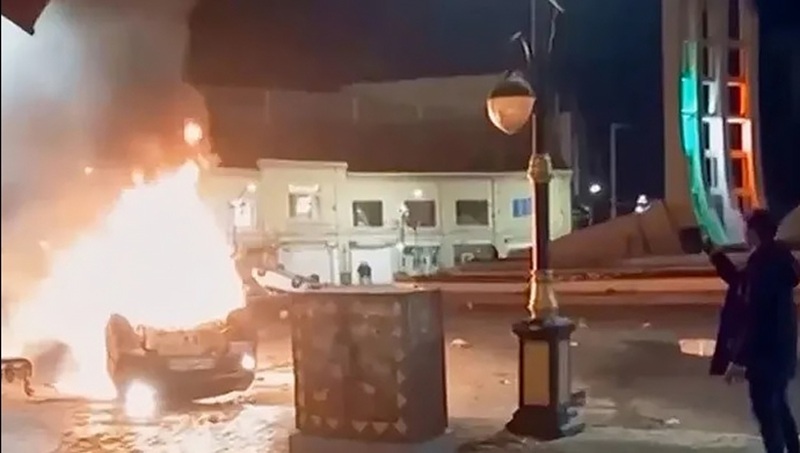
History in Iran is being written not in textbooks, but in the streets—through fire, blood, and extraordinary courage. What we are witnessing today is not a sudden outburst of anger, but the culmination of more than a century of struggle for freedom. Women and men, fully aware of the cost, have stepped into the line of fire to bring meaning to the countless sacrifices made under two dictatorships: the Shah’s monarchy and the clerical tyranny of the so-called Islamic Republic.
This uprising did not begin as an abstract political debate. Its initial spark came from merchants, workers, and ordinary citizens crushed under the weight of an economy ruined by systemic corruption. Yet it rapidly evolved into something far more fundamental. With chants of “Death to the dictator” and cries of “Freedom, freedom, freedom,” the people of Iran made unmistakably clear that their suffering—economic, political, social, cultural, environmental, and humanitarian—has a single root cause: the institution of Velayat-e Faqih and the criminal, plundering regime built around it.
A country sitting atop vast reserves of oil, gas, and natural resources does not collapse into poverty by accident. When inflation devours livelihoods and public services disintegrate, the problem is not sanctions alone, nor abstract “mismanagement.” It is a ruling elite that steals, represses, and exports terror while leaving its own population destitute. That is why every so-called “livelihood protest” inevitably transforms into a political indictment. Bread leads to freedom, and freedom demands the removal of those who have looted the nation.
Ali Khamenei and the machinery of repression futilely attempt to divide society into “legitimate protesters” whose voices may be heard and “rioters” who must be crushed. This false dichotomy has failed. The retirees, teachers, workers, nurses, and civil servants who have protested peacefully for years—ignored, beaten, and imprisoned—now stand shoulder to shoulder with the youth in open rebellion. Their collective voice has become a storm, and that storm no longer asks for reform. It demands an end to oppression.
Crucially, the Iranian people have drawn another clear red line—one that threatens not only the ruling clerics but also those who dream of resurrecting the Pahlavi dynasty. The uprising is not a quest to swap one autocracy for another, nor to romanticize a monarchy whose legacy includes censorship, torture, and absolute rule. The graveyard of history has room for both the turbaned tyrant and the crowned despot. Iran’s future will not be built by recycling failed models of power.
Those who attempt to hijack the revolution with monarchist nostalgia fundamentally misunderstand the moment. This is a generation that has paid with its eyes, its blood, and its lives. It is not rising to restore a throne, but to dismantle the very concept of inherited or unaccountable rule. The chant is not “long live the Shah,” just as it is no longer “reform the system.” The demand is unmistakable: a republic based on popular sovereignty, equality before the law, and the separation of religion from the state.
The fierce confrontations unfolding across Iranian cities reveal a simple truth: the uprising has entered its decisive phase. A people who have endured forty-seven years of clerical tyranny—and remember all too well the dictatorship that preceded it—will not settle for half-measures. They seek a future free from both Shah and Sheikh, a future long denied but now within reach.
Another February is approaching. Not as a repetition of 1979’s stolen revolution, but as its correction. This time, history will not be hijacked. This time, Iran’s people are determined to finish what generations before them were denied: freedom without qualifiers, and dignity without rulers.