


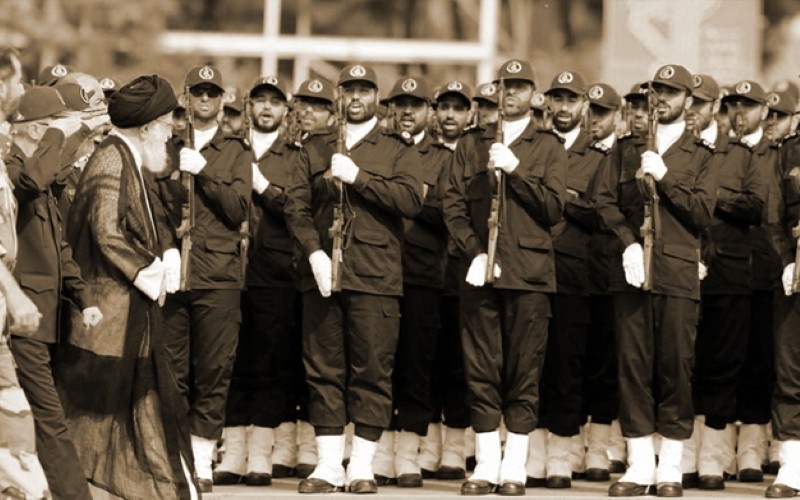

After the January 2026 massacre of protesters, European debate over designating the IRGC exposes the regime’s fear of isolation and accountability
In the aftermath of the deadly crackdown carried out by Iran regime’s forces on January 8–9, 2026, the question of designating the Islamic Revolutionary Guard Corps (IRGC) as a terrorist organization has returned to the center of political debate in Europe. What the regime frames as a “diplomatic dispute” is, in reality, a reflection of deep anxiety within Tehran over the possible loss of one of its most critical instruments of power.
As political tensions between the Iranian regime and European governments intensify, recent statements by the regime’s Foreign Ministry spokesperson have once again placed the IRGC at the heart of the confrontation. The issue of listing the IRGC has become the focal point of these reactions, with regime officials adopting an openly threatening tone in an effort to raise the perceived costs of such a decision for Europe.
Speaking at a weekly press briefing, Esmail Baghaei, spokesperson for the Khamenei regime’s Ministry of Foreign Affairs, responded to a question from Russia’s Sputnik news agency by condemning any potential European move to designate the IRGC as a terrorist entity. He described such a step as “illegal,” claiming that labeling a country’s official armed forces as terrorist lacks any legal basis. Baghaei further argued that this path was first taken by the United States and warned European governments against following Washington’s lead.
He went on to caution that such a decision would carry “consequences” for Europe. These remarks come at a time when, particularly after the killing of large numbers of protesters during the January 2026 uprising, the IRGC’s designation has become a central topic in European political circles. Parliaments and human rights institutions have repeatedly highlighted the IRGC’s role in domestic repression and its extensive operations beyond Iran’s borders.
The regime’s warnings were issued against the backdrop of extreme violence. Over just two days in January 2026, the regime’s security and military forces targeted demonstrators across multiple cities. Field reports indicate that thousands of young Iranians were killed, with the IRGC playing a decisive and operational role in the suppression. Numerous independent bodies have identified the IRGC as the regime’s primary instrument for organized, systematic violence.
The IRGC and a Record of Internal Repression
For years, the IRGC’s name has been inseparable from the suppression of popular protests inside Iran. From Tehran to smaller provincial cities, the force has consistently stood on the front line of crackdowns against dissent. For critics, the push to list the IRGC is a direct response to this long and bloody record. Extensive documentation exists detailing arbitrary arrests, torture, and the killing of protesters carried out by units linked to the IRGC.
Beyond Iran’s borders, the IRGC has also played a central role in regional destabilization. Its military presence across the Middle East and its support for armed proxy groups have been a persistent source of concern for European governments. The debate over listing the IRGC stems directly from this combination of domestic repression and transnational militancy.
In another part of his remarks, Baghaei implicitly threatened European states, warning that placing the IRGC on terrorist lists would have repercussions for them. Political observers see this language as emblematic of the regime’s broader diplomatic posture—one that repeatedly substitutes intimidation for engagement when faced with international scrutiny.
Threats or an Admission of Terror Tactics?
Analysts argue that references to “consequences” go beyond routine diplomatic warnings and amount to veiled threats of retaliation. In the past, European security services have uncovered cases involving covert operations and intimidation of dissidents on European soil linked to the Iranian regime. Within this context, the regime’s sensitivity over the IRGC’s designation becomes more comprehensible.
Critics also point to decades of Western appeasement, arguing that it has emboldened the regime. Repeated retreats in the face of threats, they say, allowed the IRGC to expand its influence and operate with growing impunity. Now that the prospect of listing the IRGC is being taken more seriously, Tehran’s diplomatic rhetoric has visibly hardened.
Ultimately, the statements from the Foreign Ministry spokesperson reveal more than defiance—they expose fear. The IRGC is a central pillar of the Khamenei regime’s survival. Its designation as a terrorist organization would strike at the core of the regime’s power structure, limiting its financial networks, mobility, and international reach. The aggressive reaction from Tehran underscores a fundamental reality: behind the threats lies deep concern over further isolation and the potential collapse of one of the regime’s most vital supports.