

Why labeling the January 2026 uprising a “coup” exposes the Iranian regime’s political and moral bankruptcy
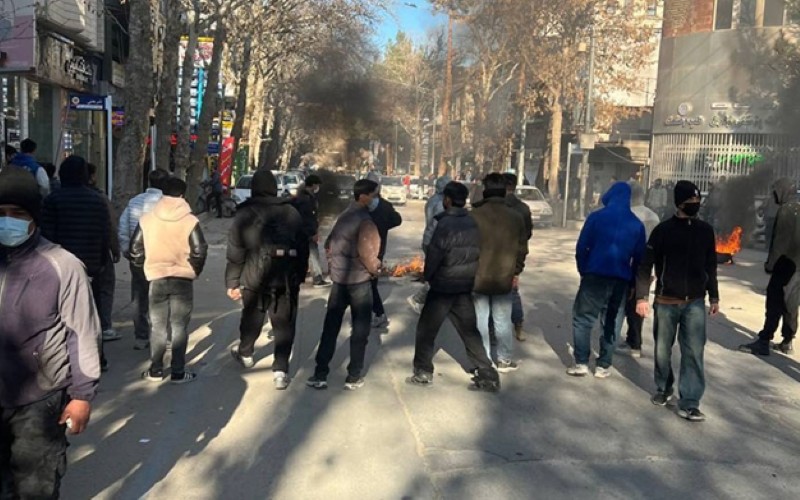
In his February 1 remarks to a handpicked audience of regime loyalists, Iran regime’s Supreme Leader Ali Khamenei deliberately described the January 2026 uprising as a “coup.” The choice of this word was neither accidental nor rhetorical excess. It was a calculated effort to erase the popular nature of the uprising and to whitewash the regime’s mass killings by reversing the roles of perpetrator and victim.
But can the eruption of a society pushed to the brink—ordinary people storming the symbols of repression—be credibly described as a coup?
The answer, by any political or analytical standard, is no.
What a Coup Actually Is
In political science, a coup d’état is defined as the sudden and unlawful overthrow of a government by actors from within the ruling structure itself, typically involving the military, security elites, or senior political figures.
Classic coups share three defining characteristics:
- Internal perpetrators
Coups are carried out by individuals who are already part of the power structure—generals, intelligence chiefs, or ruling elites. - Elite replacement, not systemic change
The objective is to replace figures at the top, not to dismantle the entire political order or rewrite the social contract. - Absence of mass participation
Coups are top-down operations. They do not require millions of people flooding the streets or risking their lives in open confrontation.
What Happened in January 2026 Was the Opposite
The events of January 2026 bear none of these features. What unfolded was a nationwide popular uprising, driven by the most marginalized and dispossessed layers of Iranian society.
Those who attacked Basij bases, banks, and other regime-linked institutions were not army officers or rival factions within the ruling elite. They were the urban poor, unemployed youth, workers, and citizens crushed under decades of repression and economic plunder. Their targets—the IRGC, predatory banks, and intimidation hubs—were widely seen by the public not as centers of governance, but as pillars of exploitation and terror.
These actions were not technical maneuvers to seize state power, as in a coup. They were symbolic acts of defiance, aimed at shattering the physical and psychological infrastructure of domination.
Why Khamenei Insists on the Word “Coup”
By labeling the uprising a coup, Khamenei is pursuing two strategic objectives:
- Detaching the uprising from society
He seeks to portray the revolt as an externally or internally orchestrated conspiracy, rather than an organic eruption from within Iranian society itself. - Legalizing mass violence
Under both domestic and international legal norms, suppressing a “coup” can be framed as defending national security. This semantic trick allows the regime to legitimize executions, mass arrests, and street killings as counter-coup measures—recasting bloodshed as law enforcement.
The Myth of “Administrative Centers”
Khamenei claimed that protesters attacked “centers that run the country.” In reality, for millions of Iranians, the IRGC and regime-controlled banks are not institutions of administration but institutions of looting and torture. Attacking them was not an attempt to govern, but a rejection of captivity itself.
Weaponizing Religion to Evade Accountability
Khamenei’s repeated emphasis on allegations of “burning Qurans and mosques” serves as a diversion. It is an attempt to shift attention away from the core issue: the killing of thousands of Iranians.
Unable to answer the economic and political logic of the protests, the regime reframes a struggle against dictatorship as a war against religion. This is ideological charlatanism of the highest order—one in which human life, which religious doctrine itself holds as more sacred than any structure even the Kaaba self, is sacrificed to preserve the regime’s concrete and ideological idols.
A Confession of Regime Isolation
The insistence on the term “coup” ultimately reveals the regime’s theoretical dead end. By using it, Khamenei implicitly admits that his rule has lost all organic connection to society. Every street protest is now perceived not as civic dissent, but as an existential threat—foreign, military, or conspiratorial.
Yet reality on the ground does not bend to linguistic manipulation. Coups are carried out with tanks and radio announcements, not with bare chests facing live ammunition.
What Khamenei calls a “defeated coup” was, in truth, an unfinished uprising—one whose roots remain embedded in the accumulated rage of Iranian society. No dictatorship has ever escaped its fate by falsifying language. Words can be distorted, but history cannot.