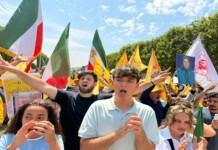
Reports of killings and detentions of minors during the January 2026 uprising expose a deepening human rights and educational crisis in Iran.
The killing and arrest of schoolchildren during the January 2026 nationwide protests mark one of the most alarming chapters in Iran’s ongoing unrest.
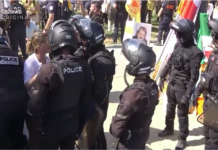
According to multiple reports emerging from inside the country, students under the age of 18 participated in large numbers in demonstrations across more than 400 cities. Some were killed. Many were detained. Families have since described searching from prison to prison without clear information about the whereabouts of their children.
For a government that insists it maintains social order, the image of minors being arrested—and in some cases reportedly shot—has created a crisis that even state-affiliated media can no longer fully ignore.
When Protest Reaches the School Gates
On February 3, state-linked outlet Tose’e Irani published an interview with education expert Mohammad Reza Niknejad. In it, he acknowledged that the arrest of schoolchildren is no longer an isolated occurrence:
“The arrest of students—at an age when the law still recognizes them as ‘children’—is no longer a marginal or exceptional piece of news; it has become a worrying part of the daily reality of recent protests.”
He admitted that official statistics are unavailable, and that information largely comes from families, lawyers, and informal networks. The absence of transparency, he noted, has intensified public anxiety.
His most striking question was simple yet revealing:
How did protest reach the school?
A Generation Connected to the World
Niknejad rejected the idea that student participation has a single cause. He pointed to what he described as the “internet generation”—young people who compare their lives with peers across the globe.
Unlike previous generations, Iranian teenagers grow up with access—despite heavy censorship—to social media and international content. They are acutely aware of global educational standards, economic opportunities, and social freedoms.
The contrast is stark.
Iran’s students face economic hardship at home, high youth unemployment prospects, strict social regulations, and limited political freedoms under the rule of Supreme Leader Ali Khamenei. Many families struggle financially, and that pressure transfers directly to children.
Niknejad identified hopelessness as a central driver. Teenagers, he said, increasingly question the value of studying when they see little prospect for a stable or prosperous future.
Schools No Longer Safe Spaces
One of the most troubling elements of the interview was Niknejad’s acknowledgment that schools themselves no longer feel safe.
He stated that arrests have reportedly occurred not only in the streets but also near or around schools. When the detention of minors becomes routine news, public trust in educational institutions erodes.
In some cities, schools have reportedly operated semi-closed. Attendance has declined. Open discussion has narrowed.
“Today,” Niknejad observed, “schools are full of protest, criticism, resentment, and anger. The teacher who is supposed to calm students is often angrier than anyone else.”
Teachers Under Pressure
The crisis does not stop with students.
Teachers in Iran face low wages, economic hardship, and increasing surveillance. Some have themselves been detained for supporting protests or voicing criticism.
In such an environment, the education system faces a dual crisis: economic strain and political repression.
Niknejad also raised the issue of educational inequality. Although Iran’s constitution promises free education, families—even in deprived areas—often bear significant costs. The expansion of privatized schooling has deepened perceptions of injustice.
For teenagers already confronting limited economic prospects, this inequity fuels frustration.
A Human Rights Crisis
Reports from families indicate that many detainees are under 18. Lawyers have cited restricted access to their young clients. Official silence persists regarding precise numbers.
The arrest of schoolchildren is not only an educational crisis—it is a human rights crisis.
Under international law, minors are entitled to special protections. Security responses involving lethal force or opaque detention practices raise serious legal and ethical concerns.
The government, meanwhile, has frequently labeled protesters as “rioters” or “terrorists,” language that lowers the threshold for severe crackdowns.
Structural Deadlock
The broader issue extends beyond a single protest wave.
For more than four decades, Iran’s ruling system has relied heavily on security-based responses to dissent. The participation of teenagers in nationwide protests suggests that dissatisfaction now reaches into the youngest politically conscious segments of society.
When minors conclude that they have no future within existing political and economic structures, the implications are profound.
The January 2026 uprising—and the reported arrest of schoolchildren across hundreds of cities—signals that the divide between the state and its youth is widening. Repression may suppress demonstrations temporarily, but it does not address underlying grievances: economic precarity, restricted freedoms, and systemic inequality.
History over the past four decades shows that cycles of protest and repression have repeated rather than resolved.
When protest reaches the classroom, it is no longer a marginal political event. It is a structural alarm bell.