



Negative capital formation, soaring inflation, and bureaucratic expansion expose deep systemic failures behind Iran’s stagnating economy
Economic growth is the foundational condition for prosperity. No country has achieved sustained improvements in living standards without expanding the size of its economic output. Yet official data now confirms that Iran’s growth engine has effectively stalled. The sharp collapse in investment signals not just a cyclical downturn, but a deep structural crisis pushing the economy toward prolonged stagnation.
Investment Collapse: A Warning of Future Contraction
Official estimates show that investment growth has fallen from negative 8 percent to approximately negative 15 percent. This is not merely a statistical fluctuation. It represents a severe contraction in the country’s future productive capacity.
When gross fixed capital formation turns sharply negative, it means the economy is consuming its capital stock rather than expanding it. The consequence is clear: the next generation will inherit a smaller and less productive economy. Negative investment today guarantees weaker growth tomorrow.
Fragile Growth Masked by Oil and Agriculture
Point-to-point economic growth for December 2025 has been reported between 2.3 and 2.9 percent. However, this modest growth is largely driven by oil output fluctuations and agricultural performance rather than broad-based industrial dynamism.
Growth excluding oil has declined, while the services and industrial sectors have moved into contraction. These are the very sectors that generate sustainable employment and long-term productivity gains. Their weakness underscores the fragility of the headline growth figure.
Demand-Side Weakness: Falling Consumption and Imports
On the demand side, conditions are even more alarming. Investment growth has plunged to negative 14.8 percent, and imports have sharply declined—often a sign of weakened domestic demand and constrained production inputs.
In some months, private consumption growth has turned negative. Negative consumption means declining current welfare. Negative investment means destruction of future welfare. Together, they form a dangerous trajectory of shrinking prosperity.
Inflation Near 47 Percent: The Growth Killer
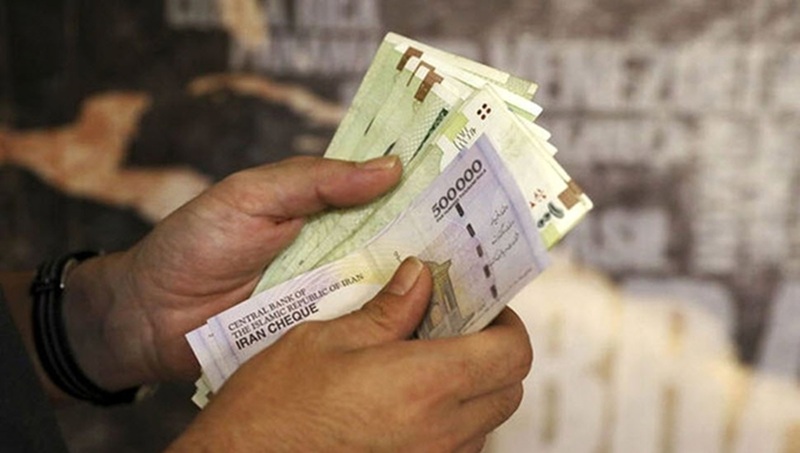
Inflation further darkens the outlook. Even optimistic scenarios suggest annual inflation may reach approximately 47 percent. Independent estimates project even higher rates.
Chronic inflation discourages investment, shortens planning horizons, and erodes purchasing power. In such an environment, rational entrepreneurs avoid committing long-term capital. Instead, resources are diverted toward short-term, speculative, or non-productive activities.
Persistent inflation combined with collapsing investment forms a destructive feedback loop: uncertainty increases the cost of capital, reduces productive investment, and further weakens growth prospects.
Structural Instability Under the Doctrine of Absolute Rule
Sustainable economic growth requires capital accumulation, institutional stability, policy predictability, and secure property rights. Over the years, the power structure under the supreme leader has systematically undermined these foundations.
Chronic policy instability, sanction-generating foreign policies, and international isolation have eroded the institutional framework necessary for economic expansion. As a result, the economy rises briefly with oil price shocks, only to relapse into stagnation.
Bureaucratic Expansion Instead of Reform
Faced with structural deterioration, the regime’s response has not been fundamental reform, but bureaucratic multiplication. Each crisis is met with the establishment of new councils—economic councils, supreme coordination councils, and various steering bodies.
These councils promise “unified command,” yet in practice they diffuse responsibility. Collective decision-making within opaque committees eliminates accountability. When no single actor bears the cost of failure, structural reform becomes politically impossible.
Official reports show that newly formed councils have focused more on producing regulations and policy documents than on ensuring effective implementation. Numerous meetings are held, yet investment indicators continue to decline. This pattern resembles “meeting therapy”—a process that complicates problems rather than resolving them.
The Accountability Deficit
Instead of acknowledging structural roots of the crisis, the regime reduces it to administrative coordination failures. A new bureaucratic layer is then added to conceal the inefficiencies of previous layers. But economic growth cannot be commanded by decree.
It requires trust, enforceable property rights, macroeconomic stability, and normalized international engagement—elements that have been systematically weakened under the current governance model.
Welfare Under Pressure
Declining private consumption signals falling real incomes. High inflation erodes purchasing power and exacerbates inequality. Simultaneously, collapsing investment implies rising unemployment and fewer opportunities for future generations.
Inflation and negative investment act as a blade cutting through societal welfare. The current generation suffers shrinking purchasing power, while the next generation faces diminished economic capacity.
An Economy in Intensive Care
Iran’s economy today resembles a patient transferred daily to conference rooms instead of an operating theater. Policymakers gather, draft minutes, and issue repetitive prescriptions. Meanwhile, economic vitality continues to bleed away.
The persistent decline in investment and inflation rates above forty percent are not accidents. They are logical outcomes of a system that has removed accountability and politicized economic decision-making.
As long as power remains centralized without transparency or responsibility, economic growth will not recover. Decades of experience demonstrate that adding councils, renaming institutions, and issuing new policy documents have failed to revive the economy.
Iran’s crisis is not a shortage of meetings. It is a crisis of structure. In such an environment, economic growth remains less a genuine policy priority and more a recurring slogan—contradicted year after year by negative investment figures and inflation approaching fifty percent.