


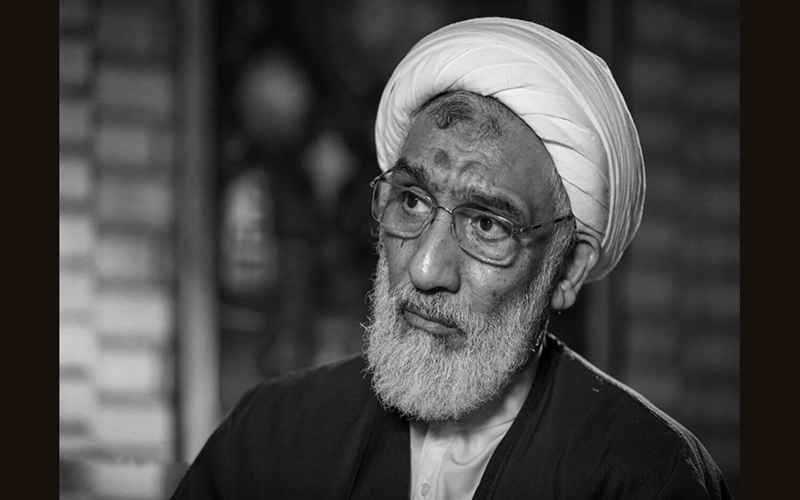

From revolutionary courts in the 1980s to alleged involvement in mass executions and overseas assassinations, Pourmohammadi’s appointment signals continuity in Tehran’s security doctrine
The appointment of Mostafa Pourmohammadi as acting head of Iran regime’s Intelligence Ministry is not merely an administrative reshuffle—it is a stark reminder of the entrenched security architecture that has defined the clerical regime for decades. His career, spanning nearly half a century, reflects a consistent pattern of judicial severity, intelligence control, and direct involvement in some of the Iranian regime’s most controversial and violent episodes.
Born on December 23, 1959, Pourmohammadi emerged from the Haqqani religious school in Qom, a key institution known for producing many of the regime’s security and judicial figures. Shortly after the 1979 revolution, he was rapidly integrated into the new power structure. By the winter of 1980, at just 20 years old, he had already been appointed as a revolutionary prosecutor in Masjed Soleyman, marking the beginning of a career deeply intertwined with repression.
Throughout the early 1980s, Pourmohammadi served as prosecutor in several volatile provinces, including Khuzestan, Hormozgan, Kermanshah, and Khorasan. Reports indicate that during this period, he issued hundreds of death sentences—some involving minors. His role intensified following the June 20, 1981 protests, where he directly participated in the prosecution and suppression of members of the People’s Mojahedin Organization of Iran (PMOI/MEK).
By September 1981, he had been transferred to Mashhad as chief prosecutor of Khorasan Province. Testimonies from that period describe summary trials lasting only minutes, often without legal representation. Allegations also emerged of systematic abuses, including sexual violence against female prisoners prior to execution—claims supported by testimonies from victims’ families and documented cases such as that of Sima Matlabi.
Pourmohammadi’s ascent continued in 1987, when he joined the Ministry of Intelligence under then-minister Mohammad Reyshahri. Within a short time, he rose to become deputy minister for foreign intelligence and later the minister’s deputy during the tenure of Ali Fallahian. At just 29 years old, he was already positioned at the core of Iran’s intelligence operations.
During this period, numerous opposition figures were assassinated abroad. Among them were Abdulrahman Ghassemlou in 1989, Kazem Rajavi in 1990, Shapour Bakhtiar in 1991, and Sadegh Sharafkandi and Fereydoun Farrokhzad in 1992. These killings were reportedly part of a broader strategy approved at the highest levels of Iran’s national security establishment.
One of the most defining chapters of Pourmohammadi’s career came in the summer of 1988, when he served as a representative of the Intelligence Ministry on the so-called “Death Commission.” Following a decree issued by Ruhollah Khomeini, thousands of political prisoners were subjected to re-evaluation and, in many cases, execution. A now-public audio recording from August 15, 1988, captures senior cleric Hossein-Ali Montazeri condemning these executions as the “greatest crime” of the Iranian regime.
Pourmohammadi initially denied involvement in these events but later openly defended them. In 2016, after the audio file surfaced, he stated that he was “proud” to have carried out what he described as divine orders against the regime’s opponents. He reiterated similar positions in subsequent years, arguing that wartime conditions justified the absence of legal safeguards.
Human rights organizations, including Human Rights Watch, formally accused him in 2005 of crimes against humanity for his role in the 1988 executions.
His record also extends to the so-called “chain murders” of the late 1990s. Between 1998 and 1999, a number of intellectuals and dissidents—including Dariush and Parvaneh Forouhar, Mohammad Mokhtari, and Mohammad-Jafar Pouyandeh—were assassinated. While the Intelligence Ministry officially attributed these killings to rogue agents, Pourmohammadi later acknowledged their organized nature, contradicting the official narrative.
Throughout the 1990s, he remained a central figure in Iran regime’s intelligence hierarchy, serving as head of foreign intelligence from 1990 to 1997 and later as deputy minister until 1999. His tenure coincided with major international incidents, including the 1994 AMIA bombing in Argentina, for which Iranian officials were implicated.
After leaving the Intelligence Ministry, Pourmohammadi continued to hold influential positions. He served as Interior Minister from 2005 to 2008 under Mahmoud Ahmadinejad, and later as head of the State Inspectorate Organization from 2008 to 2013. In 2013, he became Minister of Justice in Hassan Rouhani’s administration, a role he held until 2017.
Despite political rivalries and periodic dismissals, his presence within the regime’s inner circles remained constant. He also held advisory roles within the office of Supreme Leader Ali Khamenei and maintained influence through conservative clerical networks.
In recent years, Pourmohammadi has continued to defend the regime’s past actions. In statements made as recently as June 12, 2024, he described the case against the PMOI as “ongoing” and justified previous executions and prosecutions. Such remarks underscore a persistent adherence to the same ideological and security framework that shaped his early career.
Now, with his appointment as acting Intelligence Minister in 2026, Pourmohammadi returns to the very institution where much of his legacy was forged. His record—marked by direct involvement in mass executions, alleged crimes against humanity, and the orchestration of both domestic and international repression—offers a clear indication of the regime’s enduring reliance on figures shaped by its most violent chapters.
Far from signaling reform, his elevation suggests continuity—an unbroken line between the policies of the 1980s and the security posture of Iran today.