
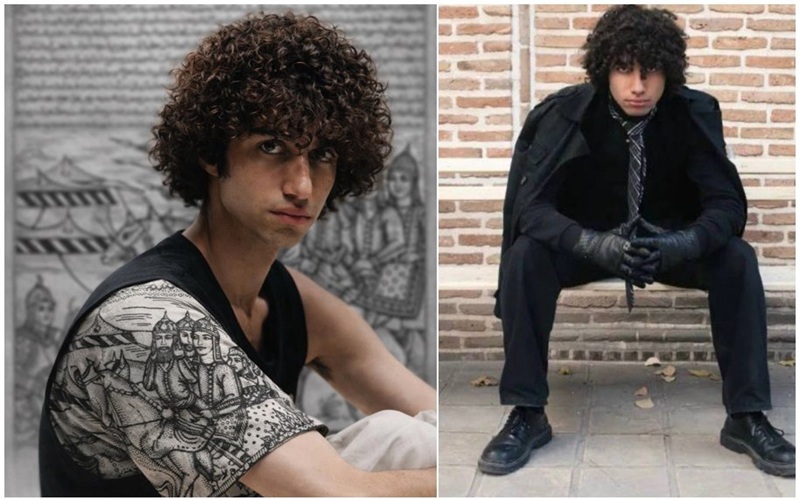

Maryam Rajavi condemns execution as a sign of regime desperation and calls for urgent UN Security Council action
The execution of 18-year-old Amirhossein Hatami in Tehran on Thursday, April 2, has drawn sharp condemnation from opposition figures, who describe it as part of an intensifying campaign of repression by Iranian regime authorities following the January 2026 uprising.
According to official statements, Hatami was executed on charges of “Moharebeh” (waging war against God) and “corruption on earth,” accusations frequently used by the regime’s judiciary in politically sensitive cases. He had been arrested by the Intelligence Organization of the Islamic Revolutionary Guard Corps (IRGC) in connection with his alleged involvement in anti-government protests.
State-affiliated media reported that Hatami participated in an assault on a classified military site in Tehran during the uprising. The regime’s authorities claimed that he and others vandalized the facility, set fires, and blocked access routes. The judiciary further stated that during interrogations, Hatami admitted his intent was to overthrow the regime and that he entered the site in search of weapons and ammunition.
Amirhossein Hatami was among several detainees transferred to solitary confinement earlier this week from Ghezel Hesar Prison. On March 31, he and four others—Mohammad Biglari, Ali Fahim, Abolfazl Salehi, and Shahin Vahed-Parast—were reportedly moved ahead of their death sentences being carried out. The sentences had been issued by Branch 15 of Tehran’s Revolutionary Court, presided over by Judge Abolghasem Salavati, who has been widely criticized by human rights organizations for his role in politically charged trials.
Maryam Rajavi, President-elect of the National Council of Resistance of Iran (NCRI), condemned the execution, describing it as a “criminal act” that reflects the regime’s fear of growing public dissent. She argued that the use of capital punishment against young protesters demonstrates what she characterized as the authorities’ desperation in the face of mounting social unrest and the potential for a broader uprising.
The criminal execution of the 18-year-old Amirhossein Hatami, a courageous rebellious youth, is yet another sign of the ruling religious fascism’s desperation in the face of public anger, and the regime’s fear of a growing uprising aimed at its overthrow.
I call on the… pic.twitter.com/GsXn3A7GkC— Maryam Rajavi (@Maryam_Rajavi) April 2, 2026
Rajavi called on the international community to take a firm stance against what she described as consecutive executions in Iran and urged the United Nations Security Council to address the situation. Her remarks underscore increasing calls from opposition groups for international intervention in response to Iran’s handling of recent protests.
The execution of Hatami comes amid a broader pattern of harsh punitive measures targeting individuals associated with the January uprising. Observers note that the use of severe charges and expedited judicial processes raises serious concerns about due process and the rights of the accused, particularly in cases involving young detainees.
As tensions persist, the case of Amirhossein Hatami is likely to intensify scrutiny of the regime’s judicial practices and fuel further debate over the international community’s response to ongoing human rights concerns in the country.