

As conflict deepens, the Iranian regime tightens its grip on information—leaving journalists trapped between state control, digital blackouts, and rising personal risk.
For journalists in Iran, truth has increasingly become a matter of national security—one that carries tangible risks. In a country long ranked among the most restrictive media environments globally, the recent war with Israel and the United States has pushed conditions into a more dangerous phase. Access to information has narrowed further, while the cost of publishing independent reporting has risen sharply.
Escalating Pressure Amid War
Iran has consistently occupied the bottom tier of global press freedom rankings. According to the 2026 World Press Freedom Index by Reporters Without Borders, the country ranks 177th out of 180—below even Taliban-controlled Afghanistan. Yet what journalists and media watchdogs now describe is not merely continuity, but escalation: a wartime intensification of longstanding repression.
Authorities of the regime have historically moved to control public narratives during periods of political or security tension. However, reporters inside Iran suggest that wartime conditions have rendered this control more systematic and more rigid. One journalist working for a well-known domestic outlet told that editorial oversight has tightened significantly, with explicit directives issued from above regarding how events must be covered. The outlet’s website, he added, is inaccessible from outside Iran—while only a select group of media organizations linked to state or security institutions appear to retain relatively stable global internet access.
Journalism in the Shadow of an Information Blackout
This testimony aligns with findings from international organizations. In March 2026, Reporters Without Borders warned that journalists in Iran are facing not only the dangers of war, but also a deliberate “information blackout.” Some reporters, the organization noted, have received threatening calls from entities linked to the state.
The result is a suffocating environment: journalists are pressured by official institutions while simultaneously attempting to operate under conditions of bombardment and insecurity. The consequence is not merely restricted reporting, but the erosion of verifiable, independent narratives altogether. Reliable information becomes scarce, replaced by fragmented or state-sanctioned accounts.
Tiered Internet and the Rise of an Information Divide
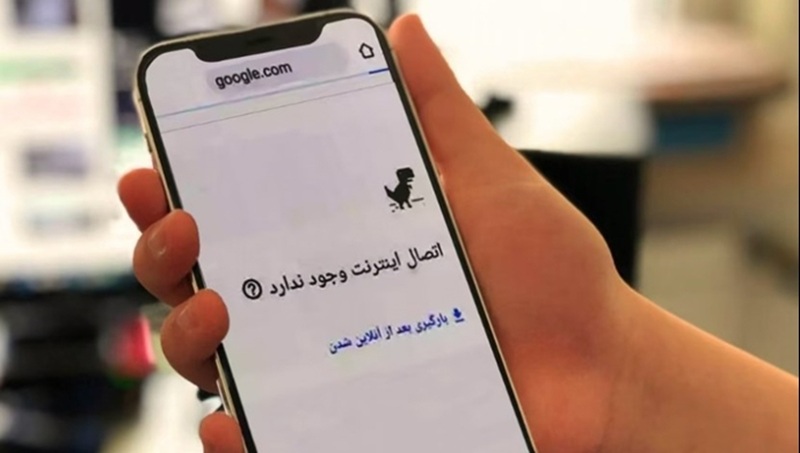
Pressure on journalists has intensified alongside severe internet restrictions. A Reuters report on April 28 indicated that Iran has entered its third consecutive month of major internet disruptions. Under a temporary scheme known as “Internet Pro,” limited connectivity has been granted to select businesses and entities.
These restrictions, which began on January 8, briefly eased in February before returning after the outbreak of war on February 28. In practice, they have created a dual information system: while the general population remains largely cut off from the global internet, a narrow segment of institutions and media outlets operates with privileged access.
Another journalist inside Iran described efforts by colleagues to compile lists of individuals eligible for so-called “white SIM cards”—devices reportedly offering less restricted international access to those approved by security bodies. He declined to participate, viewing the initiative as discriminatory and politically compromising. The logic, he suggested, is clear: those granted such privileges are expected to remain within the boundaries of the official narrative.
Fear, Censorship, and the Disappearance of Independent Reporting
Journalists report that the pressure extends well beyond digital restrictions. Routine reporting has become increasingly hazardous, particularly when covering sensitive locations or politically charged events. According to one Tehran-based reporter, “independent journalism has become nearly impossible.”
Even credentialed journalists have faced temporary detention when attempting to report from sites of attacks, with their footage deleted. While not all such cases have been independently verified, the broader pattern aligns with consistent reporting from press freedom organizations: wartime Iran has seen a sharper contraction of both access to information and the space for independent reporting.
State media, meanwhile, continues to frame any reporting outside official lines as a threat to national security. Domestic outlets are effectively confined to reproducing government narratives, avoiding sensitive field details such as the public mood or the human cost of the war.
Yet despite this expansive control, analysts argue that the regime’s propaganda apparatus has struggled to persuade. Official messaging often appears disconnected from the lived realities of citizens, widening rather than bridging the gap between state narratives and public experience.
Extending Pressure Beyond Borders
The campaign against independent voices has not been confined to Iran’s borders. Iranian journalists and activists abroad have also come under pressure.
An Information Vacuum by Design
Iran regime’s judiciary and security institutions have long pursued journalists, media outlets, and citizens for reporting, commentary, or content dissemination. What has emerged under wartime conditions is not a fundamentally new system, but a far harsher iteration of an existing model—one now empowered by the urgency and opacity of conflict.
As independent reporting becomes more difficult and internet access remains constrained, the space for professional, verifiable journalism continues to shrink. This dynamic not only enables the state to advance its preferred narratives with fewer challenges, but also makes it increasingly difficult for citizens, observers, and the international community to understand what is really happening inside Iran.
What ultimately emerges from these conditions is more than censorship. It is an engineered information vacuum—one in which truth is not always replaced by outright falsehoods, but by absence: a void shaped by fear, silence, restricted access, and the systematic erasure of independent voices.