



As the Iran regime escalates rhetoric and regional outreach, its shifting posture reveals strategic exhaustion rather than renewed strength
In recent weeks, a flurry of regional visits and urgent phone diplomacy by the Iran regime’s Foreign Minister Abbas Araghchi—coupled with a message attributed to Supreme Leader Mojtaba Khamenei directed at Gulf states—has exposed the other side of Tehran’s regional posture: one defined less by strength than by strategic deadlock and diminishing capacity.
For years, the Iran regime has anchored its regional policy in crisis generation, ideological export, and calibrated escalation. This approach has included missile and drone strikes, the mobilization of proxy networks, and deliberate disruption of critical infrastructure across neighboring and regional states. Such actions were not merely tactical—they were designed to project dominance and impose a narrative of inevitability.
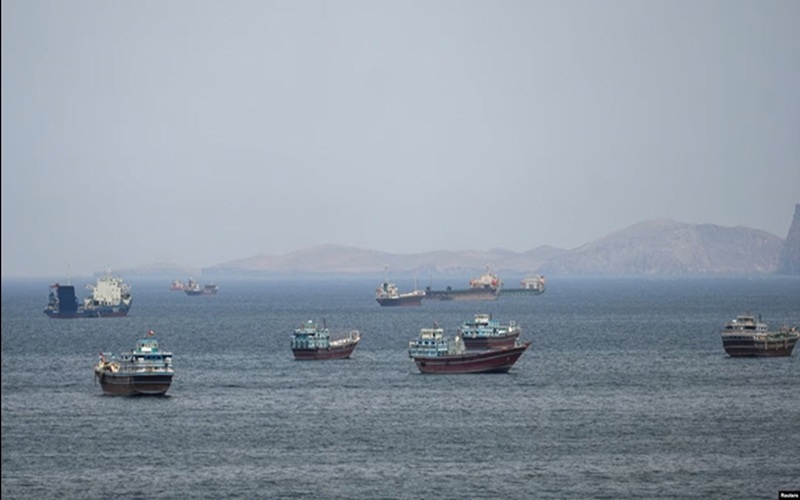
However, this strategy has come at a cost. The attempt to weaponize the Strait of Hormuz—long considered a critical leverage point—appears to have backfired. Rather than consolidating influence, it has intensified the regime’s isolation and provided justification for expanded sanctions, tighter enforcement mechanisms, and increased scrutiny over its oil exports and shipping networks. Estimates suggest that these pressures now inflict hundreds of millions of dollars in daily losses on the regime’s already strained financial system.
What remains of Tehran’s long-standing “dual-track” doctrine—combining diplomacy with field operations—is increasingly reduced to rhetorical escalation. The gap between messaging and material capability has widened, leaving behind a posture characterized by bluster rather than credible deterrence.
This reality has not gone unnoticed. Regional actors, particularly Gulf states, have grown more cautious and less receptive to Tehran’s overtures. The erosion of trust is not easily reversible; diplomatic isolation, once entrenched, rarely yields quickly to tactical adjustments.
It is within this context that recent statements attributed to Mojtaba Khamenei must be understood. His appeal to a supposed “shared destiny” among Gulf nations, framed within a “new chapter” for the Persian Gulf and the Strait of Hormuz, reflects a notable shift in tone. He stated:
“We and our neighbors in the waters of the Persian Gulf and the Sea of Oman share a common destiny, and outsiders who intervene from afar have no place here.”
The deliberate invocation of “shared destiny” is striking. Coming from a system that has long pursued coercive regional policies, such language raises legitimate skepticism among neighboring states. Indeed, throughout the recent conflict, Gulf countries have consistently refrained from aligning themselves with Tehran’s strategic outlook—underscoring a fundamental divergence in interests and threat perceptions.
At its core, this messaging does not signal a departure from past behavior. Rather, it reflects an attempt to reframe longstanding ambitions—particularly regarding influence over vital maritime corridors—under a more palatable diplomatic veneer. Khamenei further emphasized that the Iran regime would ensure security in the region through its “management” of the Strait of Hormuz, a formulation that implicitly asserts a claim to regional primacy.
Parallel statements from regime-affiliated figures have gone further, suggesting the possibility of new “legal arrangements” for governing the strait in coordination with select regional actors. Such proposals, however, have been met with clear resistance. Regional responses indicate a continued unwillingness to accept unilateral frameworks shaped by Tehran, particularly in light of recent escalatory actions.
Criticism from officials in neighboring countries underscores this dynamic. One senior diplomatic adviser from the United Arab Emirates dismissed the notion of trusting unilateral initiatives following what he described as aggressive actions by the Iran regime toward its neighbors. The message is unambiguous: credibility, once eroded, cannot be restored through rhetoric alone.
Ultimately, the Iran regime’s current approach toward the Strait of Hormuz and the broader Gulf region can be understood through three interrelated objectives: asserting a degree of regional control, leveraging the strategic importance of the strait for negotiation advantage, and deepening its pivot toward Eastern geopolitical alignments.
Yet these efforts unfold against a backdrop of mounting constraints. The regime’s room for maneuver is narrowing, and its ability to translate rhetoric into durable influence appears increasingly limited. What is presented as strategic initiative may, in reality, reflect a system grappling with the consequences of its own long-standing choices.