


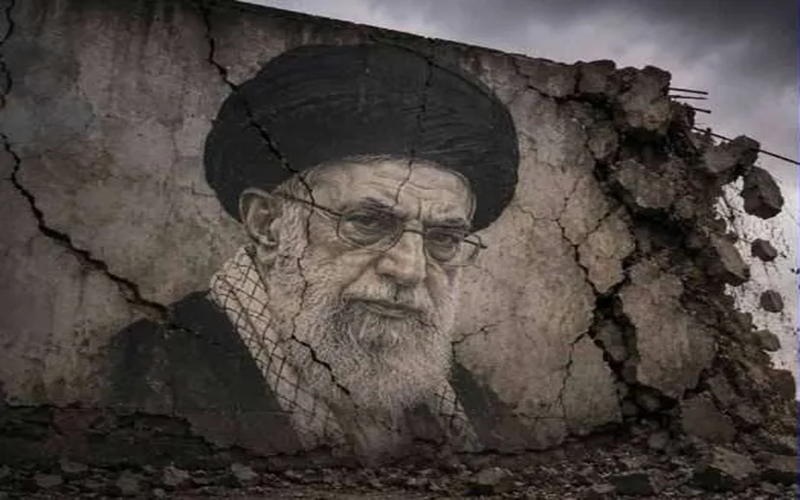

The Iranian regime’s continued survival is often mistaken for strength, but its endurance reflects a combination of repression, international circumstances, and the absence of a decisive political rupture rather than genuine stability.
One of the most frequently asked questions about Iran today is deceptively simple: if the Iranian regime has endured economic collapse, regional conflicts, nationwide uprisings, international isolation, and growing public anger, why is it still in power?
For some observers, the answer is proof of the regime’s resilience. They argue that a government that has survived so many crises must possess extraordinary durability. Yet this interpretation overlooks a crucial distinction: survival is not the same as stability.
The regime’s longevity has been shaped not only by its own instruments of control but also by a series of political and international developments that repeatedly extended its lifespan. Western appeasement policies, regional conflicts, shifting geopolitical priorities, and the absence of a coordinated international approach toward Tehran have all contributed, directly or indirectly, to the regime’s ability to weather crises that might otherwise have proven fatal.
Over the past four decades, wars and regional upheavals—from the Iran-Iraq conflict to the wars in Afghanistan and Iraq—have repeatedly altered the strategic environment in ways that allowed the regime to consolidate power internally. External threats often provided the authorities with opportunities to strengthen security structures, suppress dissent, and frame domestic opposition as a national security challenge.
At the same time, organized opposition movements faced significant political and legal obstacles. Efforts by various international actors to marginalize or isolate opposition groups, combined with broader diplomatic strategies centered on engagement with Tehran, limited the emergence of a widely recognized alternative on the international stage. Whether intentionally or not, these policies often worked to the advantage of the ruling establishment.
Survival Does Not Equal Legitimacy
The regime’s supporters frequently cite its continued existence as evidence of popular support or institutional strength. Yet longevity alone does not establish legitimacy.
The Iranian regime today bears little resemblance to the regime that emerged after the 1979 revolution. Its ideological appeal has diminished dramatically, electoral participation has declined, and public trust in state institutions has eroded. The government increasingly relies on coercive mechanisms rather than political consent to maintain control.
A state that responds to labor protests, civil activism, and political dissent primarily through arrests, repression, and intimidation may be capable of preserving order in the short term. However, such methods rarely address the underlying causes of social discontent.
The regime’s most significant challenge is not foreign pressure but the widening gap between society and the political system. Economic hardship, corruption, restrictions on civil liberties, and declining living standards have generated frustrations that extend across social classes and demographic groups.
Internal Challenges Are Growing
Beyond social dissatisfaction, the regime faces mounting internal pressures.
The question of succession remains one of the most sensitive issues confronting the political establishment. For decades, Supreme Leader Ali Khamenei functioned as the central figure balancing competing factions within the system. Yet while his son has took his position, underlying rivalries have become more visible.
The challenge is not merely identifying a successor but preserving cohesion within a political structure that contains competing interests, institutions, and power centers. Authoritarian systems often appear unified until moments of transition expose latent divisions.
These concerns emerge against the backdrop of repeated waves of protest over the past decade. The nationwide demonstrations of 2017, 2019, and 2022 revealed a pattern of persistent social unrest that has not disappeared despite extensive repression. While protest movements have varied in scale and intensity, they collectively demonstrated that dissatisfaction with the status quo remains widespread.
Perhaps most importantly, many Iranians who once hoped for gradual reform have become increasingly skeptical of the system’s ability to deliver meaningful change from within. This shift in public attitudes represents a long-term challenge that cannot be solved through security measures alone.
The Strategic Dilemma Facing Tehran
Internationally, the regime faces a dilemma that is becoming increasingly difficult to manage.
Tehran’s nuclear program, missile capabilities, and regional network of allied groups are often discussed as foreign policy tools. Yet for the ruling establishment, these elements also serve domestic political purposes by projecting strength and reinforcing deterrence.
The problem is that maintaining these policies carries substantial costs. Sanctions, diplomatic isolation, and regional tensions have contributed to economic deterioration and public frustration. At the same time, significant concessions in these areas could generate disagreements within the ruling elite and weaken key pillars of the regime’s strategic doctrine.
As a result, Tehran finds itself trapped between two difficult options: maintaining its current course at considerable economic and political cost, or making concessions that could create new vulnerabilities at home.
This strategic deadlock helps explain why the regime often appears unable to fundamentally alter its trajectory despite mounting pressures.
A Society Still Searching for Change
While the authorities continue to rely on repression and crisis management, the underlying drivers of unrest remain unresolved.
Inflation, unemployment, declining purchasing power, corruption, and growing inequality continue to affect millions of Iranians. These conditions have not disappeared after successive waves of protest; in many respects, they have intensified.
Public frustration is therefore less a temporary reaction to specific events than a reflection of deeper structural problems. The persistence of labor strikes, social protests, and civil resistance demonstrates that dissatisfaction remains embedded within society.
This does not mean that political change is imminent or inevitable. History offers numerous examples of authoritarian systems surviving far longer than observers expected. Predicting the timing of political transformation is notoriously difficult.
What can be said with greater confidence is that the regime’s survival should not be confused with genuine stability. A government may continue to rule while simultaneously experiencing declining legitimacy, worsening economic performance, internal factional tensions, and growing social alienation.
The Difference Between Survival and Stability
The central question facing Iran is therefore not whether the regime has survived past crises—it clearly has. The more important question is whether the factors that enabled its survival over the past four decades remain sufficient to guarantee its future.
Today, the regime confronts a society that is increasingly disillusioned, an economy under severe strain, persistent governance failures, and a political system facing long-term questions about succession and legitimacy.
For now, the regime remains in power. But its continued existence rests on a fragile equilibrium sustained by repression, security control, and crisis management rather than broad public consent.
That distinction may ultimately prove more important than the regime’s ability to survive another year, another crisis, or another round of international confrontation.