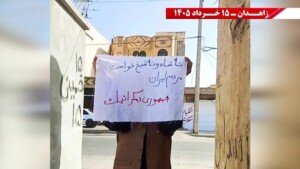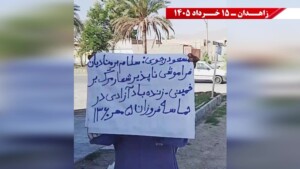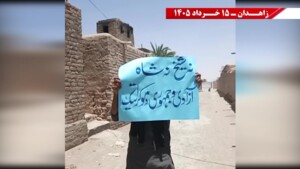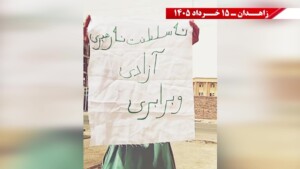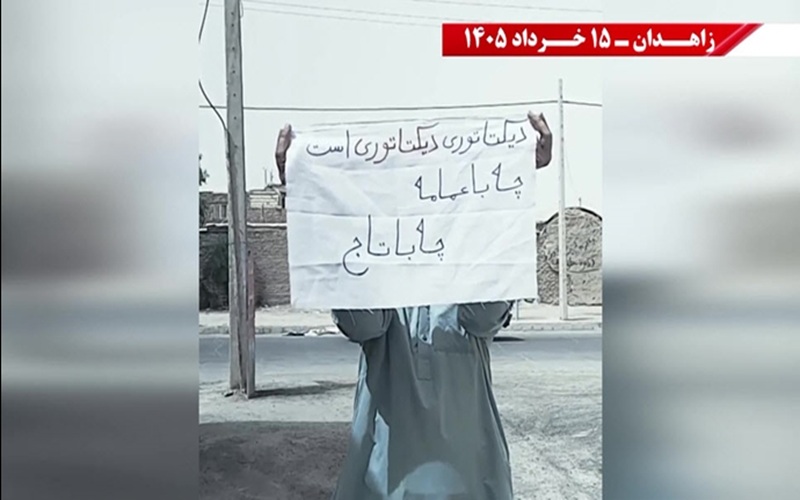

Activists in Sistan and Baluchestan display anti-regime messages and promote the slogan “No to Shah, No to Mullahs” as part of continuing nationwide resistance activities.
ZAHEDAN – June 6, 2026 — Resistance Units in Zahedan carried out a new round of political activities on Friday, June 6, as part of ongoing nationwide efforts to challenge Iran’s ruling establishment and promote the vision of a democratic republic.
According to reports from the city, activists displayed banners and posted messages in public areas condemning the clerical regime and reaffirming support for organized resistance against the ruling system. The activities coincided with similar actions reported by Resistance Units across different regions of Iran.
The messages highlighted opposition to both the current religious dictatorship and any return to monarchical rule, reflecting the movement’s longstanding slogan: “No to Shah, No to Mullahs.” Participants emphasized that Iran’s future should be determined by the Iranian people through democratic governance rather than by either hereditary or religious forms of authoritarian rule.
Condemnation of Clerical Rule
During the campaign, activists displayed quotations and messages attributed to Iranian Resistance leaders that criticized the legacy of both Ruhollah Khomeini and Ali Khamenei, holding them responsible for decades of political repression, executions, and restrictions on fundamental freedoms.
Several messages described the doctrine of Velayat-e Faqih as the root cause of Iran’s political and social crises and called for its complete abolition. Other statements paid tribute to political prisoners, victims of executions, and those who have lost their lives during successive waves of anti-government protests.
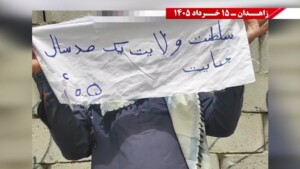
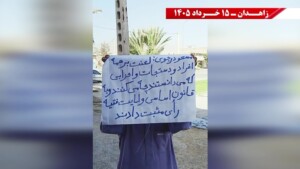
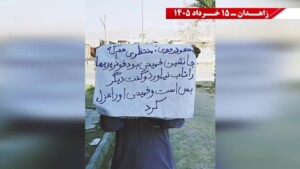
The campaign also referenced historical episodes of repression, including the mass executions of political prisoners and the violent suppression of dissent throughout the past four decades.
“No to Shah, No to Mullahs”
A central theme of the Zahedan activities was the rejection of both the current theocratic system and efforts to revive the former monarchy.
Activists argued that neither model offers a democratic future for Iran and instead promoted the establishment of a democratic republic based on popular sovereignty, political pluralism, and equal rights.
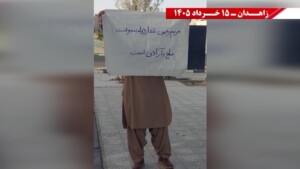
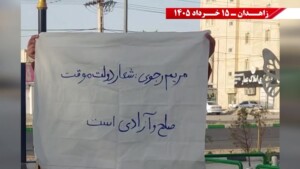
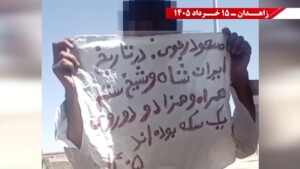
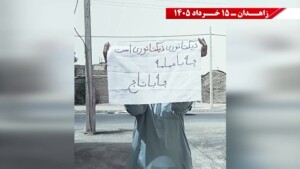
Among the slogans displayed during the activities were calls for freedom, equality, and democratic governance, alongside declarations that dictatorship remains unacceptable regardless of whether it appears in religious or monarchical form.
The slogan “No to Shah, No to Mullahs,” which has become increasingly prominent among supporters of the Iranian Resistance, featured prominently throughout the campaign.
Support for a Democratic Alternative
Participants also highlighted the Iranian Resistance’s proposed democratic alternative, emphasizing principles including political freedom, separation of religion and state, equal rights for women and men, and the establishment of a republic based on free elections.
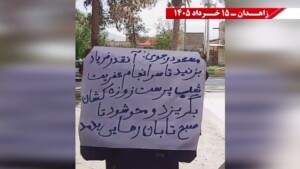
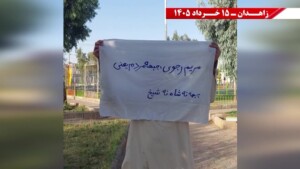
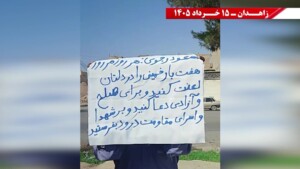
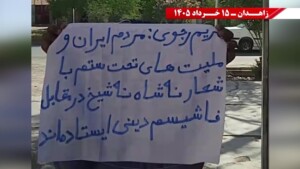
Messages displayed during the activities portrayed the Resistance Units as an important component of organized opposition inside Iran and stressed their role in sustaining anti-regime activism despite ongoing repression.
Activists further expressed support for a transitional process aimed at replacing the current system with democratic institutions founded on the will of the Iranian people.
Continued Resistance in Sistan and Baluchestan
The latest activities in Zahedan underscore the continuing role of Sistan and Baluchestan Province as one of the most active centers of anti-regime sentiment in Iran.
Despite intensified security measures and repeated crackdowns, public expressions of opposition continue to emerge across the province, reflecting broader dissatisfaction with political repression, economic hardship, and discrimination.
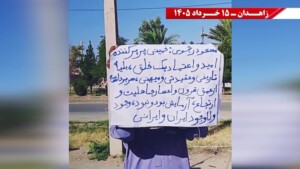
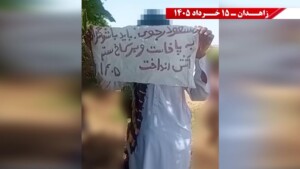
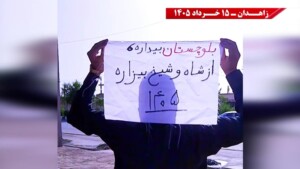
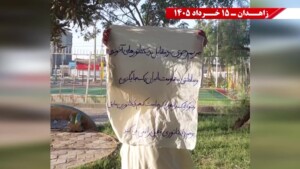
Resistance supporters say their activities will continue until the establishment of freedom, democracy, and popular sovereignty in Iran, while emphasizing that lasting change must come through the organized efforts of the Iranian people themselves.
Friday’s actions in Zahedan were presented as another step in that ongoing struggle, carrying the message that the demand for democratic change remains alive in one of Iran’s most restive regions.