


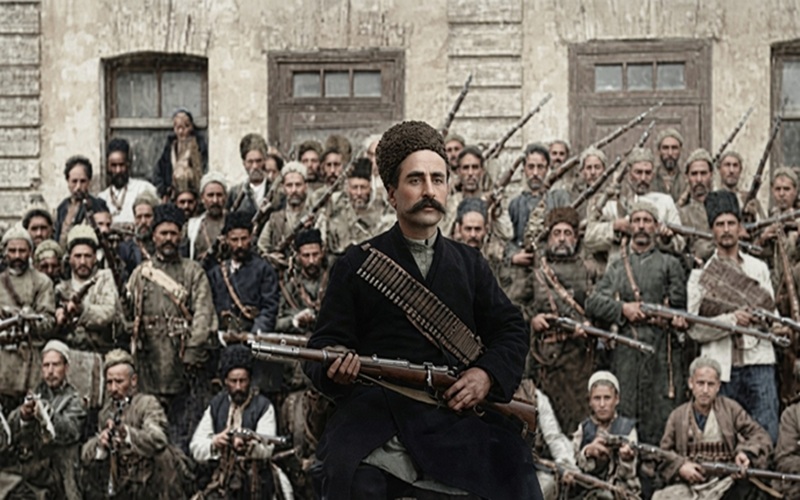

One hundred and twenty years after the Constitutional Revolution, Iran’s history tells a consistent story: every generation has risen against absolute rule, rejecting both monarchical and religious dictatorship in pursuit of freedom, national sovereignty, and democratic governance.
One hundred and twenty years after Iran’s Constitutional Revolution, its central demand remains unresolved: the rejection of absolute power.
The Constitutional Revolution of 1906 was not merely a political upheaval against the Qajar monarchy. It marked the birth of a modern national movement demanding that no ruler should stand above the law. Constitutionalists sought representative government, the rule of law, and limits on arbitrary authority—principles that have shaped every major democratic movement in Iran ever since.
The struggle that began in 1906 did not end with the fall of one dynasty or the rise of another. It continued through the Pahlavi monarchy, survived the establishment of the clerical regime after 1979, and remains alive in the aspirations of millions of Iranians today.
This continuity is particularly significant at a time when some seek to rehabilitate the image of the former monarchy by promoting Reza Pahlavi as Iran’s future leader. A closer reading of Iran’s modern history suggests that the country’s democratic movement has consistently opposed every form of hereditary or absolute rule—not merely one particular regime.
The Constitutional Revolution Was a Revolt Against Absolute Monarchy
The Constitutional Revolution emerged in response to decades of corruption, foreign interference, and unchecked royal authority under the Qajar dynasty.
Its leaders did not simply seek better governance. They sought to replace arbitrary rule with constitutional government.
Among its most celebrated figures was Sattar Khan, whose defense of Tabriz became one of the defining episodes of the revolution.
His words continue to resonate across generations:
“If only one day of my life remains, I will spend that day fighting for Iran’s independence and dignity.”
That statement captured the essence of the Constitutional Revolution. Patriotism was inseparable from freedom. National independence required political liberty, and both demanded resistance to dictatorship.
Sattar Khan famously mocked the Qajar commander Ayn al-Dowleh during the siege of Tabriz, noting that if a prince commanding 30,000 soldiers were defeated by an ordinary man from Qaradagh, history would remember not the prince’s power but his humiliation.
The symbolism remains powerful today. Throughout modern Iranian history, ordinary citizens have repeatedly challenged rulers who claimed unquestionable authority.
The Promise of Constitutional Government Was Betrayed
The Constitutional Revolution established parliament and introduced constitutional limits on royal power.
Yet those gains proved fragile.
In 1925, Reza Shah consolidated power and gradually dismantled many of the constitutional safeguards that had emerged from the revolution. Although his rule introduced modernization in certain sectors, it also restored centralized authoritarian government, severely restricting political freedoms, suppressing opposition, and concentrating power in the monarchy.
The Constitutional Revolution’s vision of accountable government once again gave way to absolute rule.
This pattern would repeat itself decades later under his son, Mohammad Reza Pahlavi, whose increasingly authoritarian rule ultimately fueled the revolutionary unrest that culminated in 1979.
The lesson of modern Iranian history is difficult to ignore: replacing one dynasty with another has never guaranteed liberty.
Mossadegh Revived the Constitutional Spirit
Few political figures embodied the ideals of constitutional government more clearly than Mohammad Mossadegh.
As prime minister, Mossadegh defended both Iran’s sovereignty and parliamentary democracy, insisting that national independence and political freedom were inseparable.
Condemning the extension of the 1933 oil agreement concluded under Reza Shah, Mossadegh declared in Parliament:
“History has never shown someone causing such enormous damage to his own country in a single agreement.”
More fundamentally, he argued:
“A life without freedom and independence is not worth even a penny.”
His words reflected the same principles that had inspired the Constitutional Revolution nearly half a century earlier.
Until his final days, Mossadegh maintained that defending the nation required defending democratic institutions. His removal in the 1953 coup marked another major setback for Iran’s constitutional development.
The Same Struggle Continues Under Clerical Rule
The overthrow of the Shah in 1979 raised hopes that constitutional government might finally emerge.
Instead, the new ruling establishment replaced monarchical absolutism with religious absolutism through the doctrine of Velayat-e Faqih, granting ultimate political authority to an unelected Supreme Leader.
For many Iranians, this represented not the fulfillment of the Constitutional Revolution but another betrayal of its original aspirations.
The institutions changed.
The concentration of power did not.
Over the past four decades, successive waves of protest—from student demonstrations and labor movements to nationwide uprisings—have consistently demanded political accountability, civil liberties, and democratic representation rather than another form of authoritarian rule.
The slogans heard during recent nationwide protests reflect this historical continuity. Increasingly, demonstrators have rejected both the current theocracy and attempts to restore hereditary monarchy, insisting that Iran deserves neither clerical rule nor royal dictatorship.
“Neither Shah Nor Mullah”
This historical experience explains why the slogan “Neither Shah nor Mullah” has become increasingly significant within Iran’s democratic opposition.
It rejects the notion that the country’s future lies in choosing between two authoritarian traditions.
Instead, it argues that the struggle launched in 1906 remains unfinished until Iran achieves a genuinely democratic republic founded upon popular sovereignty, free elections, the rule of law, and the separation of religion from the state.
For supporters of this vision, the debate is not between different rulers but between fundamentally different systems of government.
The issue is not who occupies the throne—or the office of Supreme Leader—but whether absolute power itself continues to exist.
History Offers a Clear Warning
The Constitutional Revolution reminds us that Iran’s democratic movement has never been a struggle simply against one dynasty or one ideology.
It has been a struggle against dictatorship itself.
From Sattar Khan defending constitutional government in Tabriz, to Mossadegh resisting both foreign domination and domestic authoritarianism, to today’s generation confronting religious dictatorship, each chapter reflects the same aspiration: a government accountable to its citizens rather than one claiming authority by birth, divine mandate, or inherited privilege.
One hundred and twenty years after the Constitutional Revolution, that aspiration remains remarkably consistent.
Iran’s modern history suggests that lasting freedom will not come through restoring a crown or preserving a turban. It will come only by fulfilling the unfinished promise first articulated in 1906: that sovereignty belongs to the people, that no individual stands above the law, and that Iran’s future should be determined by its citizens—not by hereditary rulers or absolute clerical authority.