


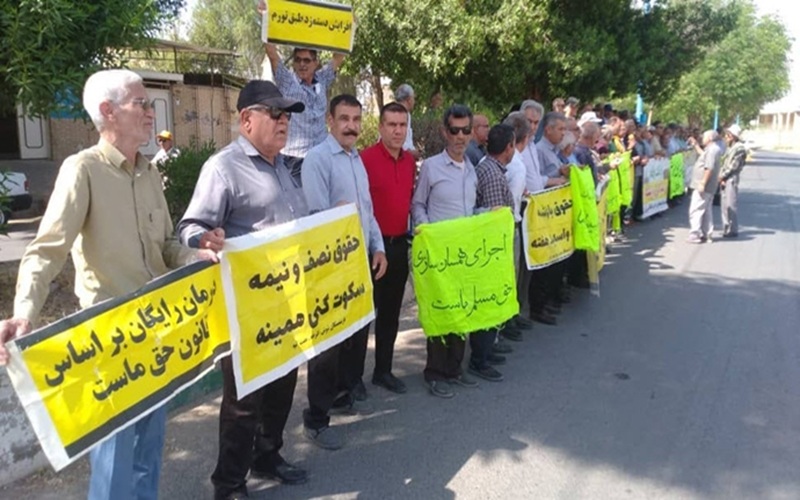

Mounting inflation, unemployment, repression, and war-related destruction have intensified the structural crises facing Iran, raising concerns about renewed nationwide unrest and the regime’s ability to maintain control.
As Iran enters a fragile post-war period, the ruling clerical regime is confronting a convergence of economic, social, and political crises that threaten to deepen instability across the country. Analysts warn that the factors that fueled previous nationwide uprisings—including poverty, inflation, unemployment, and public anger toward the regime—have not only remained unresolved but have intensified in the aftermath of war.
The Iranian regime now faces the challenge of navigating what many observers describe as a tense and uncertain peace, while struggling with severe economic damage, growing social dissatisfaction, and increasing pressure from a population that has repeatedly demonstrated its willingness to protest against dictatorship and corruption.
War Damage Adds to an Already Fragile Economy
The conflict has significantly worsened an economy that was already suffering from years of mismanagement, corruption, sanctions, and the regime’s costly regional interventions.
Experts estimate that the damage inflicted on Iran’s economy and infrastructure has reached hundreds of billions of dollars. Critical sectors, including industry, energy production, housing, education, and manufacturing, have sustained substantial losses. Even if sanctions are eased and foreign investment becomes available, many economists believe the scale of destruction will prevent any rapid recovery.
The regime’s hopes for economic stabilization largely depend on obtaining access to foreign capital, technology, and reconstruction resources. However, analysts argue that even significant international concessions would only cover a fraction of the losses accumulated through years of economic decline and recent wartime devastation.
Conditions Behind Nationwide Protests Have Worsened
Perhaps the greatest concern for Tehran is the persistence of the social and economic grievances that have repeatedly triggered nationwide protests.
The conditions that led to the bloody January uprising and other anti-regime demonstrations remain firmly in place. Inflation continues to erode living standards, unemployment remains widespread, and millions of Iranians struggle to meet basic needs.
The situation has been further aggravated by internet restrictions and communication disruptions that have damaged businesses and employment opportunities across the country. Economic experts estimate that millions of jobs have been directly or indirectly affected by these policies, adding further pressure on households already facing severe financial hardship.
Many observers note that the temporary sense of national unity created during wartime is unlikely to survive once attention shifts back to domestic realities. As economic hardships become increasingly visible, latent political and social tensions may once again surface.
Rising Poverty and Growing Public Health Concerns
The deterioration of living conditions has become increasingly evident across Iran.
Food inflation has reached alarming levels, placing essential goods beyond the reach of many families. Health professionals have raised concerns about the growing impact of malnutrition, particularly among children and low-income households.
Reports indicate that many families have been forced to reduce consumption of essential food items, including dairy products and protein sources, due to rising prices. Experts warn that the long-term consequences could include increased rates of malnutrition and other health-related problems among vulnerable populations.
These developments further illustrate the widening gap between the regime’s official claims and the everyday reality experienced by ordinary Iranians.
Repression Intensifies as Fear of Dissent Grows
Rather than addressing the root causes of public dissatisfaction, the regime has responded with increased repression.
Since the latest wave of nationwide protests, authorities have expanded their use of security measures, including harsher surveillance, broader legal restrictions, confiscation of opponents’ property, and intensified crackdowns on political dissent.
Human rights advocates have repeatedly warned about a rise in executions, arbitrary arrests, and politically motivated prosecutions. The regime’s continued reliance on repression reflects growing concern among its leadership about the possibility of renewed unrest.
The ruling establishment appears determined to preserve its grip on power through coercion rather than reform, despite mounting evidence that public frustration continues to grow.
Structural Failure at the Heart of the Crisis
Beyond sanctions and wartime damage, many analysts identify a deeper problem: the regime’s system of governance itself.
Economic decision-making in Iran is frequently driven by political calculations, factional interests, and directives from unelected centers of power rather than transparent legal and institutional frameworks. This pattern has discouraged investment, weakened economic confidence, and contributed to chronic inefficiency.
As a result, even potential economic openings may prove insufficient unless accompanied by fundamental political and structural changes.
A Regime Confronting an Uncertain Future
The post-war period presents a critical test for the Iranian regime. If economic isolation continues and reconstruction efforts fail to materialize, the destruction caused by conflict could become a permanent feature of daily life rather than a temporary setback.
For millions of Iranians already burdened by poverty, inflation, unemployment, and repression, the prospect of enduring years of shortages and instability is likely to intensify demands for change.
The regime may seek to portray the end of war as a victory, but the deeper battle it faces is internal. The unresolved economic collapse, growing social discontent, and ongoing repression suggest that the conditions driving resistance and protest remain alive—and may become even more explosive in the months ahead.