


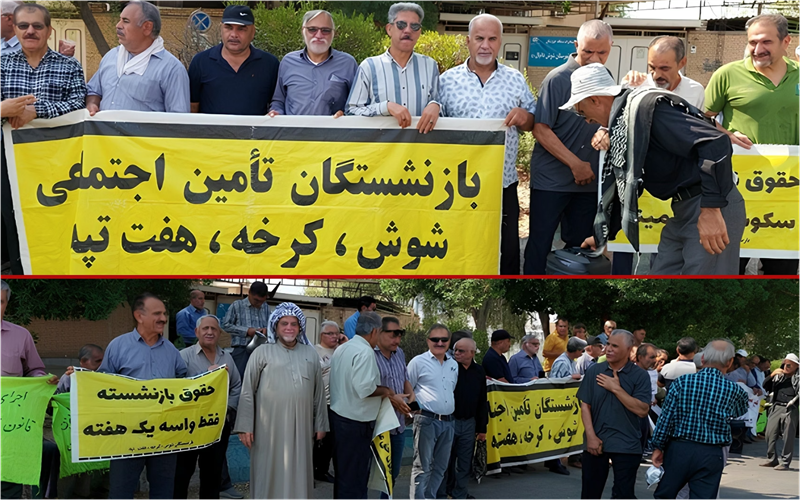

Retirees take to the streets in temperatures exceeding 50°C, denouncing low pensions, rising prices, collapsing public services, corruption, and the regime’s costly war policies.
Retirees take their grievances to the streets
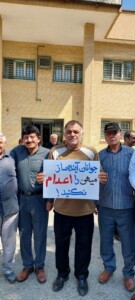
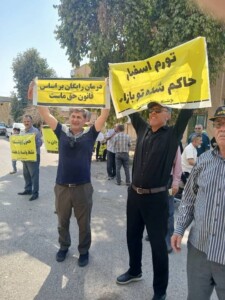
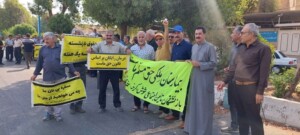
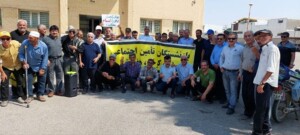
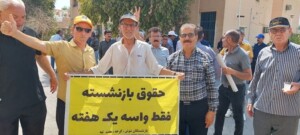
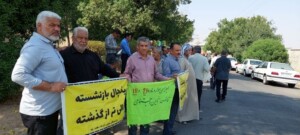
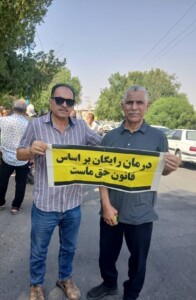
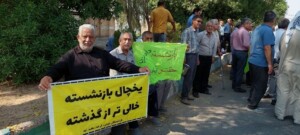
Retired workers and pensioners in Shush, Khuzestan Province, took to the streets on Sunday, August 9, protesting against worsening living conditions, inflation, discrimination, corruption, and the policies of the Iranian regime.
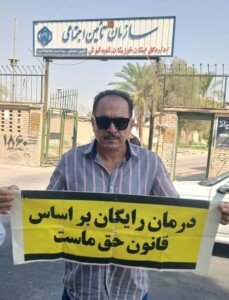
The retirees gathered and marched in front of the Social Security Organization office, demanding action over inadequate pensions, soaring prices, declining purchasing power, and the deterioration of essential public services.
Their protest came as temperatures in Khuzestan exceeded 50 degrees Celsius, underscoring the determination of the demonstrators to continue pressing their demands despite extremely harsh conditions.
The protest was not limited to economic grievances. The retirees also condemned the regime’s policies, corruption, embezzlement, and what they described as the squandering of the country’s resources while ordinary people struggle to afford basic necessities.
“We no longer want war”
One of the most prominent slogans heard during the demonstration was:
“We no longer want war; we don’t want ‘True Promise.’”
The slogan reflects growing public anger over the diversion of national resources toward the regime’s military and regional policies while households face rising food, housing, healthcare, and education costs.
By explicitly linking their economic hardship to government priorities, the retirees turned their demonstration into a broader protest against the regime’s political and economic direction.
Other slogans included:
- “We have neither money nor bread; damn this inflation.”
- “Neither parliament nor government cares about the people.”
- “The treasury and public funds have become a playground for thieves.”
- “A high-income country—what has happened to you?”
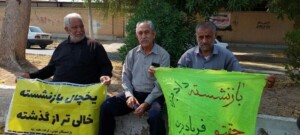
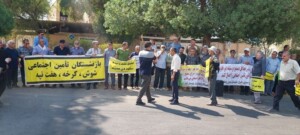
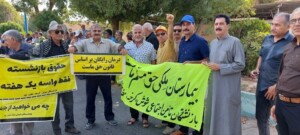
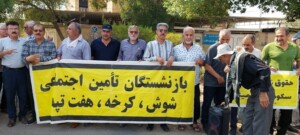
These slogans reveal a central contradiction at the heart of the retirees’ grievances: Iran possesses substantial natural and economic resources, yet large sections of its population are struggling to meet basic needs.
Pensions no longer cover basic needs
Retirees repeatedly emphasized that their pensions are insufficient to cover even a fraction of their monthly expenses.
Among the slogans was:
“A retiree’s pension lasts only one week.”
The statement captures the widening gap between pensions and the cost of living. Persistent inflation has eroded the purchasing power of fixed incomes, leaving retirees particularly vulnerable because many depend almost entirely on their pensions.
The protesters also condemned the growing cost of healthcare and what they described as the commercialization of medical treatment and education.
For elderly citizens already facing higher healthcare needs, rising medicine and treatment costs can turn inadequate pensions into a direct threat to their well-being.
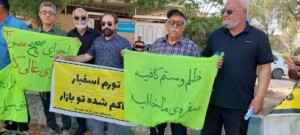
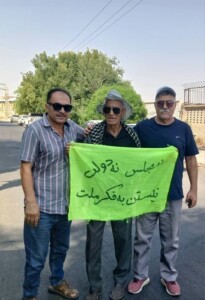
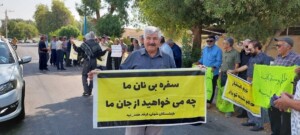
“Our empty tables brought us to the streets”
Food insecurity and declining household purchasing power were central themes of the demonstration.
Retirees chanted:
“Enough oppression and injustice; our table is empty.”
and:
“Our table has no bread; what more do you want from our lives?”
These slogans point to a broader social crisis in which inflation is not simply an economic statistic but a daily reality affecting access to food and other necessities.
The protesters also accused government officials of ignoring their conditions while corruption and the alleged looting of public wealth continue.
Another slogan summarized their anger:
“They emptied Social Security and made us miserable.”
The reference to Social Security is particularly significant because retirees depend on the organization for pensions and healthcare coverage. Their accusations therefore directly target the institutions responsible for providing basic social protection.
Protesters reject official promises
The retirees also expressed deep distrust toward government institutions.
They chanted:
“Neither parliament nor government—they don’t care about the people.”
and:
“An appointed government, it lies through and through.”
Such slogans demonstrate that the protesters are no longer merely demanding adjustments to pensions or benefits. Their grievances increasingly encompass the broader system of governance and the failure of state institutions to address the country’s economic and social problems.
Another slogan stated:
“From Khuzestan to Gilan, death to these managers.”
This reflects the geographic breadth of the frustration expressed by retirees, who see their problems as part of a nationwide crisis rather than an isolated local issue.
A broader protest movement
The Shush demonstration is part of a continuing wave of protests by retirees and pensioners across Iran.
Retirees have repeatedly taken to the streets in recent years to demand adequate pensions, healthcare coverage, payment of outstanding benefits, and protection against inflation.
Their persistence is significant because pensioners represent a social group that has spent decades working within Iran’s public and economic institutions. Their protests therefore expose the failure of the system to provide economic security even to people who have completed their working lives.
The slogans heard in Shush also demonstrate how economic protests increasingly intersect with broader political and social grievances.
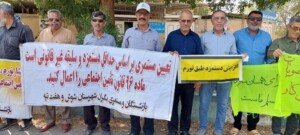
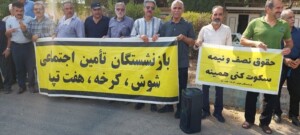
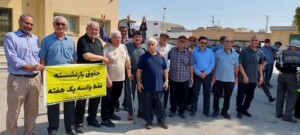
The protesters condemned corruption, inequality, war policies, executions, and the government’s failure to protect the population from economic hardship.
Among the slogans was also a direct appeal:
“Do not execute the young people who will build the future of our homeland.”
This demonstrates that the retirees’ demands extend beyond their own pensions and living conditions. They are also expressing opposition to the regime’s broader campaign of repression.
A protest under extreme heat
The fact that the demonstration took place as temperatures in Khuzestan exceeded 50°C adds another dimension to the protest.
Despite their age and the severe weather, the retirees gathered in front of the Social Security Organization and marched through the streets.
Their presence sends a clear message: promises and official statements have failed to resolve their problems, and they intend to continue protesting until their demands are addressed.
Their central message was expressed in another slogan:
“Only in the streets can we get our rights!”
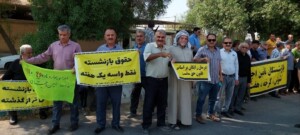
For Iran’s retirees, the streets have increasingly become the only arena in which they believe their grievances can be heard.
The Shush demonstration therefore illustrates two crises unfolding simultaneously: the economic collapse confronting ordinary Iranians and the growing loss of trust in the institutions of the Iranian regime.
As inflation erodes pensions, healthcare becomes increasingly unaffordable, and public resources remain at the center of accusations of corruption and mismanagement, retirees are refusing to remain silent.
Their protests show that economic hardship is increasingly transforming into broader social and political dissent—and that even under extreme heat, Iran’s protesters continue to take their demands to the streets.