


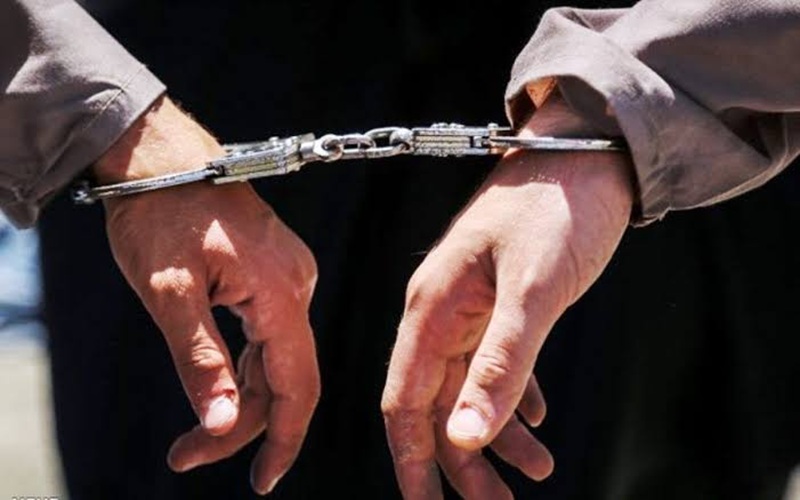

New arrests, violent prison raids, torture allegations, sham trials, and inhumane detention conditions reveal the Iranian regime’s continuing campaign to silence political dissent and intimidate supporters of the PMOI/MEK.
The Iranian regime is intensifying its campaign of repression against political opponents, PMOI/MEK supporters, and their families as it confronts growing social discontent and resistance across the country.
Recent reports reveal a pattern extending far beyond individual arrests. Arbitrary detention, enforced disappearance, violent prison raids, torture, solitary confinement, sham judicial proceedings, and collective punishment are being used simultaneously across Iran’s prisons and detention centers.
The latest cases indicate that the regime is seeking to suppress dissent not only through executions, but also through a broader system of intimidation designed to isolate political prisoners and prevent their voices from reaching the outside world.
Detainees held incommunicado
At least 11 people arrested between May and July 2026 remain without reliable information about their whereabouts or conditions, raising serious concerns about torture and other forms of ill-treatment during interrogation.
Those identified include:
- Abolhasan Gholamreza-Nasab, 42, from Sarbaz, a father of one, arrested in Bam in May.
- Ali-Akbar Karimi, 42, from Chenaran, an electrician and father of two, arrested in Chenaran in May.
- Amir-Hossein Baddaghi, 21, a student at Tabriz University from Khoy, arrested in Urmia in May.
- Mahmoud-Ali Arab, 20, from Azadshahr in Golestan Province, arrested in May.
- Ehsan Sahraei, 45, from Shahreza and father of two, arrested in May.
- Alireza Dahmardeh, 18, from Ziba Shahr in Zahedan, arrested in June.
- Javad Behzadi, 34, a tiler and father of two from Firuzabad, Fars Province, arrested in Bushehr in June. His brother, Ehsan Behzadi, 29, is also imprisoned.
- Ghazal Sayyadi, 38, from Tehran, arrested in Andisheh in July.
- Ashkan Mortazavi, 38, from Sarpol-e Zahab and residing in Mohammadshahr, Karaj, arrested in Karaj in July.
- Benjamin Obaydi, 41, from Masal, Gilan Province, a PhD holder in art and father of one, arrested in Masal in July.
- Amir-Aslan Mameneh, 20, from Ilam, arrested in July. He had previously been arrested in September 2025.
The absence of information about these detainees is particularly alarming because Iranian authorities have repeatedly been accused of denying prisoners access to lawyers, families, and independent monitors while subjecting detainees to coercive interrogations and torture.
The Iranian Resistance has called on the United Nations, the UN High Commissioner for Human Rights, and the Special Rapporteur on the situation of human rights in Iran to demand information about these detainees and insist on access to their places of detention.
Violent raid on Evin political prisoners
The repression has also intensified inside Iran’s prisons.
On Saturday, August 8, guards at Evin Prison violently raided Halls 3 and 4 of Ward 7 at approximately 11:30 a.m. According to reports, guards beat prisoners while claiming to conduct a search, destroyed their belongings, and confiscated personal property.
The whereabouts and condition of several imprisoned PMOI/MEK supporters remain unknown following the raid, including Ehsan Rostami and Mojtaba Taghavi in Hall 3 and Amirhossein Moradi and Hassan Amidi in Hall 4.
The incident follows another raid on August 1, when guards stormed Hall 2 of Ward 7, beat prisoners, and forcibly removed several PMOI supporters, including Amirhossein Moradi, Ehsan Rostami, Pejman Toobreh-Rizi, and Mojtaba Taghavi.
The repeated assaults demonstrate that political prisoners are being subjected to a coordinated policy of intimidation and collective punishment rather than isolated acts of misconduct by individual prison guards.
Sham trials used to prolong persecution
The regime’s repression also continues through its judiciary.
Political prisoner Parisa Kamali, 39, is scheduled to face another trial on August 10 at Yazd Central Prison on charges of “media propaganda against the regime.”
Kamali was arrested in May 2024 and subsequently sentenced to six years in prison on charges including alleged membership in the PMOI, “acting against national security,” and “destroying public property.” She was later exiled to Yazd Prison as an additional form of punishment.
In a message from prison, Kamali condemned the regime’s use of executions and massacres to spread fear, declaring that political prisoners had moved beyond fear and were instead filled with anger and determination.
Her case illustrates how the Iranian judiciary is used not simply to adjudicate cases, but to prolong the punishment of political prisoners through repeated prosecutions, prison transfers, exile, and additional charges.
Torture and deliberate mistreatment behind prison walls
Other political prisoners are facing severe physical and psychological pressure.
In Ahvaz’s Sheiban Prison, political prisoner Masoud Jamei has reportedly been subjected to harsh treatment after protesting prison conditions. Authorities transferred him to solitary confinement without adequate cooling facilities during the extreme heat in Ahvaz.
Jamei had previously been placed in solitary confinement in July for protesting the same conditions.
He was arrested in 2023 alongside Farshad Etemadifar and Alireza Mardasi. In July 2025, a regime court in Ahvaz sentenced the three men to death twice, along with an additional year in prison, on charges including “Moharebeh,” “assembly and collusion against national security,” alleged membership in the PMOI, and propaganda against the regime.
The use of solitary confinement under extreme heat, particularly against a prisoner already protesting prison conditions, raises serious concerns about deliberate physical punishment and cruel treatment.
Prisoners beaten for exposing abuses
In Lakan Prison in Rasht, prison guards reportedly severely beat Hamzeh Darvish, a Sunni prisoner, after he exposed conditions inside the prison.
The assault was reportedly so severe that fellow prisoners had to carry his semi-conscious body on a stretcher to the prison dispensary.
Such attacks serve a broader purpose: preventing prisoners from documenting or exposing conditions inside Iran’s notoriously opaque prison system.
When prisoners who speak about abuse are themselves beaten or placed in isolation, the authorities effectively create an environment in which torture and mistreatment can continue without scrutiny.
Signal jammers used against prisoners
In Ghezel Hesar Prison, authorities have reportedly installed powerful signal jammers in Unit 2 following a successful hunger strike involving approximately 1,500 prisoners.
The jammers have reportedly disrupted communications while also causing dizziness, nausea, and severe physical discomfort among prisoners.
Rather than addressing the grievances that prompted the hunger strike, the authorities appear to have responded by restricting prisoners’ ability to communicate and organizing an additional layer of pressure inside the prison.
The measure highlights the regime’s reliance on technological as well as physical repression to isolate prisoners from the outside world.
A system built on fear and impunity
The latest reports point to a consistent pattern across Iran’s detention system.
The regime is simultaneously:
- Arresting political opponents and young people without providing information about their whereabouts;
- Holding detainees incommunicado, creating fears of torture and enforced disappearance;
- Raiding political-prisoner wards and physically assaulting inmates;
- Destroying and confiscating prisoners’ personal belongings;
- Using solitary confinement and deliberately harsh conditions as punishment;
- Bringing repeated charges against political prisoners through opaque judicial proceedings;
- Imposing death sentences on political prisoners;
- Beating prisoners who expose abuses;
- Restricting communication from prisons; and
- Applying collective punishment against prisoners engaged in protests or hunger strikes.
These measures are not merely prison-management failures. Taken together, they represent a systematic effort to suppress political dissent and prevent prisoners from becoming centers of resistance.
The continuing executions reported across Iran reinforce the same strategy. Capital punishment, arbitrary detention, torture, and prison abuses function as interconnected tools of political repression.
International action is urgently needed
The growing number of cases underscores the need for independent international scrutiny of Iran’s prisons.
The Iranian Resistance has called on the UN Human Rights Council, the UN High Commissioner for Human Rights, the Special Rapporteur on Iran, and other international human rights organizations to condemn the treatment of political prisoners and establish an international fact-finding mission to visit Iranian prisons.
Such a mission should have unrestricted access to detention facilities and be permitted to meet privately with prisoners, particularly those facing execution, torture, prolonged solitary confinement, or incommunicado detention.
The fate of detainees whose whereabouts remain unknown must also be urgently established.
The Iranian regime has repeatedly demonstrated that domestic mechanisms are incapable of providing meaningful protection for political prisoners. Its judiciary and security institutions are themselves central components of the repression.
As arrests, executions, and prison abuses continue, international silence risks reinforcing the regime’s sense of impunity. The cases emerging from Evin, Sheiban, Lakan, Ghezel Hesar, and detention centers across Iran show that the campaign of repression remains active—and that political prisoners continue to pay the highest price for challenging a system determined to preserve its power through fear.