


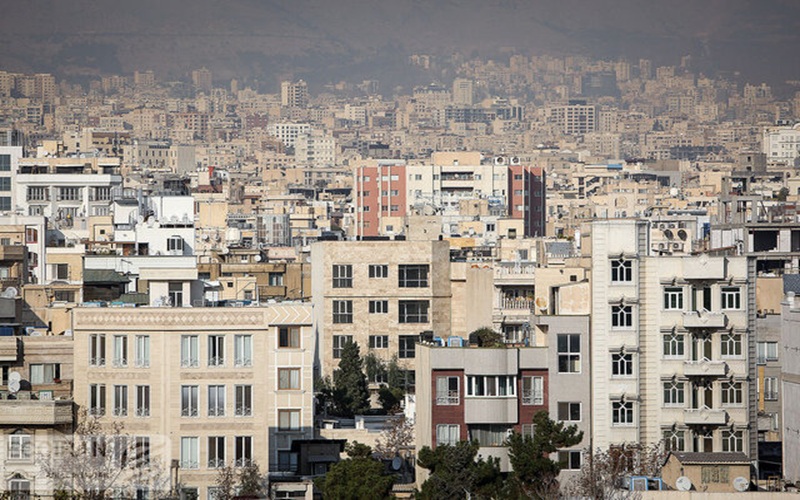

Already burdened by soaring rents, housing shortages, and structural corruption, Iran’s housing market has been pushed into a new phase of crisis by war damage, delayed reconstruction, and mounting pressure on low-income families.
Long before the recent war, Iran’s housing sector was one of the country’s most severe economic and social challenges. For millions of tenants and low-income households, securing affordable housing had become increasingly difficult amid years of high inflation, declining purchasing power, and chronic shortages.
The aftermath of the recent conflict has intensified those problems. Damage to residential neighborhoods, the displacement of families, increased demand for rental housing, and slow reconstruction efforts have placed additional strain on a market that was already under immense pressure.
As a result, housing affordability has become an even greater concern for millions of Iranians struggling to cope with a worsening cost-of-living crisis.
Rental Inflation Continues to Outpace Household Incomes
According to the latest official figures, annual rent inflation in Iran has exceeded 33 percent, while year-on-year rental inflation stands at approximately 31 percent.
Although these figures remain below the country’s overall inflation rate, they represent a significant financial burden for households whose wages have failed to keep pace with rising living costs.
Official statistics also continue to identify housing, water, electricity, gas, and other utilities as one of the largest components of household spending, accounting for more than one-third of the average family’s expenditures.
For millions of renters, housing costs now consume an increasingly unsustainable share of monthly income.
Many Families Spend Most of Their Income on Rent
Economic studies and official assessments indicate that tenants in many of Iran’s major cities now spend between 50 and 70 percent of their monthly income on rent alone.
This leaves little money for essential expenses such as food, healthcare, education, and transportation.
For many households, homeownership has become unattainable, while even renting modest accommodation is increasingly beyond reach.
Housing, once regarded as a basic social necessity, has increasingly become a privilege available only to those with substantial financial resources.
Housing Shortage Exists Alongside Millions of Empty Homes
Iran’s housing crisis is not simply the result of insufficient construction.
Government officials and housing experts have repeatedly acknowledged that the country faces a shortage of several million residential units.
At the same time, census data indicate that more than 2.5 million homes remain vacant, while over 2 million additional properties are classified as second homes.
Analysts argue that many of these properties have been removed from the residential market due to speculation, land hoarding, and investment practices that prioritize financial returns over housing needs.
The coexistence of widespread housing shortages and millions of unused residential units highlights the structural distortions affecting Iran’s property market.
War Added New Pressure to an Already Fragile Market
The recent conflict further destabilized the housing sector.
Residential buildings in Tehran, Kermanshah, Tabriz, Isfahan, and several other cities were damaged or destroyed during military strikes.
Many families—particularly tenants—lost not only their homes but also much of their personal property and household belongings.
Numerous displaced residents were forced to seek temporary shelter with relatives or move into emergency accommodations.
Weeks after the fighting ended, however, reconstruction efforts remain slow, while compensation programs have reportedly progressed with significant delays and uncertainty.
Many affected families continue to live without clear information regarding rebuilding assistance or financial support.
Rental Market Tightens Further
The arrival of displaced families into the rental market has intensified competition for available housing.
Combined with limited supply and continuing price increases, the additional demand has made finding affordable accommodation increasingly difficult.
For many renters, relocating no longer means improving their living conditions. Instead, it often requires moving to smaller apartments, less developed neighborhoods, or districts farther from workplaces and schools.
This growing displacement is reshaping urban living patterns while placing additional burdens on already vulnerable households.
Structural Problems Continue to Drive the Crisis
Housing specialists argue that Iran’s current crisis cannot be explained solely by war or resource shortages.
Decades of structural corruption, land speculation, weak housing policies, declining purchasing power, and ineffective regulation have steadily transformed housing from a basic necessity into a speculative investment asset.
Even during periods of increased oil revenues and improved foreign income—including the years following the 2015 nuclear agreement—the country’s housing affordability continued to deteriorate.
The result has been widening inequality between those able to accumulate property wealth and millions of households increasingly priced out of the market.
Housing Crisis Reflects Broader Governance Challenges
The country’s housing emergency has evolved beyond a purely economic issue.
For many observers, it has become a reflection of broader governance problems, including corruption, rent-seeking, policy failures, and the unequal allocation of national resources.
Until those underlying structural issues are addressed, experts warn that reconstruction following the recent war is likely to remain slow and uneven, while millions of tenants and low-income families will continue to face mounting financial pressure and increasing housing insecurity.
Rather than creating Iran’s housing crisis, the recent conflict has exposed and intensified weaknesses that have been developing for decades—turning an already severe challenge into one of the country’s most urgent social and economic problems.