


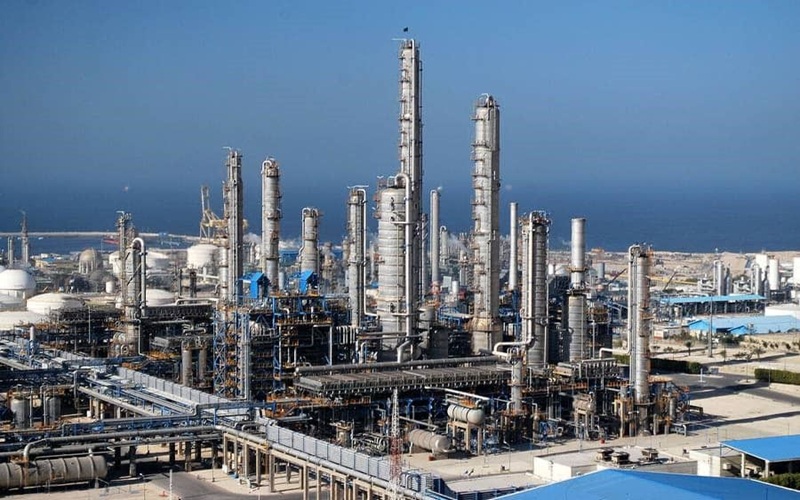

Despite possessing the world’s second-largest natural gas reserves, Iran faces chronic blackouts, industrial shutdowns, and mounting public frustration—a crisis rooted not in resource scarcity but in decades of corruption, mismanagement, and misplaced political priorities.
Few countries illustrate the consequences of poor governance more vividly than Iran. Despite possessing the world’s second-largest proven natural gas reserves and some of the largest oil resources on Earth, the country continues to experience chronic electricity shortages that disrupt daily life, cripple industrial production, and deepen public dissatisfaction.
In theory, a country so richly endowed with fossil fuel resources should have little difficulty supplying reliable electricity to its citizens. Yet millions of Iranians endure rolling blackouts every summer—and increasingly during winter months as well. Factories reduce production, businesses suffer financial losses, hospitals and public services operate under increasing strain, and households are forced to adapt to routine power outages.
This contradiction is no accident. Iran’s electricity crisis is not the result of insufficient natural resources. It is the product of decades of structural corruption, chronic underinvestment, economic isolation, and a political system that has consistently prioritized ideological and military ambitions over national infrastructure.
A Growing Gap Between Supply and Demand
For years, electricity demand in Iran has grown steadily, driven by population growth, urbanization, industrial expansion, and rising summer temperatures.
Successive governments under the Iranian regime failed to match this growth with adequate investment in generation capacity and grid modernization.
According to assessments by the U.S. Energy Information Administration (EIA) and Iranian energy experts, electricity shortages reached roughly 12 gigawatts during peak summer demand in recent years. Domestic projections now warn that the supply deficit could exceed 20 gigawatts if current trends continue.
Officially, Iran possesses approximately 95 gigawatts of installed generating capacity. In practice, however, the country’s operational capacity is significantly lower. Aging equipment, delayed maintenance, fuel constraints, and technical failures mean that only around 70–75 gigawatts are reliably available during periods of peak demand.
The gap between nominal capacity and actual production reflects a broader reality: decades of neglected investment have steadily eroded the resilience of Iran’s electricity system.
Infrastructure Neglected While Billions Were Spent Elsewhere
Electricity infrastructure requires continuous modernization. Power plants must be upgraded, transmission lines expanded, substations replaced, and new technologies integrated to meet growing demand.
Iran has largely failed on every front.
Over the past two decades, electricity consumption has increased by roughly four to six percent annually. Yet numerous power plant projects have suffered years of delays or remain unfinished due to financial mismanagement, bureaucratic inefficiency, and political interference.
The Sirik Combined Cycle Power Plant in Hormozgan Province has become emblematic of this dysfunction. Announced as one of the country’s flagship energy projects, it has faced repeated delays stemming from funding shortages, contractual disputes, and administrative failures.
Meanwhile, enormous oil and gas revenues that could have modernized Iran’s energy infrastructure were instead directed toward military spending, security institutions, regional proxy operations, and opaque state-controlled economic networks.
The opportunity cost has been immense.
Many of Iran’s thermal power plants are now more than three decades old. Official statistics place their average efficiency at approximately 39 percent—well below the performance of modern combined-cycle facilities operating in many developed economies.
Older plants consume more fuel while producing less electricity, increasing both operating costs and environmental pollution.
An Aging Grid Wastes Precious Electricity
The problems extend beyond electricity generation.
Iran’s transmission and distribution network suffers from years of inadequate maintenance and insufficient modernization. Technical losses remain significantly higher than international best practices, with estimates placing grid losses at around 10 to 13 percent of generated electricity.
In advanced electricity systems, transmission losses often remain below six percent.
Every percentage point lost represents electricity that never reaches consumers despite the fuel burned to produce it. Reducing these losses would effectively create additional generating capacity without constructing a single new power plant.
Yet modernization has repeatedly been postponed.
Energy Subsidies Without Structural Reform
Iran’s heavily subsidized electricity pricing has long complicated investment in the energy sector.
Artificially low tariffs discourage efficiency, reduce the financial viability of utility companies, and leave insufficient resources for maintenance and expansion. While affordable energy remains important for protecting households, subsidy policies have often been implemented without broader structural reforms, leaving the electricity sector chronically underfunded.
Inflation, currency depreciation, and international sanctions have further increased the cost of importing advanced equipment and financing infrastructure projects, exacerbating existing weaknesses rather than creating them.
Cryptocurrency Mining Became a Symbol of Unequal Governance
Cryptocurrency mining has become one of the most controversial aspects of Iran’s electricity debate.
Authorities have repeatedly attributed portions of the country’s electricity shortages to unauthorized cryptocurrency mining operations. Illegal mining certainly places additional pressure on the grid.
However, public debate has increasingly focused on reports that some large-scale mining facilities allegedly benefited from preferential access to subsidized electricity and political protection while ordinary households and manufacturers bore the burden of electricity rationing.
Whether or not every allegation can be independently verified, the controversy reflects a broader crisis of public trust. Many Iranians believe that politically connected institutions enjoy privileged access to scarce national resources while ordinary citizens pay the price through blackouts and rising living costs.
Renewable Energy Remains an Untapped Opportunity
Perhaps the greatest paradox is Iran’s failure to exploit its extraordinary renewable energy potential.
Large parts of the country receive some of the highest levels of solar radiation in the Middle East, while numerous regions possess significant wind resources capable of supporting utility-scale renewable generation.
Nevertheless, renewable energy continues to account for only a very small share of Iran’s electricity production. Despite repeated government announcements and investment plans, solar and wind development has remained far behind neighboring countries that have invested aggressively in clean energy over the past decade.
Instead of diversifying its energy mix and reducing pressure on aging thermal plants, Iran remains overwhelmingly dependent on natural gas-fired generation.
This dependence has created additional vulnerabilities. During winter months, competition between residential heating demand and electricity generation frequently forces authorities to reduce fuel supplies to power plants, increasing the risk of electricity shortages even outside the summer peak season.
A Crisis of Governance, Not Resources
The Iranian regime frequently attributes electricity shortages to rising consumption, unusually hot weather, drought, or international sanctions.
These factors undoubtedly influence the severity of the crisis. Climate change has increased cooling demand, drought has reduced hydropower generation, and sanctions have complicated access to foreign investment and advanced technology.
Yet none of these explanations address the fundamental issue.
Countries with far fewer natural resources—and in many cases harsher climates—have successfully expanded electricity production through transparent governance, long-term planning, private investment, and modern infrastructure management.
Iran’s electricity shortages persist because political priorities have consistently outweighed economic ones.
For decades, investment that could have strengthened national infrastructure was diverted elsewhere, while corruption, state monopolies, weak institutional accountability, and policy uncertainty discouraged both domestic and foreign investment in the energy sector.
The result is a country rich in energy resources but increasingly unable to convert those resources into reliable public services.
The recurring blackouts experienced by millions of Iranians are therefore not simply technical failures. They are the visible consequence of a governance model that has prioritized political survival over economic development. Until transparency, accountability, and investment replace corruption and patronage as the guiding principles of economic policy, Iran’s electricity crisis is likely to remain a recurring symbol of the regime’s broader structural failures.