


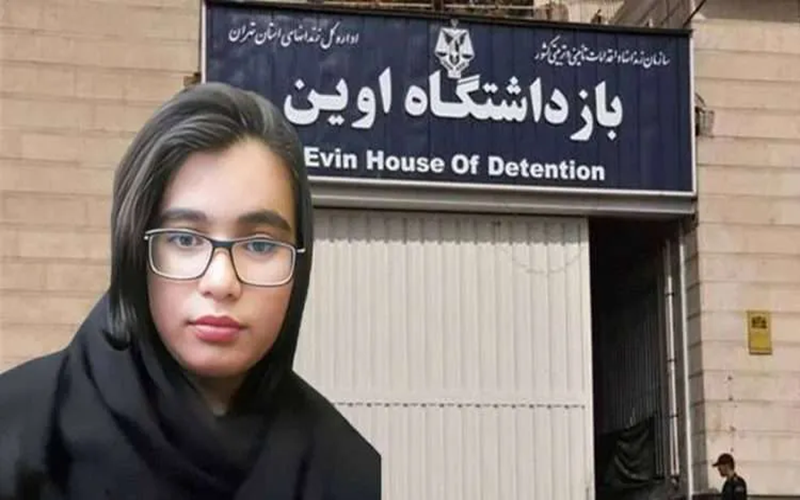

The death sentence against PMOI supporter Arghavan Fallahi has intensified concerns over Iran’s escalating use of capital punishment against political prisoners, with rights advocates urging immediate international intervention before the sentence is carried out.
Iran’s campaign of repression against political dissidents has entered another alarming phase following the reported death sentence handed down to Arghavan Fallahi, a 25-year-old political prisoner and supporter of the People’s Mojahedin Organization of Iran (PMOI/MEK).
According to the National Council of Resistance of Iran (NCRI), Branch 15 of Tehran’s Revolutionary Court, presided over by the notorious Judge Abolqasem Salavati, sentenced Fallahi to death. The ruling was officially communicated to her lawyer on July 1, 2026 (10 Tir 1405).
The NCRI described the verdict as a “criminal sentence” and warned that Fallahi’s life is in immediate danger unless the international community acts swiftly.
Urgent Appeal to the International Community
The NCRI has called on the United Nations, international human rights organizations, and governments worldwide to intervene immediately to prevent the execution.
The organization also renewed its longstanding demand for an independent international fact-finding mission to visit Iranian prisons and meet directly with political prisoners, arguing that increasing numbers of detainees face execution after proceedings that fail to meet basic international legal standards.
Human rights advocates have repeatedly warned that political prisoners in Iran remain at heightened risk amid the regime’s escalating crackdown following recent political and military developments.
Months of Solitary Confinement and Alleged Torture
According to the NCRI, Fallahi was arrested on January 25, 2025, in the city of Parand by Iranian security forces.
She was transferred to Ward 241 of Evin Prison, a high-security section controlled by the Judiciary’s Intelligence Protection Organization.
The report states that she spent approximately five months in solitary confinement, where she was subjected to prolonged interrogations and severe psychological and physical pressure.
Following the evacuation of Evin Prison, she was transferred first to Greater Tehran Penitentiary (Fashafouyeh) and later returned to the women’s ward of Evin Prison.
Throughout her detention, she reportedly remained in prolonged legal uncertainty while facing significant restrictions on communication with the outside world.
Concerns Over Due Process Violations
The NCRI and human rights organizations say Fallahi was denied fundamental legal protections during her detention.
According to the reports, she was deprived of:
- Regular access to legal counsel.
- Consistent communication with her family.
- A fair and transparent judicial process.
There are also allegations that she was subjected to torture and intense pressure to extract forced confessions linking her to the killings of two senior regime judges, Mohammad Moghiseh and Ali Razini.
The allegations have raised further concerns about the use of coerced confessions in politically sensitive cases before Iran’s Revolutionary Courts.
Previously Imprisoned for Political Charges
This is not Fallahi’s first encounter with Iran’s security apparatus.
In November 2022, she and her father, Nasrollah Fallahi, were arrested in Shiraz by security forces.
Following her transfer to Evin Prison, Branch 26 of Tehran’s Revolutionary Court sentenced her to two years in prison on charges of “assembly and collusion” and “propaganda against the regime.”
She completed that sentence and was released before being arrested again in February 2025 under the current case.
Growing Concerns Over Executions of Political Prisoners
Fallahi’s case comes amid increasing international concern over Iran’s growing use of the death penalty against political prisoners and dissidents.
Human rights organizations have repeatedly warned that executions are being used not only as criminal punishment but also as a tool of political intimidation intended to suppress opposition and discourage public dissent.
The NCRI argues that Fallahi’s sentence reflects a broader pattern in which political activists, particularly those accused of links to the PMOI, face severe punishment following prolonged incommunicado detention, allegations of torture, and proceedings lacking internationally recognized standards of due process.
With the death sentence now formally issued, rights advocates say the coming days and weeks may prove decisive. They are urging governments, the United Nations, and international human rights bodies to act immediately, warning that sustained international pressure may be the only means of preventing another execution of a political prisoner in Iran.