



Neither military confrontation nor engagement with the Iran regime offers a lasting solution. A democratic transition must be driven by the Iranian people, organized resistance, and free elections.
For decades, international debate over Iran has been trapped in a false binary. Policymakers and commentators often frame the country’s future as a choice between continued engagement with the Iran regime or escalating pressure to the point of military confrontation. Yet history demonstrates that neither path, on its own, offers a durable solution.
Diplomatic negotiations have periodically reduced tensions, but they have failed to alter the regime’s fundamental behavior. At the same time, foreign military intervention cannot substitute for the political will of the Iranian people. Sustainable democratic change cannot be imposed from outside; it must emerge from within Iranian society.
The Crisis Is Structural, Not Tactical
The roots of Iran’s crisis lie in the nature of the regime itself.
Political power is concentrated in unelected institutions that rely on systematic repression, restrictions on civil society, censorship, and the repeated use of external crises to reinforce domestic control. From the regime’s perspective, meaningful concessions on its nuclear ambitions, regional policies, or political freedoms are not merely policy adjustments—they are potential threats to its own survival.
For this reason, the regime’s intransigence should not always be interpreted as confidence. More often, it reflects fear that genuine reform would expose deep internal fractures and accelerate demands for fundamental political change.
War Cannot Deliver Democracy
Calls for military action regularly re-emerge whenever diplomatic efforts stall. Yet the assumption that weakening the regime militarily would automatically pave the way for democracy is deeply flawed.
Iran is a large, diverse country with complex social, ethnic, and regional dynamics. A broad military conflict would likely devastate infrastructure, displace civilians, deepen economic suffering, and create prolonged instability. As numerous conflicts across the Middle East have demonstrated, the collapse of state institutions does not automatically produce democratic governance.
Moreover, external threats often strengthen authoritarian governments rather than weaken them. The Iran regime has repeatedly used foreign pressure to justify harsher security measures, suppress dissent, and rally loyalist factions under the banner of national defense.
Human Rights Cannot Be Separated from Foreign Policy
The regime’s domestic repression and its regional behavior are two expressions of the same political system.
A government that relies on executions, arbitrary imprisonment, censorship, and systematic violations of civil liberties at home is equally willing to pursue destabilizing policies abroad. Any international strategy that isolates the nuclear issue from the regime’s human rights record addresses only part of the problem.
Recent developments illustrate this reality. The ongoing hunger strike by prisoners in Qezel Hesar Prison, protesting the regime’s escalating use of executions, highlights how capital punishment continues to serve as a primary instrument of political control. The worsening human rights situation is not an unrelated domestic issue—it is central to understanding the regime’s broader conduct.
Ignoring these abuses in favor of narrowly focused negotiations risks granting the regime additional time and legitimacy while repression continues inside the country.
Rejecting Both Theocracy and Hereditary Rule
Iran’s future should not be reduced to a choice between preserving the current theocracy and restoring hereditary monarchy.
A significant segment of Iranian society—particularly the generations that have participated in nationwide protests in recent years—rejects both systems. They seek a political order based on popular sovereignty rather than religious authority or inherited power.
The legitimacy of any future government must derive from free elections, an elected constituent assembly, political pluralism, and the rule of law. No individual should claim authority through bloodline, religious doctrine, military power, or foreign sponsorship.
Organization Matters
Public dissatisfaction with the regime is widespread, but widespread anger alone is insufficient to secure a stable democratic transition.
History demonstrates that spontaneous protests, while powerful, often struggle to produce lasting political change without organization, leadership, and continuity. Sustainable democratic movements require networks capable of preserving communication, coordinating action, and maintaining momentum despite intense repression.
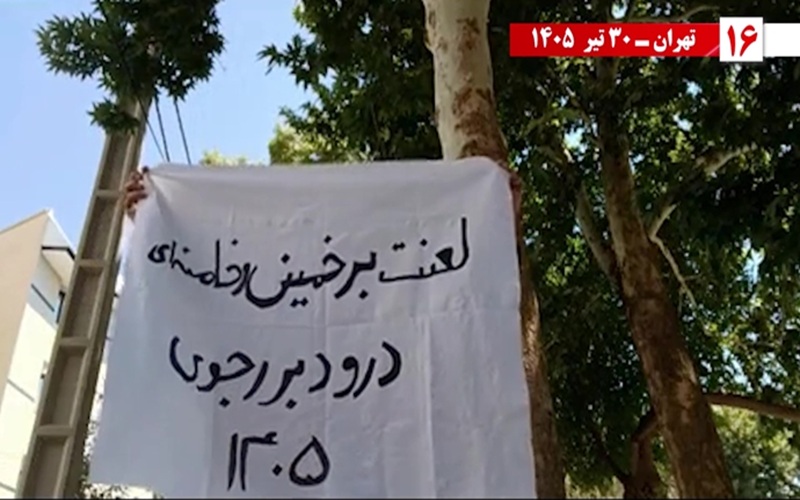
Within this context, the Resistance Units associated with the PMOI/MEK represent an important element of Iran’s political landscape. Operating under extraordinary security pressure, these networks seek to sustain protest activities, facilitate communication among activists, and preserve organizational continuity inside the country.
Like any political movement, they should remain open to scrutiny and public debate. At the same time, the enormous security and propaganda resources devoted by the regime to dismantling these networks reveal an important reality: the regime fears organized opposition far more than isolated acts of dissent.
A Democratic Blueprint Already Exists
One of the most developed proposals for Iran’s democratic transition is the Ten-Point Plan presented by Maryam Rajavi.
The plan advocates a democratic republic founded on universal suffrage, free elections, separation of religion and state, gender equality, judicial independence, respect for human rights, the rule of law, and a non-nuclear Iran living peacefully with its neighbors.
Its significance lies not in demanding unquestioning acceptance but in providing a transparent political framework that can be openly debated by Iranians themselves. Ultimately, sovereignty must belong to the people and to the institutions they freely elect.
The International Community Has a Different Role
The international community should not decide Iran’s political future.
Its constructive role is not to choose rulers but to defend universal principles. That includes holding perpetrators of human rights violations accountable, supporting the free flow of information, protecting civil society, and recognizing the Iranian people’s right to organize peacefully and participate in determining their country’s future.
Regional countries also stand to benefit from a stable, democratic, non-nuclear Iran governed by the rule of law rather than by ideological expansionism and permanent confrontation.
The Third Option
Iran is not condemned to choose between war and appeasement.
Engagement that ignores the rights and aspirations of the Iranian people merely provides the regime with additional time to consolidate repression. Military conflict, meanwhile, risks devastating society without guaranteeing freedom or democratic governance.
There is a third path—one rooted in the agency of the Iranian people themselves. It depends on organized civic resistance, political participation, and a clear democratic roadmap for transition.
The future of Iran should ultimately be decided not on the battlefield or at negotiating tables between foreign powers, but at the ballot box. Only a political system in which no individual or institution stands above the people’s vote—whether in the name of religion, hereditary privilege, or military power—can provide the lasting foundation for peace, stability, and democracy.