


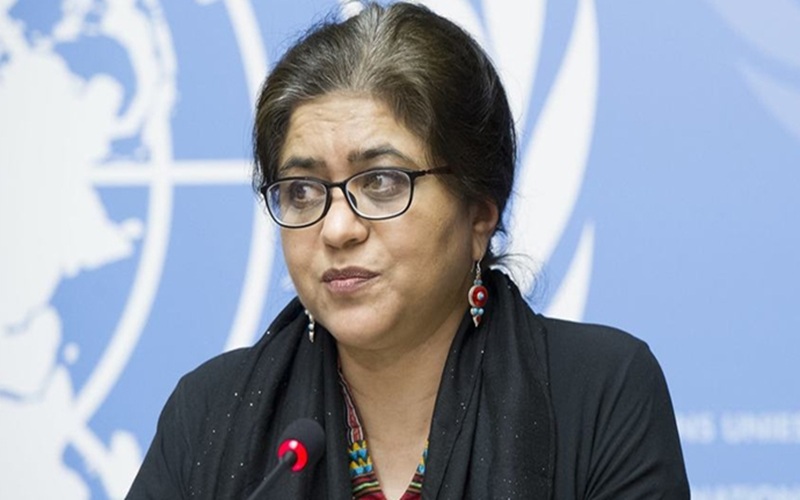

UN investigators warn that families have been summoned for final visits, signaling imminent executions amid an accelerating crackdown on protesters.
The United Nations Independent International Fact-Finding Mission on Iran has issued an urgent appeal to the Iranian regime to immediately halt the execution of 10 young men sentenced to death in connection with anti-regime protests in Isfahan, warning that further executions could be imminent after some families were reportedly summoned for final visits.
The appeal, released on July 23, follows the execution of Erfan Esfandiari, reportedly 18 years old, and Gol Mohammad Mohammadi, a 23-year-old Afghan national, on July 19. UN investigators strongly condemned the executions, describing them as part of a broader pattern of capital punishment used to suppress political dissent.
UN Warns More Executions Are Imminent
According to the Fact-Finding Mission, all twelve men were arrested after protests on January 8 in Alikhani Square in Isfahan, where, according to state media, four members of the security forces were killed.
The Mission expressed alarm that the families of at least two of the remaining ten prisoners have already been called for final visits.
“According to credible information, the families of at least two of the remaining 10 men have been summoned for final visits, suggesting that more executions are imminent.”
UN investigators warned that these cases reflect an accelerating campaign of executions targeting individuals accused of participating in the nationwide protests that erupted in late December 2025.
Pattern of Protest-Related Executions
The Fact-Finding Mission noted that the Isfahan case is not an isolated incident. Since the beginning of 2026, the regime has carried out several executions linked to the protests.
Among the cases highlighted by the UN:
- Three young men were executed in Qom in March after convictions related to the deaths of security personnel.
- Four more young men were executed in late April after being convicted over an alleged attack on a Basij base in Tehran.
- According to Iran’s own judiciary, 23 men have been executed in connection with the protests since March.
The Mission also cited credible reports indicating that more than 60 individuals, including at least three women and two boys, have been sentenced to death since the protests began in December 2025.
Concerns Over Accelerated Death Sentences
UN experts voiced particular concern over what they described as the regime’s effort to fast-track capital punishment cases involving protesters and national security charges.
The warning follows a July 15 announcement by Tehran Prosecutor General Ali Salehi, who said that, under orders from Judiciary Chief Gholam-Hossein Mohseni-Eje’i, all cases related to the protests and recent security-related events had been completed and referred to the courts.
According to the Fact-Finding Mission, this directive significantly increases the risk that additional death sentences will be issued and rapidly carried out.
“This announcement raises serious fears of further death sentences and executions.”
Death Penalty Used as a Tool of Repression
The UN Mission reiterated concerns it has raised in previous reports that the Iranian regime has repeatedly expanded the use of the death penalty during periods of political unrest.
Investigators noted that executions have become increasingly common following the nationwide protests, reinforcing longstanding concerns expressed by UN human rights mechanisms regarding the use of capital punishment to silence dissent.
The latest warning comes amid continuing international concern over the sharp rise in executions in Iran, where human rights organizations have documented one of the world’s highest rates of capital punishment.
UN Calls for Immediate Moratorium
The Fact-Finding Mission concluded by urging the Iranian authorities to immediately stop all pending executions, particularly those involving individuals convicted in connection with the protests.
The UN also renewed its longstanding call for Iran to establish an immediate moratorium on the death penalty, with the ultimate objective of abolishing capital punishment altogether.
The Mission stressed that preventing the imminent execution of the remaining ten prisoners is now an urgent priority, warning that without immediate action, the recent executions in the Isfahan case could soon be followed by more.