


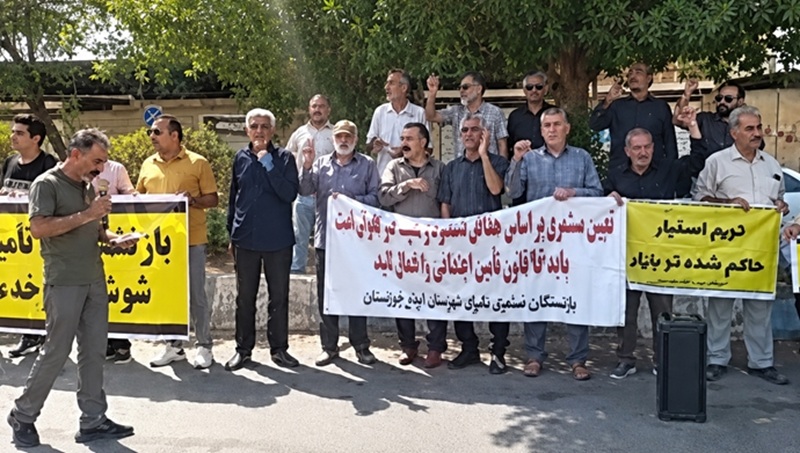

Surging inflation, a collapsing currency, mounting wage arrears, and deteriorating working conditions are driving millions of Iranian workers deeper into poverty while raising fears of widespread labor unrest.
Iran’s Working Class Faces an Unprecedented Economic Squeeze
Iran’s worsening economic crisis is placing unprecedented pressure on working-class families as the rapid depreciation of the national currency and relentless inflation erode purchasing power across the country. With the poverty line in major cities now estimated at at least 70 million tomans per month, millions of workers are struggling to meet even their most basic needs.
At the same time, reports from factories and service industries indicate that workers are confronting a new wave of layoffs, delayed wage payments, reduced benefits, and increasing job insecurity. Labor activists warn that a large segment of Iran’s workforce—many of whom already lived below the poverty line before the recent escalation of the country’s economic crisis—may no longer be able to endure these conditions much longer.
If current trends continue through the end of the summer, they caution, labor protests are likely to expand significantly.
Workers Return to Jobs Only to Find Months of Unpaid Wages
In recent weeks, several factories that had previously reduced operations or dismissed employees resumed production and asked former workers to return.
For many, returning to work meant temporarily escaping unemployment, abandoning informal jobs such as ride-hailing services, and hoping for a stable income once again.
Instead, many workers report that after several weeks back on the job, they have yet to receive wages for the Persian months of Khordad and Tir.
The situation is particularly severe because many workers lost their unemployment insurance benefits once they returned to work. They now find themselves trapped without either wages or unemployment support.
Other factories that restarted operations as early as April continue to accumulate unpaid salaries, leaving workers with little financial security.
Labor Representatives Warn of a Dangerous Breaking Point
Akbar Shokat, executive secretary of the Workers’ House in Qom Province and a former member of the Board of Trustees of the Social Security Organization, warned that years of wage suppression have already pushed most workers below the poverty line.
According to him, the combination of unemployment, employers’ inability—or unwillingness—to pay wages, and prolonged economic uncertainty has created conditions in which workers may not be able to withstand more than another two months.
He warned that if conditions do not improve by the end of summer, the labor sector could face “serious unrest.”
Inflation Continues to Destroy Purchasing Power
These warnings come as the free-market exchange rate has approached 200,000 tomans per U.S. dollar, fueling sharp increases in the prices of food, housing, transportation, healthcare, and other essential goods.
Unlike the daily increases in living costs, workers’ wages have remained largely unchanged. Even those stagnant salaries are frequently paid weeks or months late.
Official domestic reports illustrate the scale of the crisis:
- Hormozgan Province recorded point-to-point inflation of 101 percent.
- Khuzestan reported 99 percent inflation.
- Bushehr registered 96.5 percent.
These provinces host many of Iran’s oil, gas, petrochemical, port, and contracting workers, making the impact especially severe on key industrial sectors.
Petrochemical Workers Report Retaliation Despite Rising Profits
The situation at the Mahshahr Petrochemical Terminals and Storage Company highlights the growing disconnect between corporate performance and workers’ conditions.
Management has celebrated a 24 percent increase in export loading and a 22 percent increase in mineral terminal operations, presenting these figures as evidence of successful management.
Workers, however, describe a very different reality.
According to employees, several contract and third-party workers were dismissed after pursuing labor-related demands. Although some later obtained legal rulings ordering their reinstatement, they reportedly remain barred from returning to their workplaces.
Others say that after filing complaints to recover unpaid legal entitlements, their salaries were cut by half—a measure they view as retaliation for asserting their rights.
Contract workers further report that:
- Salaries are not being adjusted according to this year’s approved wage rates.
- Overtime and holiday pay have been eliminated.
- Seasonal bonuses have been removed.
- Food quality and portions have deteriorated.
- Fruit distributions have stopped.
- Even drinking water has reportedly been removed from workplaces.
Employees working shifts lasting 13 to 14 hours say such conditions have become increasingly unbearable.
Questions Over Financial Priorities
Workers have questioned how a company backed by major state-linked shareholders—including the Persian Gulf Holding Company, the State Retirement Fund, and the Armed Forces Social Security Organization—can report increased exports while claiming an inability to pay wages or provide basic workplace welfare.
Labor activists argue that the crisis extends well beyond businesses genuinely affected by shortages or export disruptions.
They say some employers continue to possess raw materials and inventory yet deliberately reduce production, using the country’s broader crisis as justification for delaying wages or dismissing workers.
Government Offers Promises but Few Solutions
Despite the worsening situation, the regime’s president Masoud Pezeshkian’s administration has yet to introduce effective measures to address expanding wage arrears.
Proposals such as providing emergency financing to manufacturers, easing customs procedures for importing raw materials, strengthening labor inspections, and penalizing employers who fail to pay workers have remained largely limited to official statements without meaningful implementation.
Meanwhile, labor dissatisfaction continues to spread.
Power Shortages Add to the Employment Crisis
Industrial electricity shortages have created another major challenge.
Frequent power cuts are disrupting production and increasing the risk of factory closures and further unemployment.
Earlier, Iran regime’s Deputy Minister of Industry announced that economic losses from industrial power outages had increased dramatically—from approximately 303 trillion tomans in 2024 to 473 trillion tomans in 2025—warning that continued electricity shortages could result in significantly higher unemployment during the second half of the year.
Economic Pressures Increase the Risk of Wider Labor Unrest
The convergence of soaring inflation, a collapsing currency, unpaid wages, shrinking workplace benefits, and worsening energy shortages has created a multidimensional crisis for Iranian workers.
For many households, savings have long been exhausted. Even a single month’s delay in receiving wages can mean being unable to pay rent, purchase food, obtain medicine, or cover children’s education expenses.
As economic conditions continue to deteriorate and government responses remain largely ineffective, labor activists increasingly warn that growing hardship could translate into broader social unrest, with workers reaching a point where continued endurance is no longer possible.