


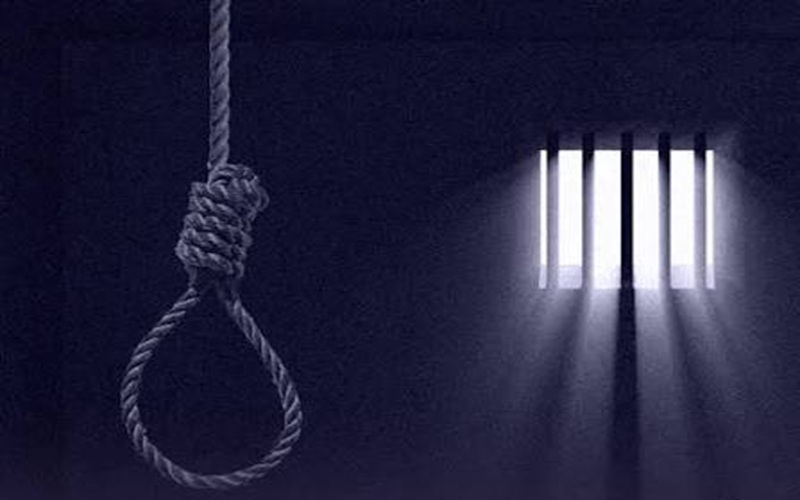

For decades, the Iranian regime has relied on executions as one of its most effective tools of repression. Public hangings, politically motivated death sentences, and mass executions have been designed to instill fear and discourage dissent. Yet recent events suggest that this strategy is producing the opposite effect. Rather than silencing society, executions are fueling public resistance, strengthening prison protests, and exposing growing divisions within the regime itself.
The public execution of two young protesters in Isfahan has become a turning point. Instead of intimidating the population, it sparked protests in parts of the city. At the same time, authorities have been forced into an unprecedented confrontation with more than 1,500 death-row prisoners in Qezel Hesar Prison, whose unity has strengthened the nationwide “No to Execution Tuesdays” campaign.
The result is a growing political dilemma. Every execution intended to restore fear appears instead to deepen public anger, reinforce organized resistance, and intensify disagreements among the regime’s own political factions.
A Regime on the Defensive
The regime’s anxiety has become increasingly visible in its own media.
State television recently attempted to discredit the growing campaign against executions by arguing that before saying “No to Executions,” people should first say “No to Murderers.” Broadcasters insisted that those executed had committed serious crimes and portrayed opposition to capital punishment as an effort to defend criminals rather than uphold human rights.
The very need to justify executions so aggressively reveals a deeper concern. If the policy still enjoyed broad public acceptance, the authorities would not feel compelled to defend it so vigorously.
That nervousness is shared by some of the regime’s most hardline figures.
Hardliners See Opposition as a Political Threat
Among the strongest reactions came from Hamid Rasaei, a hardline parliamentarian and deputy chairman of the regime’s Cultural Commission.
Responding to the protests that followed the executions in Isfahan, Rasaei argued that renewed discussions of negotiations had emboldened critics of the regime. He lashed out at those opposing the executions, writing that “the untimely ceasefire and the fruitless negotiating table with Khamenei’s killers have emboldened these people,” before accusing protesters of objecting to what he described as the lawful punishment of violent criminals.
His remarks illustrate how the regime increasingly frames opposition to executions not as a humanitarian concern, but as part of a broader political challenge threatening its authority.
Even Regime Insiders Are Raising Alarms
What makes the current debate particularly significant is that criticism is no longer limited to activists or opposition groups. Warnings are increasingly emerging from figures associated with the regime itself.
Mohammad Taghi Fazeli Meybodi, a cleric identified with the regime’s reformist current, questioned the wisdom of expanding executions while the country faces deepening economic hardship.
He argued that judges should ask themselves why young people become involved in violent confrontations in the first place, pointing to poverty, unemployment, and social deprivation as underlying causes. In an unusually candid warning, Meybodi urged the authorities: “Do not increase the number of executions. Pay attention to the condition of the people. When the price of bread reaches 50,000 tomans, every kind of disaster can follow.”
His remarks do not challenge the regime’s legitimacy. Rather, they reflect growing concern that harsh repression, combined with worsening living conditions, could provoke even greater social unrest.
A similar warning came from Azar Mansouri, head of the Reform Front, who addressed an open letter to Judiciary Chief Gholamhossein Mohseni-Ejei after the Isfahan executions.
Referring directly to the public reaction, Mansouri wrote: “The people’s protests in Isfahan over the implementation of the execution sentences showed that society is not indifferent to this issue.” She warned that ignoring such reactions could leave “accumulated anger and dissatisfaction” smoldering beneath the surface until it erupts into a far more costly social crisis.
Neither Meybodi nor Mansouri questioned the regime’s authority. Instead, they warned that escalating executions at a time of economic collapse and widespread dissatisfaction could become politically counterproductive.
Resistance Continues to Expand
While regime factions argue over the consequences of executions, resistance inside and outside prison walls continues to grow.
The unity displayed by more than 1,500 prisoners sentenced to death in Qezel Hesar Prison has become one of the most remarkable examples of collective resistance inside Iran’s prison system. Their continued participation in the “No to Execution Tuesdays” campaign has challenged prison authorities and inspired broader solidarity across the country.
Resistance Units have likewise praised the citizens who protested during the executions in Isfahan, portraying these demonstrations as evidence that fear is gradually giving way to open defiance.
Every new execution now carries a political cost. Instead of serving solely as an instrument of intimidation, it increasingly becomes a rallying point for public protest and renewed opposition.
A Debate the Regime Never Wanted
The growing controversy over executions reflects more than a disagreement over criminal justice. It has become part of a broader struggle within the regime over how to respond to mounting political, economic, and social pressures.
Hardliners continue to demand uncompromising repression, while figures within the regime’s own establishment increasingly warn that executions may be accelerating the very instability they are intended to prevent.
That debate itself is revealing.
For decades, the regime sought to convince society that fear belonged exclusively to the people. Today, the evidence increasingly suggests that fear has spread to the ruling establishment itself. The public protests in Isfahan, the resilience of prisoners participating in the “No to Execution Tuesdays” campaign, and the unprecedented warnings from regime insiders all point to the same conclusion: executions are no longer simply a tool of repression—they have become a source of political anxiety within the regime.
As opposition grows both inside and outside the prison walls, the real question confronting Tehran is no longer whether executions can silence dissent, but whether they are accelerating the internal crisis the regime is desperately trying to contain.