


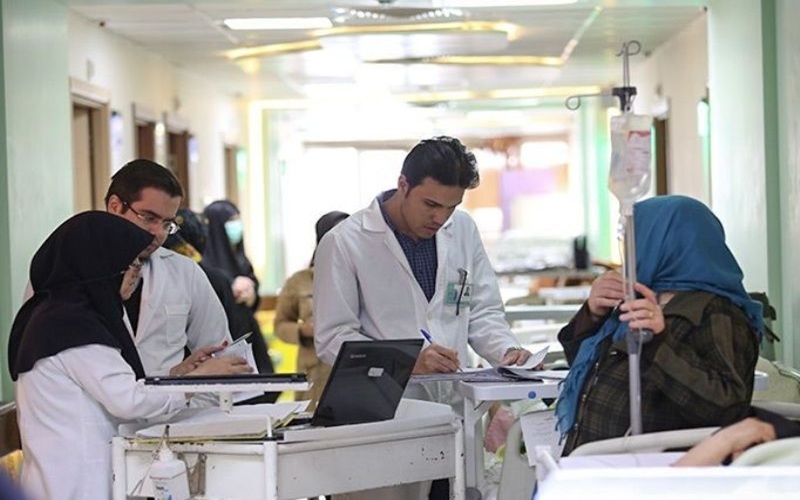

The spread of installment payments for medical care is not a sign of financial innovation—it is evidence that millions of Iranians can no longer afford basic healthcare.
For decades, the Iranian regime has claimed that healthcare is one of its greatest achievements. Yet a new and troubling trend reveals a different reality. Across Iran, clinics, dental offices, physiotherapy centers, and even mental health providers are increasingly advertising “treatment today, pay later.”
What might appear at first glance to be a modern financial service is, in fact, a symptom of deepening economic distress. When families must borrow against next month’s income simply to visit a doctor or buy medicine, healthcare has ceased to be a public service and become another casualty of economic collapse.
The rise of installment medicine says less about innovation than it does about the growing medical poverty facing millions of Iranians.
Healthcare Is Becoming Another Consumer Debt
Installment financing has long been associated with expensive consumer goods such as automobiles, smartphones, and household appliances. Today, the same marketing language is appearing in healthcare.
Advertisements increasingly promise:
- “Get treated today, pay next month.”
- “Medical credit without a guarantor.”
- “Pay in 4 to 24 installments.”
The practice is no longer limited to cosmetic procedures or expensive dental work. Reports indicate that installment payment options are expanding to include prescription medications, laboratory tests, physiotherapy, home nursing services, psychotherapy, and even online medical consultations.
This shift reflects a harsh reality: many patients no longer have sufficient cash to cover even routine medical expenses.
Inflation Is Reaching the Doctor’s Office
Iran’s prolonged economic crisis has already eroded household purchasing power through soaring inflation, currency depreciation, and stagnant wages. Now the effects are becoming increasingly visible inside hospitals and clinics.
Doctors report that conversations with patients often begin not with symptoms but with questions about discounts, deferred payments, or installment plans.
Many physicians say patients are postponing diagnostic imaging, laboratory testing, or purchasing prescribed medications because they simply cannot afford them. Others delay treatment for weeks or months while trying to gather enough money.
These are not isolated cases.
They represent a growing pattern in which medical decisions are increasingly determined by financial hardship rather than clinical necessity.
Mental Healthcare Is Becoming a Luxury
Perhaps nowhere is the crisis more visible than in mental healthcare.
Therapists report that many patients have begun spacing appointments farther apart to reduce costs. Others discontinue treatment after only a few sessions, despite requiring ongoing care. Some ask whether they can wait until payday before paying for counseling.
Mental health professionals warn that interrupted treatment significantly reduces the effectiveness of therapy and increases the likelihood that conditions such as depression, anxiety, and trauma will worsen over time.
In a society already burdened by economic uncertainty, political repression, and social instability, reduced access to mental healthcare carries consequences far beyond individual patients.
Delaying Treatment Often Means Paying More Later
Medical professionals and labor organizations have warned for years that increasing numbers of Iranians are abandoning treatment because they cannot afford it.
The consequences extend well beyond immediate suffering.
Patients skip medications or reduce prescribed dosages to make prescriptions last longer. Rehabilitation sessions are canceled. Specialist appointments are postponed until illnesses become acute. Preventive care is delayed until emergency intervention becomes unavoidable.
What begins as an attempt to save money frequently results in more severe illness and substantially higher medical costs later.
This is one of the hidden costs of prolonged economic decline.
A Safety Net That No Longer Functions
Installment payment systems are not unique to Iran. Many countries offer healthcare financing or medical credit.
The crucial difference lies in why these systems exist.
In functioning healthcare systems, financing options supplement comprehensive insurance coverage. In Iran, they are increasingly replacing it.
Large portions of healthcare expenses—including physician visits, medications, laboratory services, diagnostic imaging, dental care, rehabilitation, and specialized treatments—continue to be paid directly by patients.
As inflation has accelerated and household incomes have failed to keep pace, the gap between medical costs and people’s ability to pay has widened dramatically.
Official data previously showed households allocating a relatively modest share of their income to healthcare. However, after years of steep inflation and rapidly rising medical prices, health expenditures have become one of the largest burdens on family budgets, forcing many households to choose between medical treatment and other basic necessities such as rent, food, or their children’s education.
The Cost of Economic Mismanagement
Government officials may welcome the expansion of installment healthcare as evidence of financial innovation or entrepreneurial adaptation.
That interpretation ignores the underlying problem.
Families do not finance chemotherapy, physiotherapy, psychiatric treatment, or prescription medicine because they prefer flexible payment plans. They do so because they have exhausted their savings, their incomes no longer cover basic expenses, and the healthcare system no longer protects them from financial ruin.
The growing market for medical credit is therefore not a sign of modernization.
It is evidence that inflation, the collapse of the national currency, and years of economic mismanagement have reached one of the most fundamental aspects of daily life: the ability to receive medical care when it is needed.
A society in which patients postpone treatment, ration medication, or borrow money simply to see a doctor is not witnessing innovation. It is witnessing the steady normalization of poverty—one clinic visit at a time.