


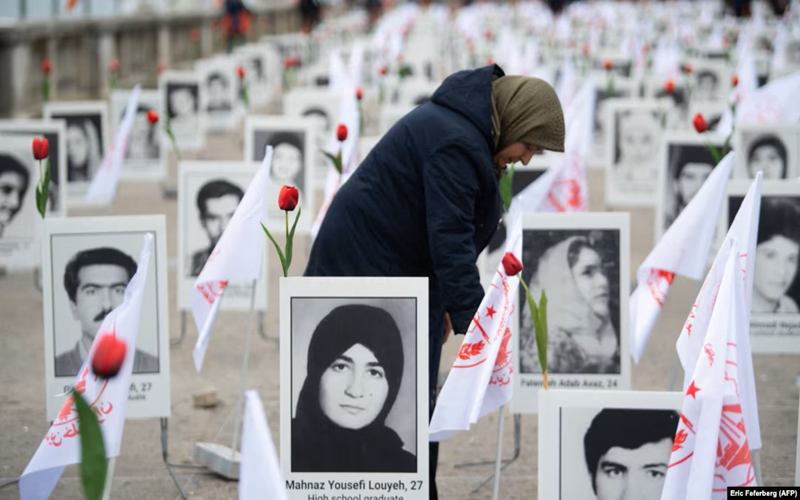

The 1988 massacre was carried out through so-called “Death Commissions” that bypassed every principle of due process, deciding the fate of thousands of political prisoners through ideological interrogations rather than legal proceedings.
The Machinery Behind the 1988 Massacre
The mass execution of political prisoners in Iran during the summer of 1988 was not the result of judicial proceedings. It was orchestrated through special bodies that became known as the “Death Commissions”—ad hoc panels that operated entirely outside the framework of law and due process.
Rather than functioning as courts, these commissions served as instruments for implementing a predetermined campaign of extermination. Their members did not evaluate evidence, investigate criminal conduct, or determine guilt under any recognized legal standard. Instead, prisoners were subjected to brief ideological interrogations designed to decide whether they would live or die.
The commissions ignored even the regime’s own legal procedures. Prisoners were denied access to lawyers, appeals, or any opportunity to challenge the decisions that sealed their fate.
Ideological Loyalty Became the Standard for Life or Death
Instead of examining alleged criminal acts, the Death Commissions focused almost exclusively on political and religious beliefs.
Prisoners were questioned about whether they would renounce their political affiliations, express remorse for past activism, or condemn opposition organizations. Those associated with the People’s Mojahedin Organization of Iran (PMOI/MEK) were frequently asked whether they would publicly denounce the organization and its leadership.
Some prisoners faced even more disturbing questions. They were reportedly asked whether they would cooperate with the authorities by spying on fellow prisoners, assisting intelligence services, participating in torture, or even joining execution squads responsible for killing other political detainees.
For many, refusing these demands amounted to a death sentence.
Prisoners Were Kept in the Dark Until Their Final Moments
One of the defining characteristics of the massacre was the secrecy surrounding the executions.
Prisoners were rarely informed that they had been sentenced to death. In many cases, they only realized their fate when guards handed them paper and a pen to write a final will.
Even then, they were not told when or how they would be executed. Many remained unaware until they were led to the gallows or placed before firing squads.
The absence of notice, legal representation, or any meaningful judicial process has led numerous human rights experts to characterize the killings as extrajudicial executions and crimes against humanity.
Political Prisoners Were the Primary Targets
The overwhelming majority of those executed were supporters of the PMOI/MEK, including both men and women imprisoned solely because of their political beliefs or activities.
In Tehran Province, the executions also claimed the lives of hundreds of left-wing political prisoners. Unlike PMOI supporters, many leftist detainees were subjected to religious examinations rather than political questioning.
The commissions asked whether they considered themselves Muslims, whether they performed daily prayers, read the Quran, or whether their fathers had practiced Islam.
Those who identified as non-believers but acknowledged that their fathers had been practicing Muslims were frequently accused of apostasy and sentenced to death.
Others escaped execution but endured severe corporal punishment. Many were flogged repeatedly until they agreed to pray.
Female leftist prisoners faced similar interrogations. Those who gave what the authorities considered “incorrect” answers were reportedly sentenced to repeated floggings—five lashes for every missed daily prayer, amounting to 25 lashes every day—until they submitted to the regime’s religious demands.
Kurdish Political Prisoners Were Also Targeted
The campaign extended beyond central Iran.
In Kurdistan and West Azerbaijan provinces, hundreds of prisoners affiliated with Kurdish opposition organizations, including Komala and the Kurdistan Democratic Party of Iran, were also subjected to enforced disappearance and extrajudicial execution.
Their political affiliation alone often determined their fate.
The Questions That Determined Life or Death
The questions asked by the Death Commissions reveal that the proceedings were never intended to administer justice. Instead, they measured absolute obedience to the ruling system.
Among the questions reportedly posed to prisoners were:
- Would you condemn the PMOI/MEK and its leadership?
- Will you express remorse for your political beliefs and activities?
- Do you declare loyalty to the ruling regime?
- Are you willing to walk through minefields to assist the regime’s military?
- Would you fight against the PMOI/MEK alongside the regime’s armed forces?
- Are you prepared to spy on former comrades and cooperate with intelligence agents?
- Would you join an execution squad?
- Would you personally hang a PMOI supporter?
- Are you a Muslim?
- Do you perform daily prayers?
- Do you read the Quran?
- Did your father regularly pray and read the Quran?
The answers to these questions frequently determined whether a prisoner would return to a cell—or be sent directly to execution.
A Lasting Symbol of Impunity
Nearly four decades later, the Death Commissions remain among the most notorious symbols of the 1988 massacre. Their summary interrogations, ideological tests, and complete disregard for legal safeguards transformed prisons into execution centers where thousands of political prisoners disappeared within weeks.
The massacre continues to be a central focus of international calls for accountability, with survivors, victims’ families, and human rights organizations seeking justice for one of the largest episodes of mass political execution in Iran’s modern history.