The collapse of the rial has pushed Iran’s official basic monthly wage to roughly $80, while the cost of a minimum standard of living has soared far beyond workers’ incomes.
The collapse of Iran’s currency has pushed the basic monthly wage of Iranian workers to roughly $80, exposing the dramatic erosion of purchasing power and the deepening poverty confronting millions of working families.
According to a report published by the Iranian Labor News Agency (ILNA) on Tuesday, September 3, the basic wage for workers in the current Iranian year stands at 16.625 million tomans. At an exchange rate approaching 200,000 tomans to the U.S. dollar, the wage is worth only about $83.
For a married worker with one child, total monthly earnings including allowances reach approximately 24.9 million tomans, equivalent to only about $122 at an exchange rate of 205,000 tomans per dollar.
The figures become even more striking when compared with the cost of living.
Wages Fall Far Behind the Cost of Living
The official cost-of-living basket was estimated at around 42 million tomans in March 2026. Yet the Supreme Labor Council, a government-controlled body, set the basic wage for the new year at less than 17 million tomans.
Mohsen Bagheri, the labor representative on the council, said on August 21 that new calculations by the labor side put the cost of the household basket at more than 80 million tomans, nearly twice the figure reported in March.
The Iran Retirees Council separately estimated in August that the poverty line for a four-person family in Tehran had reached 90 million tomans, while maintaining a “normal” standard of living required more than 150 million tomans per month.
The disparity is stark. A married worker with one child receiving 24.9 million tomans covers only about 28 percent of the estimated minimum cost of living.
Former labor wage committee chairman Faramarz Tavfiqi, citing official statistics and nutritional data, similarly estimated that the minimum monthly cost of living for an average 3.3-person household had reached approximately 90.6 million tomans by late July.
The figures demonstrate how far wages have fallen behind the basic costs of food, housing, healthcare and other necessities.
A Decade of Wage Erosion
The collapse becomes even clearer when wages are measured in dollars.
ILNA’s review of the past decade shows that in 2016, the basic monthly wage was approximately 812,164 tomans. At an exchange rate of around 3,500 tomans per dollar, this amounted to approximately $232.
By September 2021, the basic wage had risen to 2.655 million tomans, but the dollar value had already fallen to approximately $99, based on an exchange rate of 26,800 tomans.
Today, the basic wage is worth only around $80.
The nominal increase in wages has therefore failed to compensate for the collapse of the national currency and the extraordinary rise in prices. Because Iran depends heavily on imported goods and raw materials, currency depreciation feeds directly into the cost of consumer goods and production.
Meat Disappears From Workers’ Tables
The consequences are increasingly visible in household diets.
Yadollah Faraji, a retired labor activist and former head of the General Steel workers’ council, told ILNA that workers—including skilled employees—have experienced a dramatic decline in living standards over the past decade.
Families that were once considered part of the middle class, he said, have increasingly fallen into poverty and then absolute poverty.
“We used to buy several kilograms of red meat every month 10 years ago,” Faraji said. “But for months now, we haven’t seen meat on our table.”
Food inflation has made the situation even more severe. Official statistics show that year-on-year inflation for food and beverages reached 128.1 percent in July 2026, compared with overall inflation of 87.9 percent.
A report by Shargh newspaper also found that rising prices have forced households to reduce consumption of essential foods. Consumption of red meat, poultry and eggs has reportedly fallen by 25 to 50 percent, while annual per-capita dairy consumption has declined from roughly 100 kilograms at the beginning of the 2010s to around 40 kilograms.
Poverty Extends to Healthcare and Working Conditions
The crisis is no longer limited to food.
Reports from Tehran indicate that the high cost of dental treatment has forced some workers to have teeth extracted rather than receive restorative treatment.
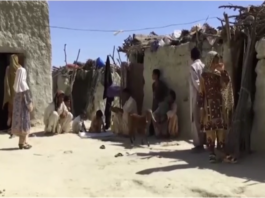
Meanwhile, some workers are not even receiving their meager wages on time. Around 30 railway line guards in the Iranshahr area reportedly have approximately five months of unpaid wages. The workers say they work from early morning until near sunset without adequate food or proper accommodation, with some reportedly forced to rest under bridges.
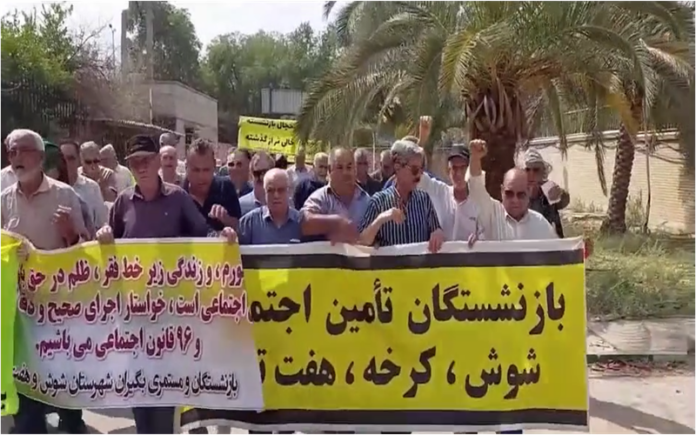
Economic hardship has also fueled growing protests among retirees. Steel retirees in Isfahan recently gathered for a second consecutive week to protest the loss of health insurance, unpaid adjustment arrears and deteriorating living conditions.
“One speaks of our problems, but there is no one willing to listen,” one retiree said.
Economic Crisis Becomes a Political Threat
The severity of the crisis has even prompted warnings from officials within the regime.
Parliament Speaker Mohammad Bagher Ghalibaf recently acknowledged that military power alone cannot guarantee the regime’s survival. He warned that regardless of how much military strength Iran possesses, it cannot endure if “people are hungry” and economic growth and production are absent.
Fadahossein Maleki, a member of parliament’s National Security Commission, similarly acknowledged that the consequences of the economic war are more serious and longer-lasting than military attacks.
Such statements underscore the depth of Iran’s economic crisis. For workers whose monthly basic wage has effectively collapsed to around $80, the issue is no longer simply declining purchasing power. It is a struggle to afford food, healthcare and the most basic conditions of a dignified life.
The widening gap between wages and living costs is fueling poverty, social discontent and labor protests—while the continued collapse of the rial threatens to push millions of Iranian families even further below the poverty line.