
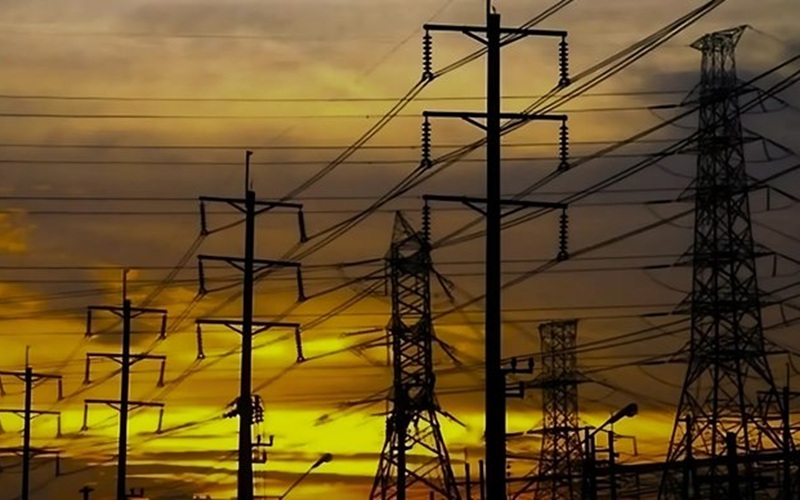

Repeated outages and voltage fluctuations are no longer merely a summer inconvenience. They are damaging household appliances, disrupting businesses and factories, reducing production, and pushing more costs onto an already strained population.
Iran’s electricity crisis is continuing through the summer of 2026, and the consequences of repeated blackouts have gone far beyond enduring several hours of heat and darkness.
Reports from residents, shop owners, workshops, and industrial units indicate that repeated power cuts and voltage fluctuations are damaging refrigerators, televisions, air conditioners, water pumps, shop equipment, and industrial machinery. At the same time, small workshops and production units are being forced to reduce operations, lay off workers, or suspend activity altogether.
The publication of electricity blackout schedules showed that several-hour outages were continuing across different provinces. The daily schedules also indicated that power cuts would continue into September.
What is becoming increasingly clear is that the cost of the electricity crisis is being transferred directly to households, workers, and producers.
Blackouts Are Causing More Than Darkness
For many households, the most expensive moment comes when the electricity returns.
Sudden reconnection and voltage fluctuations can damage electrical appliances and electronic equipment. Refrigerators, televisions, air conditioners, water pumps, and other household devices can be severely affected, leaving families with repair or replacement bills at a time when the prices of basic goods and appliances have risen sharply.
A video circulated on social media on Thursday showed the owner of a lighting store describing how repeated outages and power fluctuations had burned a large number of chandeliers in his shop.
He said that he had already installed electrical protection equipment, but it had failed to prevent the damage. He also said that he could not afford to purchase a generator to protect his business from continued outages.
The experience is not isolated.
On Wednesday evening, August 19, a resident of Mashhad posted a video showing his neighborhood during a blackout. Describing the impact of the outages, he said: “In the age of technology, when the electricity goes out, I feel as if I have suddenly been thrown from behind my laptop into the Stone Age.”
That same evening, another resident of Eslamshahr posted a video of the darkness in his area and warned: “People’s patience has run out and it will soon erupt.”
These comments reflect a broader reality: the electricity crisis is becoming a source of economic pressure as well as public frustration.
Electricity Bills Are Adding to the Burden
The financial pressure on households is not limited to damaged appliances.
Increasing electricity bills have also generated anger among consumers. One resident told Independent Persian that an electricity bill of 160 million rials had arrived for an 80-square-meter home.
When the resident went to the electricity office to complain, the response was reportedly that the air conditioner should not be used.
The resident responded that they were ill and asked how they could possibly avoid using air conditioning. The reported answer was: “Yes, this is Iran; everything is possible here.”
Electricity tariffs are calculated progressively, meaning that consumption above designated thresholds can be charged at significantly higher rates. For ordinary residential areas, the monthly summer consumption pattern has been set at 300 kilowatt-hours, with higher coefficients applied to consumption beyond the prescribed level.
Consumption exceeding 500 kilowatt-hours can therefore fall into more expensive tariff brackets.
This creates a particularly harsh contradiction during the summer: households are expected to endure extreme heat while simultaneously facing higher costs for the electricity needed to cool their homes.
Industry Is Paying an Even Heavier Price
The consequences are even more severe for factories and industrial workshops.
Reports from industrial estates in Tehran, Alborz, and northern provinces indicate that electricity restrictions can disrupt the activity of some production units for as much as 12 hours a day when scheduled shutdowns and prolonged outages are taken into account.
For a production line, however, a power cut is not simply a period during which machines stop operating.
An interruption can halt an entire production process, delay orders, damage materials, increase operating costs, and reduce revenues. Repeated disruptions can also make it difficult for businesses to retain workers or meet contractual obligations.
The severity of the problem was acknowledged even by Mohammad-Sadegh Mofteh, deputy minister of Industry, Mining and Trade. On Wednesday, he acknowledged that when an “energy imbalance” occurs, industries and production units are among the first sectors subjected to restrictions.
Mofteh warned that the consequences would not remain confined to factory owners. They would ultimately reach the public through unemployment, reduced supplies of goods, and disruption throughout the economic chain.
The Crisis Is Spreading Through Supply Chains
The impact of electricity shortages is also beginning to appear further down the production chain.
Some manufacturing units have reported a sharp decline in the supply of products from Petrochemical Arvand, linking the reduction to electricity restrictions and falling production.
Data from Iran’s commodity exchange reportedly showed that the supply of one of the complex’s products, which had stood at around 13,000 tons in March, fell to approximately 1,000 tons in recent weeks.
Such reductions can have consequences far beyond the affected plant. When a major producer cuts output, downstream manufacturers can face shortages of raw materials, higher costs, delays in production, and further interruptions.
The electricity crisis therefore risks becoming a multiplier of economic problems rather than an isolated failure in the power sector.
Industrial Power Generation Is Also Falling
The deterioration is visible even in electricity generation by industrial facilities themselves.
According to a report by Khabaronline, the maximum electricity production of power plants owned by industries has fallen by 33 percent this summer, from 4,468 megawatts to 3,052 megawatts.
That represents a loss of approximately 1,416 megawatts of generating capacity.
The significance of this decline is considerable. Industry is already among the first sectors to face restrictions when electricity supplies become insufficient. At the same time, the ability of industrial facilities to generate their own electricity is also declining.
The result is a reinforcing cycle: electricity shortages restrict industrial production, while reduced industrial generation further limits available electricity.
Even University Entrance Exams Are Affected
The crisis has reached areas that require a stable electricity supply for only a few hours but carry enormous importance for families.
On Thursday, reports emerged from examination centers hosting Iran’s university entrance examinations. Fars reported that a power outage at the Faculty of Engineering of Shahid Chamran University in Ahvaz left candidates in darkness and in temperatures approaching 50 degrees Celsius, disrupting the examination session and causing noise and confusion.
Shahid Chamran University is hosting more than 8,500 university entrance examination candidates this year.
The incident is particularly revealing because the Ministry of Energy had already asked citizens to reduce their electricity consumption between 7 a.m. and 6 p.m. on Thursday and Friday so that examination centers would not experience disruptions.
In other words, maintaining reliable electricity for a nationwide examination has itself become dependent on millions of consumers voluntarily reducing their electricity use.
A Crisis Paid for by the Public
The continuing blackouts of summer 2026 demonstrate that “electricity imbalance” is no longer simply a technical expression appearing in official reports.
Its consequences can be seen across society.
It is the household whose refrigerator or television is destroyed by voltage fluctuations. It is the shopkeeper whose inventory or equipment is damaged. It is the workshop unable to complete an order because its machinery cannot operate. It is the factory forced to reduce production. And it is the worker whose employment becomes increasingly uncertain as production declines.
The costs are accumulating on several fronts simultaneously.
Households are expected to tolerate prolonged outages, absorb the cost of damaged appliances, and pay increasingly expensive electricity bills. Producers face not only higher energy costs but also lost production, damaged equipment, generator expenses, delayed orders, and declining revenues.
For years, warnings about Iran’s electricity imbalance have been accompanied by promises of solutions. Yet the persistence of the crisis demonstrates that the problem has moved well beyond temporary summer shortages.
The electricity crisis is now directly affecting household finances, industrial production, employment, supply chains, and the survival of small businesses.
What was once described primarily as a problem within the power grid has become a broader economic and social crisis—one whose costs are increasingly being transferred from the failing infrastructure to the people and businesses that depend on it.