


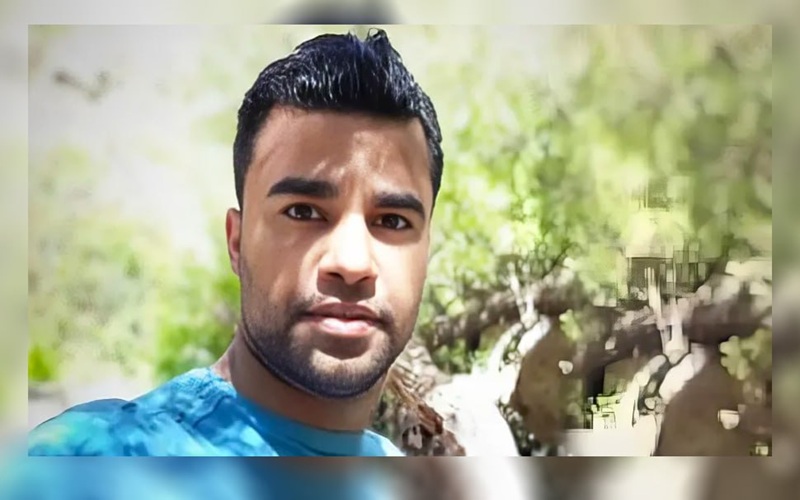

From Vakilabad Prison, political prisoner Seyed Mohammad Javad Vafaei Thani marks the anniversary of the PMOI’s founding, paying tribute to generations of resistance and expressing confidence that their struggle will ultimately bring freedom to Iran.
From Vakilabad Prison in Mashhad, Iranian political prisoner Seyed Mohammad Javad Vafaei Thani has issued a message marking the anniversary of the founding of the People’s Mojahedin Organization of Iran (PMOI/MEK), paying tribute to generations of resistance and expressing confidence that the movement’s sacrifices will ultimately lead to freedom in Iran.
Writing in September 2026, Vafaei Thani acknowledged the difficult conditions facing prisoners amid the Iranian regime’s repression and the broader crises affecting people across Iran. But he stressed that hardship cannot be a reason for silence.
“In such difficult days, when this bloodthirsty and anti-human regime has created such harsh conditions for the people of Iran and the region, naturally our circumstances in prison, like those of all the people of this land, are difficult and arduous,” he wrote. “But this is no reason for us to remain silent.”
The political prisoner said that those held behind bars have a responsibility to speak for people who are unable to make their voices heard freely.
“We have a duty, under all circumstances, to be the voice of our oppressed people and to cry out about their pain and suffering,” he stated.
Remembering the Founders of the Resistance
Vafaei Thani reflected on the founding of the PMOI more than six decades ago and the sacrifices made by its founders. He specifically recalled Mohammad Hanifnejad and his comrades, who were executed by the Shah’s regime in the early 1970s.
“Sometimes I think: if Hanif and his companions had not founded this organization and watered its roots with their blood, what would the people of Iran have today?” he wrote.
For Vafaei Thani, the history of the PMOI represents a continuing process in which successive generations have inherited the commitment and sacrifices of those who came before them. He described himself as having emerged from what he called the “green branches” of this movement through awareness and conscious choice.
“I thank God that I too sprouted on the green branches of this tree and was granted the blessing of awareness and the choice of this evergreen path,” he wrote.
More than 60 years after its establishment, he argued, the movement has grown beyond the ability of repression to extinguish it.
“Today, more than sixty years after the beginning of this growth, this tree has taken root and we have become a forest that no winter and no axe can destroy or silence,” he declared.
He linked this resilience to the repeated attempts by successive Iranian regimes to eliminate opposition through executions, imprisonment and repression.
“Every time they cut off our heads, we grew again and again and multiplied,” he wrote.
A Message of Defiance From Behind Bars
Vafaei Thani’s message comes from a prison system that has become one of the principal instruments of repression used by the Iranian regime against political opponents, activists and dissidents. His words portray imprisonment not as an end to political resistance, but as another arena in which prisoners can raise their voices.
He expressed confidence that the sacrifices made by generations of resistance fighters would ultimately bear fruit, regardless of whether those who made the sacrifices live to witness that day.
“God willing, in the near future, whether we are here or not, the fruit of these efforts, resistance and struggles, and the sincerity and sacrifice of this blessed tree will be celebrated by the honorable people of Iran with freedom,” he wrote.
He also remembered those who were executed for their political beliefs, describing them as continuing symbols of the struggle for freedom.
“When our comrades were sent to the gallows, the stars, moon and sun witnessed how they roared,” he wrote. “They know that they too were stars who went from among us to the heavens, and on that day they will shine alongside the people of Iran and in their hearts and sing songs of joy.”
Looking Toward Future Generations
The political prisoner also reflected on the successive challenges faced by the resistance movement and credited the leadership of Maryam Rajavi and Massoud Rajavi with shaping its subsequent political and organizational trajectory.
“Over these years, we have gone through many trials together,” he wrote. “We blossomed with Sister Maryam’s revolution and, under the leadership of Brother Massoud, charted our roadmaps.”
Looking beyond his own generation, Vafaei Thani said he hoped future generations would recognize the significance of the sacrifices made by those who preceded them and carry the struggle forward.
“God willing, future generations will appreciate the outcome of this path and bring it to its destination better than we and those before us,” he stated.
The message concludes with lines of poetry expressing a determination to remain connected to the stars and the larger struggle despite the hardships endured.
Written from Vakilabad Prison in Mashhad, Vafaei Thani’s message is ultimately one of defiance and hope: imprisonment, executions and repression may impose immense suffering, but they cannot extinguish the aspiration for freedom, he argues. His central message is that those resisting the Iranian regime have a responsibility to continue speaking for an oppressed society—even from behind prison walls.