


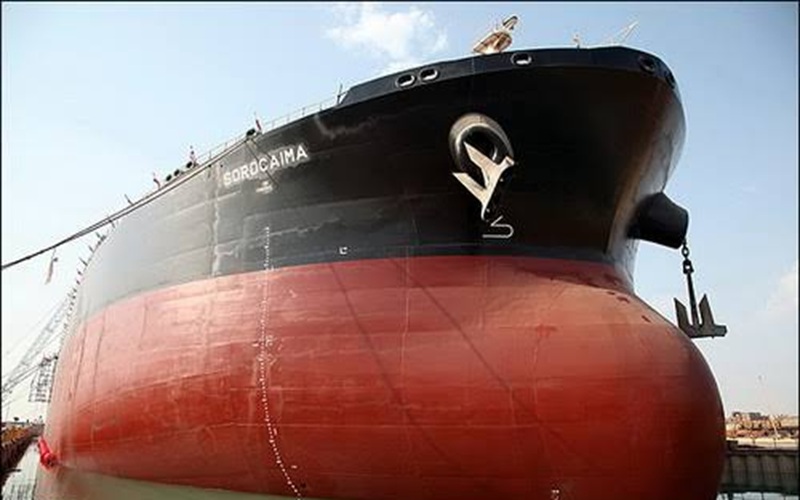

As nearly six million barrels of Iranian crude cross the Atlantic aboard seized tankers, the economic consequences of Tehran’s military escalation are increasingly being borne by the Iranian people.
Nearly six million barrels of Iranian crude oil, valued at approximately $600 million, are currently crossing the Atlantic aboard three tankers seized by the United States, according to tanker-tracking data. The reported movement offers a stark illustration of how the Iran regime’s policy of military confrontation can translate directly into the loss of national wealth.
The three vessels—Majestic X, Tifani, and Lenore—together carry about 5.9 million barrels of Iranian crude. Kpler data showed two of the tankers, Majestic X and Tifani, off Brazil’s northern coast, while Lenore entered the Atlantic through the Cape of Good Hope on September 22 after being seized in the Indian Ocean in June. TankerTrackers reported that the combined cargo was heading toward the United States.
The episode is more than a dispute over three tankers. It demonstrates the economic consequences of turning Iran’s strategic position and energy resources into instruments of military confrontation.
Oil Wealth at the Cost of Confrontation
Oil remains one of Iran’s most important sources of foreign-currency revenue. Every barrel that cannot be sold, transported, or converted into revenue represents a loss of resources that could otherwise support the country’s economy.
The current episode shows the vulnerability created when oil exports become entangled with military escalation.
According to reporting based on maritime tracking data, Majestic X was carrying approximately 1.88 million barrels of Iranian crude when it was seized in April. Tifani was also seized during the same period after loading Iranian oil, while Lenore was seized in June. The United States has said the seizures were aimed at disrupting sanctioned shipping networks and intercepting vessels providing material support to Iran.
The reported value of the three cargoes—approximately $600 million—puts the economic dimension into concrete terms.
That is hundreds of millions of dollars in Iranian oil wealth caught up in an international confrontation rather than generating revenue for Iran.
The Strait of Hormuz and the Cost of Escalation
The chain of events is directly connected to the regime’s confrontation over the Strait of Hormuz.
According to AFP reporting, the tankers were seized after the United States imposed a blockade on Iranian ports in response to Iran’s obstruction of the Strait of Hormuz. The strait is one of the world’s most important energy corridors, carrying a substantial share of global oil and liquefied natural gas shipments.
The consequence for Iran is particularly damaging because the country depends heavily on maritime routes for its oil exports.
Instead of strengthening Iran’s economic position through its strategic location, the confrontation has exposed Iranian energy assets to additional restrictions, interdictions and seizures.
The regime’s military strategy therefore carries a paradox: the more it turns energy routes into a battlefield, the greater the risk that Iran’s own energy wealth becomes inaccessible to the Iranian economy.
Who Pays the Price?
The regime’s officials can describe the seizures as “piracy” or the “plundering of the nation’s assets.” Iranian state-linked media have used such language in response to the reported movement of the oil toward the United States.
But behind the political rhetoric lies a straightforward economic question: who ultimately bears the cost when hundreds of millions of dollars in Iranian oil become trapped in an international confrontation?
It is not the regime’s propaganda apparatus that needs to stretch household budgets to compensate for lost revenue.
It is the Iranian population already facing inflation, declining purchasing power, shortages, unemployment and deteriorating living standards.
Every disruption to oil exports places additional pressure on a country whose economy needs foreign-currency income to finance imports and sustain economic activity. The loss of export opportunities therefore has consequences far beyond the oil industry itself.
From National Resources to Instruments of Conflict
Iran possesses some of the world’s largest oil and gas resources. Yet decades of regime policies have repeatedly placed these resources at the center of sanctions, regional confrontation and international disputes.
The latest tanker episode illustrates the contradiction.
Iranian oil worth roughly $600 million is physically moving across the Atlantic while the Iranian economy struggles with deep structural problems. The resource exists; the barrels have value; but the political and military environment created by the regime has made converting that wealth into economic benefit increasingly difficult.
The issue is therefore not simply whether one country has seized another country’s oil.
The deeper question is why Iran’s enormous natural resources are being exposed to such risks in the first place.
The Economic Bill of Warmongering
For years, the regime has justified its regional military posture and confrontation with foreign powers in the name of national security and strategic strength.
Yet the economic consequences tell another part of the story.
Military escalation can generate costs through sanctions, disrupted trade, restrictions on shipping, reduced oil revenues, damage to infrastructure, capital flight and increased risk premiums. These costs eventually reach ordinary households through higher prices, weaker purchasing power and fewer economic opportunities.
The nearly $600 million cargo now crossing the Atlantic provides a tangible example.
Rather than being transformed into investment in Iran’s infrastructure, industry, healthcare, education or household welfare, this oil has become part of an international confrontation surrounding the regime’s military policies.
That is the fundamental economic cost of the regime’s warmongering: Iran’s natural wealth is being consumed by confrontation instead of being converted into prosperity for the Iranian people.
The Iranian people are therefore confronted with a stark contradiction. Their country possesses vast energy resources, yet the regime’s policies have repeatedly placed those resources at risk of sanctions, blockade and seizure.
The question is not whether Iran has enough wealth.
It is whether the regime’s policies allow that wealth to serve the people who own it.