


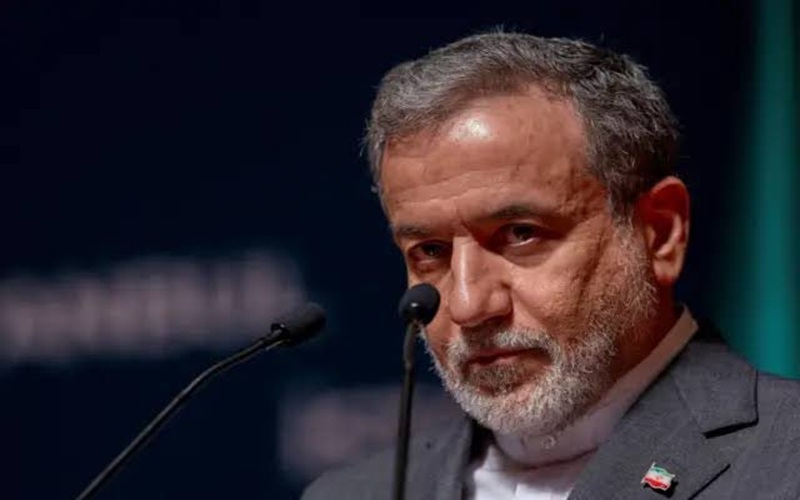

Conflicting accounts from regime media and officials expose a growing dispute over who controls foreign policy, who authorized contact with Washington, and how Tehran should respond to mounting pressure.
The indirect contact between Iran regime Foreign Minister Abbas Araghchi and U.S. envoy Steve Witkoff on the sidelines of the United Nations General Assembly has triggered an unusually public dispute inside Tehran. The controversy is not limited to whether the contact was necessary. Regime-linked media and officials are openly contradicting one another over who authorized it, who controls foreign policy, and what the encounter says about Tehran’s position under pressure from Washington.
The dispute exposes a regime struggling to present a unified line at a moment when its room for maneuver is increasingly constrained.
Who authorized the contact?
The sharpest criticism came from Tasnim, a news agency closely associated with the regime’s security establishment. It accused Araghchi of engaging with Witkoff without coordination or authorization from the relevant decision-making bodies, including the Supreme National Security Council.
Tasnim questioned why Araghchi needed to convey Iran’s conditions again when, according to the same report, those conditions had already been communicated to Washington through intermediaries. It also demanded an explanation from the foreign minister regarding the authorization for the contact.
The issue quickly moved into parliament, revealing a direct contradiction within the regime itself.
Ibrahim Rezaei, a member of the parliament’s National Security and Foreign Policy Commission, demanded to know under what authorization and policy framework the contact had taken place. He emphasized that the Foreign Ministry is an “executor” of foreign policy rather than its policymaker and described the meeting as “nothing but a sign of weakness.”
Yet another member of the same parliamentary commission, Mojtaba Zarei, offered the opposite account. He said Araghchi had obtained the necessary authorization from the governing structures and had acted as an executor of their decisions.
The contradiction is significant. The dispute is no longer simply over the conduct of one minister. Regime figures are publicly presenting incompatible accounts of the chain of command itself.
Why repeat conditions Washington already knows?
The second point of contention concerns Tehran’s explanation for the contact.
Iran’s state broadcaster presented the encounter as an opportunity to convey Tehran’s conditions for reopening the Strait of Hormuz, portraying Witkoff as having insisted on the contact and Araghchi as agreeing in order to communicate Iran’s position.
Tasnim strongly challenged that narrative. It argued that the regime’s conditions had already been conveyed and warned that portraying Witkoff as seeking the meeting could create the impression that Tehran was prepared to respond to Washington’s demands while facing increasing American pressure.
Fars raised similar questions. In an article titled “Three Important Questions for Araghchi About the Reason for Meeting Witkoff,” the agency pointed to previous statements by Iran’s security officials and Foreign Ministry spokesman that Tehran’s conditions had already been formally communicated to Washington.
If Washington already knew those conditions, Fars asked, what was the necessity or benefit of conveying them again?
The question goes to the heart of the regime’s predicament: Tehran wants to project firmness and insist that it is not negotiating from weakness, while simultaneously maintaining channels for communication with Washington.
A public argument over whether diplomacy signals weakness
The language used by regime insiders is particularly revealing.
Rezaei’s description of the contact as a “sign of weakness” demonstrates that the question of how Tehran appears to Washington has become an internal political issue. Tasnim likewise objected to a narrative that could suggest Tehran was responding to Washington’s wishes under pressure.
Fars went further, questioning whether the contact could help reduce the political pressure created by high oil prices on the Trump administration. In other words, regime media are not merely debating the diplomatic merits of the encounter. They are arguing over who benefits from the contact and whether Tehran has conceded an advantage to Washington simply by engaging.
These arguments expose an increasingly defensive posture. Different factions appear to be competing to demonstrate that they are the ones defending the regime’s declared red lines, while accusing others of creating the appearance of weakness.
Conflicting narratives point to deeper internal friction
The controversy surrounding Araghchi therefore provides a window into a broader problem inside the regime.
One side says the Foreign Ministry acted without authorization. Another says it acted under orders. One narrative portrays the American side as seeking the contact. Another questions why Tehran agreed to it. One faction insists that Iran’s conditions have already been delivered and sees little reason for another exchange, while another presents the contact as the implementation of an authorized decision.
These contradictions are difficult to reconcile as a coherent public strategy.
They also demonstrate how pressure from outside the regime is feeding disputes inside it. As Washington increases political and economic pressure, Tehran must simultaneously maintain its rhetoric of resistance and find ways to communicate with its adversary. The resulting tension is increasingly visible in the statements of regime media and officials themselves.
Uncertainty at the top adds to the picture
The dispute also comes amid conflicting accounts concerning President Masoud Pezeshkian’s access to Mojtaba Khamenei, further highlighting the opacity surrounding decision-making at the top of the regime.
Pezeshkian previously said communication with Mojtaba Khamenei was difficult, while later confirming a seven-hour meeting with him and saying that maintaining “unity and cohesion” was the most important message conveyed during the encounter.
These competing accounts do not by themselves establish a definitive rupture at the top. But together with the public dispute over Araghchi’s authorization, they illustrate the difficulty of establishing a clear and consistent picture of where decisions are being made.
A regime increasingly arguing with itself
The Araghchi–Witkoff controversy is therefore significant not simply because two sides communicated in New York. Its importance lies in what followed inside Tehran.
Regime media, parliamentarians, and political figures are openly challenging one another over authorization, diplomatic strategy, the chain of command, and whether engagement with Washington demonstrates strength or weakness.
For a regime that places heavy emphasis on centralized authority and political “unity,” such public contradictions are revealing.
The disagreement over one diplomatic contact has become a broader argument over who is directing policy and how Tehran should respond when mounting external pressure collides with internal political constraints. Rather than presenting a single, coherent position, the regime’s own institutions and media are exposing competing calculations—and, in the process, making its internal friction increasingly visible.