


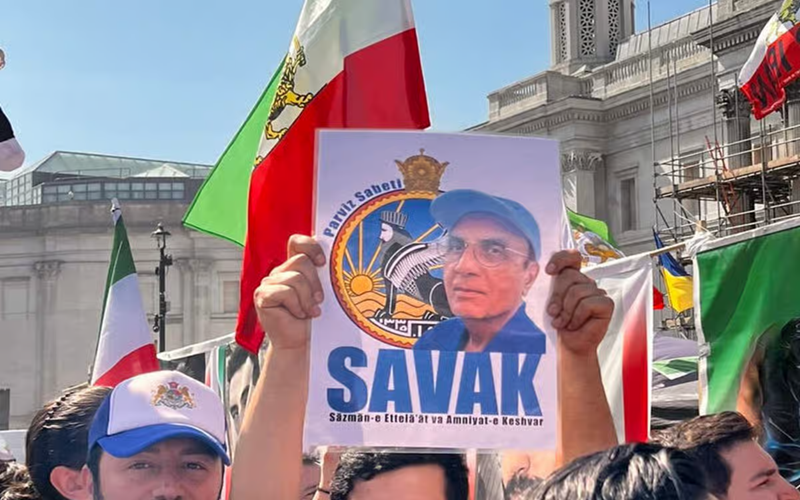

Efforts to portray Reza Pahlavi as the embodiment of freedom revive the legacy of the Shah’s repression, deepen political divisions, and undermine the Iranian people’s struggle for a democratic republic.
A Freedom Prize That Revives the Legacy of Royal Repression
Iran’s struggle for freedom cannot be separated from its struggle against dictatorship in all its forms. Whether imposed under a hereditary monarchy or a theocratic system, authoritarian rule has repeatedly sought to deny the Iranian people their fundamental rights and sovereignty.
Against this historical background, attempts by Western institutions to elevate Reza Pahlavi, the son of Iran’s deposed shah, as a symbol of freedom raise profound questions about the meaning of democracy and the political future being promoted for Iran. Bestowing prestigious awards in the name of freedom on a figure whose principal political credential is his family connection to a former dictator risks rehabilitating a system remembered for its prisons, torture chambers, censorship, and political repression.
Such initiatives do not erase the history of the Pahlavi monarchy. Nor do they establish a democratic mandate for its heirs. Instead, they risk replacing the Iranian people’s struggle for self-determination with a political project centered on a personality whose claim to leadership rests heavily on hereditary association.
The Failed Model of Manufacturing Leaders from Abroad
The Middle East has repeatedly witnessed attempts to engineer political alternatives from outside, elevate favored personalities, and present them as the natural representatives of entire populations. The experience of Ahmad Chalabi in Iraq remains a prominent example of the limitations and dangers of promoting externally favored political figures as alternatives to existing regimes.
The effort to present Reza Pahlavi as the inevitable face of a future Iran follows a similarly troubling logic: elevate a recognizable figure, attach the language of freedom and democracy to his name, and use international platforms to cultivate an image of national legitimacy.
But a political future cannot be manufactured through awards ceremonies, media campaigns, or endorsements by influential foreign circles. Democratic legitimacy must come from the Iranian people themselves, through their freely expressed political will.
Iran’s 1979 revolution was a mass uprising against the monarchy of Mohammad Reza Shah Pahlavi. It challenged personal rule, political repression, the one-party system imposed under the Rastakhiz Party, and the concentration of power in the hands of the shah. The subsequent establishment of clerical dictatorship betrayed the democratic aspirations of that revolution, but the failure of the Islamic Republic does not justify restoring the system that preceded it.
The choice facing Iran is not between the current theocracy and a return to hereditary monarchy. Presenting these as the only possible alternatives denies the Iranian people the right to build a fundamentally different political order.
The Shah’s Repression Cannot Be Rebranded as Freedom
As Iran marks the 120th anniversary of the Constitutional Revolution of 1906, the country’s history of resistance to arbitrary rule remains central to its political identity. The struggle for constitutional government, accountable authority, and popular sovereignty long predates both the Islamic Republic and the contemporary promotion of Reza Pahlavi.
The record of the shah’s government includes the suppression of political opposition, censorship of the press, imprisonment of dissidents, and the activities of SAVAK, the regime’s notorious intelligence and security organization. Political activists from leftist, republican, nationalist, and other opposition currents faced persecution, torture, and imprisonment.
Survivors of that repression and the families of its victims have every reason to reject attempts to sanitize the monarchy’s legacy. The experiences of political prisoners subjected to torture, including in facilities associated with the Pahlavi security apparatus, cannot simply be pushed aside to accommodate a new political narrative.
The central question is straightforward: how can hereditary succession be presented as a democratic solution when the historical system associated with that succession denied political pluralism and concentrated power in one individual?
A person’s descent from a former monarch does not establish democratic credentials. Nor can the historical record of a government be separated from the political project that seeks to restore its ruling family to power.
Why Monarchism Serves the Theocracy’s Politics of Fear
Absolute monarchy and absolute theocracy differ in their ideological foundations, but both concentrate political authority at the expense of popular sovereignty. Neither system, by its defining structure, guarantees free elections, equal citizenship, independent institutions, or the peaceful transfer of power.
The Iranian regime has long benefited from presenting political change as a choice between the existing theocracy and a return to the past. Promoting the monarchy as the only alternative reinforces this false dichotomy, allowing the authorities to portray the democratic opposition as divided, unreliable, or incapable of offering a viable future.
This dynamic is particularly damaging when it deepens divisions among women, young people, republicans, democratic activists, and other forces seeking to end authoritarian rule. Instead of building a common front around political freedoms and the rejection of dictatorship, competing projects of personal rule risk turning the struggle for Iran’s future into a contest over which authoritarian legacy should prevail.
The beneficiaries are not necessarily the monarchist figures receiving international recognition. The Iranian regime can also benefit when opposition forces become polarized, democratic cooperation weakens, and the demand for a democratic republic is obscured by a manufactured choice between crown and turban.
Opposition to the Iranian regime must therefore be accompanied by an unequivocal rejection of hereditary political privilege. Replacing one form of unaccountable rule with another would not fulfill the democratic aspirations of the Iranian people.
A Growing Response to the Promotion of Reza Pahlavi
Opposition to the promotion of Reza Pahlavi has extended beyond individual critics to include republican organizations, political coalitions, human rights advocates, and German public figures. Their objections reflect a broader concern that international recognition is being used to elevate one political current above Iran’s diverse democratic opposition.
Several initiatives have challenged efforts to present Pahlavi as the representative of the Iranian people:
- Survivors of SAVAK torture and victims’ families addressed an open letter to the mayor of Frankfurt, drawing attention to the historical record of repression under the shah.
- Twenty-five organizations, acting under the banner of Solidarity for a Republic and Democracy in Iran, issued a statement opposing the political initiative.
- The Cooperation Council of Iranian Republican Organizations rejected attempts to appropriate the Iranian people’s political identity for a single individual or faction.
- The Revolutionary Left Alliance–Iran voiced its opposition to political arrangements that seek to rehabilitate symbols of royal authoritarianism.
- More than 70 prominent German figures signed an open letter warning against the divisive and undemocratic implications of presenting Reza Pahlavi as a representative of Iran.
- Approximately 700 activists, intellectuals, and citizens inside and outside Iran added their names to a protest rejecting the association of a freedom prize with the legacy of the monarchy.
Together, these interventions challenge the assumption that international visibility confers national legitimacy. They also underline the importance of confronting the historical record of the former monarchy rather than treating its legacy as irrelevant to debates about Iran’s future.
The significance of these protests lies not in establishing a competing personality as the sole representative of the opposition, but in defending the principle that no individual or political faction can claim ownership of Iran’s democratic aspirations.
Iran Needs a Democratic Republic, Not Another Dynasty
The Iranian people’s struggle is not simply a campaign to replace one ruler with another. It is a struggle to dismantle the structures that make arbitrary rule possible.
A democratic future requires free and fair elections, freedom of expression and association, an independent judiciary, equality between women and men, protection for ethnic and religious minorities, and institutions accountable to the public. It also requires the rejection of hereditary political authority and any system that grants an individual power above the people.
These principles cannot be reconciled with the proposition that the son of a deposed dictator should be elevated to national leadership because of his ancestry. Reza Pahlavi must be judged by the political program he advances and the democratic guarantees he is prepared to accept—not by his family name or the awards bestowed upon him abroad.
European institutions and political organizations should recognize that promoting a particular figure does not give them the authority to determine Iran’s political future. Nor should the language of freedom be used to marginalize the victims of the former monarchy or disregard the diversity of Iran’s democratic opposition.
The people who have risked their lives confronting repression in Tehran, Zahedan, Kurdistan, Khuzestan, and elsewhere deserve more than symbolic recognition. Their struggle is for the right to determine their own future, without the imposition of either a religious dictatorship or a hereditary monarchy.
Iran’s modern history offers a clear lesson: authoritarianism does not become democratic because its symbols change. A crown cannot guarantee freedom any more than a turban can legitimize absolute power.
No Shah, No Mullahs expresses a fundamental democratic principle: Iran’s future belongs to its people, not to a ruling dynasty, a clerical establishment, or any political project seeking to impose a predetermined leader. The path to freedom lies in establishing a democratic republic founded on popular sovereignty, political pluralism, and equal rights—not in restoring the privileges of the past.