


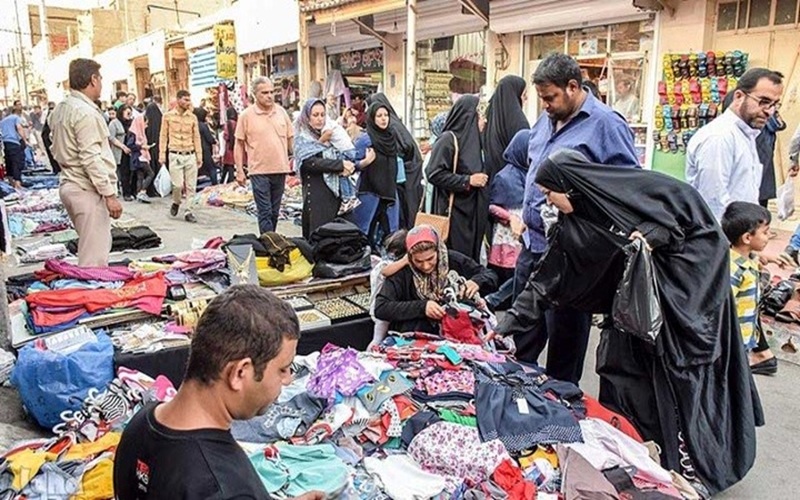

Rising living costs are reshaping household spending, pushing families toward secondhand goods and installment purchases while widening the gap between ordinary Iranians and the wealthy.
In an October 8, 2026, report, the state-run Jomhouri Eslami newspaper examined the changing purchasing patterns of Iranian households. The report described how higher living expenses and shifting consumption priorities are transforming not only household budgets but also social behavior and the future of domestic production.
The changes reflect a broader economic reality: for many Iranians, shopping is no longer about choosing between different products, improving living conditions, or replacing outdated possessions. It has become a struggle to meet basic needs.
Secondhand Goods and Deferred Purchases Become the New Normal
According to Jomhouri Eslami, many families are postponing purchases or eliminating them altogether. Rather than buying new products, they increasingly turn to secondhand goods, including items that households would ordinarily expect to purchase new.
This shift is more than a sign of greater thrift. It reflects the declining ability of families to afford ordinary consumer goods and maintain their previous living standards.
Installment purchases have also expanded beyond expensive items to include clothing, mobile phones, digital devices, and some everyday consumer products. Families are increasingly spreading payments over time to acquire necessities that would otherwise be beyond their immediate budgets.
Such arrangements may provide temporary relief, but they also commit future income to current expenses. For households already struggling with inflation and rising essential costs, installment payments can further restrict their ability to meet subsequent needs.
The result is a growing cycle of deferred purchases, reduced consumption, and mounting financial pressure.
The Widening Divide Between Rich and Poor
The crisis is not affecting all sections of Iranian society equally. The state-run newspaper’s account highlights the growing divide between households struggling to cover necessities and wealthier groups that retain the means to purchase luxury goods and services.
For families whose incomes are largely consumed by housing, food, healthcare, and education, buying a durable household item can require months of postponement. Spending on recreation, travel, cultural activities, education, and savings is increasingly squeezed out of household budgets.
For wealthier Iranians, by contrast, consumption remains a matter of choice. Expensive cars, luxury household appliances, premium digital devices, branded clothing, costly travel, and specialized services remain within reach.
This contrast exposes the unequal distribution of economic hardship. While ordinary families are forced to reconsider basic purchases, wealthier households continue to enjoy options that are becoming inaccessible to an expanding section of society.
The disparity is especially consequential when households cannot adequately fund healthcare, education, or savings while others retain substantial discretionary spending power.
A Crisis Reshaping Iran’s Economic and Social Structure
The consequences extend beyond individual purchasing decisions. When millions of consumers postpone replacing household goods or stop buying entire categories of products, domestic demand changes. Businesses face a shrinking market, while producers may find it increasingly difficult to sell goods to consumers whose incomes no longer cover their basic needs.
The newspaper itself acknowledges the broader significance of this transformation, describing changes in household purchasing as a sign of deeper shifts in Iran’s economic and social structure.
This creates a damaging cycle: falling purchasing power reduces consumption, weakening demand places pressure on production and employment, and declining economic security further limits household spending.
The burden falls particularly heavily on families with limited incomes and no financial reserves to absorb successive price increases.
Iran’s economic crisis therefore cannot be measured solely through exchange rates, inflation figures, or government budget indicators. It is also visible in the everyday decisions families are forced to make: buying used instead of new, postponing necessary purchases, borrowing against future income, and sacrificing education, leisure, or savings to cover immediate expenses.
Growing Economic Pressure and Social Discontent
The account published by Jomhouri Eslami offers a revealing picture of the pressures confronting Iranian households. The transformation it describes is not simply a voluntary adjustment in consumer preferences. It reflects the narrowing choices available to people whose incomes cannot keep pace with the cost of living.
As economic insecurity spreads and the gap between wealthy groups and ordinary families widens, the consequences extend beyond household finances. Persistent deprivation can deepen public frustration, weaken confidence in the country’s economic future, and intensify existing social tensions.
The central question is how long families can continue absorbing these pressures by cutting consumption and postponing essential purchases. When even basic expectations of a stable life become increasingly difficult to meet, economic hardship becomes a broader social and political challenge.
For millions of Iranians, the issue is no longer whether they can improve their standard of living, but how much more of it they must surrender simply to get by.