



From livestock feed imports to the “Debsh Tea” case, official admissions expose a system built on rent, monopoly, and impunity.
A rare public admission by Iran’s Minister of Agriculture has once again exposed the depth of corruption embedded in the regime’s import system—where essential goods are transformed into instruments of rent-seeking, monopoly, and illicit wealth accumulation.
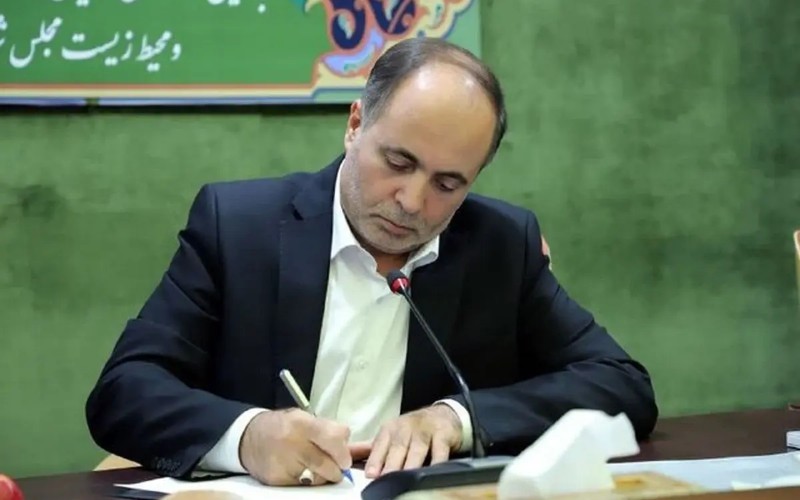
On Tuesday, December 9, the regime’s Minister of Agriculture, Gholamreza Nouri Ghezeljeh, announced that several importers of essential goods have formally filed complaints with his ministry. Speaking at Shahid Beheshti University, he stated that these companies were protesting over their “share of imports.” In a revealing remark, Nouri Ghezeljeh claimed that the profits of some of these importers are “several times greater” than the wealth of U.S. President Donald Trump.
According to Forbes estimates, Trump’s net worth reached approximately $7.3 billion by September 2025. Yet the Iranian minister offered no concrete details about the companies he accused—no names, no balance sheets, no verified profit figures. This silence is itself telling, reflecting a familiar pattern in which officials hint at massive corruption while carefully avoiding exposure of the networks involved.
Available evidence suggests that the companies in question are importers of livestock feed. Mohammadreza Kalami, secretary of the Union of Livestock Feed Importers, has stated that these firms are owed $5.6 billion by the government. He added that some large companies have deliberately kept imported feed at customs, waiting for foreign currency debts to be settled before releasing the goods to the market—effectively holding food supply chains hostage.
Livestock feed includes core commodities such as corn, barley, soybean meal, forage, bran, and concentrates—materials essential for meat, dairy, and poultry production. In Iran, corn, soybean meal, and barley are the three most critical and widely consumed feed inputs. Any manipulation of this sector directly impacts food prices and food security for the broader population.
Despite these risks, Alireza Habibi, deputy head of currency allocation at the Central Bank, confirmed that €11 billion has been allocated in this year’s budget for importing essential goods and feed at preferential exchange rates. This massive allocation, intended to stabilize prices, has instead become a primary source of corruption.
A member of the regime’s parliament previously revealed large-scale violations in livestock feed import registrations at the Ministry of Agriculture, noting that import licenses were being bought and sold on the black market. Such practices are not aberrations but structural features of an economy dominated by state favoritism and opaque decision-making.
Many companies importing essential goods are directly or indirectly linked to institutions and individuals close to the Iranian regime. Domestic media have repeatedly accused them of exploiting “rents created by access to state-subsidized foreign currency.” These rents allow privileged actors to secure cheap currency, delay or falsify imports, and profit enormously through resale or market manipulation.
Even the regime’s judiciary has been forced to acknowledge the scope of the problem. On November 4, Gholamhossein Mohseni Ejei, head of the regime’s judiciary, admitted that “in some cases, individuals who register import orders have no intention of importing the goods at all, or they sell the registered goods through unofficial and illegal channels.”
Several cases involving importers who received state currency but failed to import any goods have sparked public outrage in recent years. The most notorious is the “Debsh Tea” scandal. In December 2023, the regime’s judiciary announced that between 2019 and 2022, approximately $3.37 billion in subsidized currency was allocated to a “commercial group” for importing tea and machinery. A significant portion of this currency was instead sold on the open market at inflated rates.
The names of two ministers from Ebrahim Raisi’s government surfaced in this corruption case. Although the judiciary claimed they were sentenced to prison, subsequent reporting by Iranian media indicates that both individuals remain free—another clear example of selective justice and institutional impunity.
Corruption driven by rent, monopoly, and collusion with regime institutions has become one of Iran’s most entrenched economic pathologies. Transparency International’s 2024 Corruption Perceptions Index ranked Iran 151st out of 180 countries, placing it among the most corrupt systems in the world.
These revelations confirm that corruption in Iran is not the result of weak oversight or individual misconduct. It is the product of a governing model that concentrates power, shields insiders, and converts public resources—especially food and essential goods—into tools for enrichment and control. As long as this system remains intact, scandals will not be exceptions; they will be the operating logic of the regime itself.