


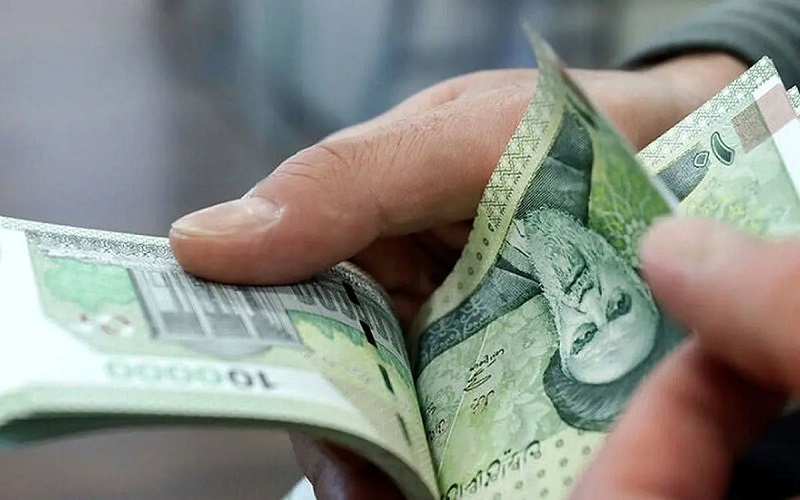

As the Iranian New Year approached, the Supreme Labor Council once again set workers’ wages, effectively silencing any opportunity for protest or negotiation by the labor force—the very group that performs the most work while earning the least.
Minimal Wage Adjustments Amid Soaring Costs
According to the Council’s decision, the minimum wage for workers will increase by 45% in 2025, while salaries for other labor categories will see a 32% rise. Consequently, the daily minimum wage was set at 3.46M tomans, the household consumption allowance at 2.2M tomans, and the housing allowance remained unchanged at 900K tomans per month. Additionally, the marriage allowance was set at 500K tomans.
Despite this nominal increase, the reality for workers remains bleak. The regime’s Minister of Cooperatives, Labor, and Social Welfare, Ahmad Meydari, sought to portray the wage hike as a significant achievement, claiming that wages had risen from 7.1M to 10.4M tomans. However, he conspicuously omitted any mention of the real costs of living, including housing, healthcare, education, and transportation.
Government-Controlled Wage Negotiations
The Ham Mihan newspaper echoed government rhetoric, stating, “Some members of parliament had announced the approval of the wage on Tuesday, March 18, but with the management of the Ministry of Labor and the support of employers, this year’s wage was approved earlier than Nowruz.”
The Supreme Labor Council, which determines annual wage adjustments, consists of representatives from labor, employers, and government officials. However, labor activists have long criticized the presence of so-called worker representatives, whom they accuse of being aligned with government interests rather than truly advocating for workers’ rights.
Suppressing Wages Under False Pretenses
Authorities often justify suppressing wage increases by arguing that higher salaries will fuel inflation. At other times, they claim that monthly inflation rates are lower than the wage hikes or promise mid-year salary adjustments that never materialize. Consequently, soaring inflation, unfulfilled promises, and the ever-increasing cost of living continue to push workers further into poverty.
A Stark Imbalance Between Wages and Living Costs
The 2025 wage resolution maintains the workers’ housing allowance at 900K tomans, unchanged from 2024, despite average rental costs in major Iranian cities exceeding 15M tomans. For a worker earning the new minimum wage of approximately 13M tomans (including various allowances), even affording rent requires sacrificing essential needs or living under dire conditions.
Ahmad Bigdeli, a member of the Social Commission in Parliament, criticized the decision, stating: “How can the housing allowance remain unchanged when rents have skyrocketed?” Regarding grocery allowances, he added: “Last year’s grocery voucher was 1.4M tomans. We hoped it would surpass 4M tomans this year, but it only reached 2.2M. That amount barely covers a few days’ worth of food.”
The Grim Reality: Wages Cover Only a Fraction of Expenses
While the government celebrates a 45% wage increase, economic studies reveal a far harsher truth: household expenses have reached at least 36M tomans per month, while the poverty line in major cities stands at 45M tomans. Independent labor organizations had previously called for a minimum wage of 60M tomans, arguing that anything less would leave workers unable to cover their basic needs.
In reality, workers’ salaries only cover 9 to 10 days of expenses per month. To match the minimum cost of living, wages would need to increase by 200%—a demand that remains ignored by the authorities.
Widening Poverty and Declining Living Standards
For over five decades under the clerical regime, the working class has steadily fallen below the poverty line. Many workers can no longer afford essential healthcare, education, or even basic sustenance. Soaring medical costs have left 70% of retirees financially stranded, forcing them to rely on meager benefits to survive. Desperation has driven many to forego essential treatments, pulling their own teeth instead of seeking dental care, while malnutrition has become widespread due to the consumption of expired or low-quality food.
Adding to the crisis, while workers earn wages in rials, their expenses are effectively priced in dollars due to skyrocketing inflation. Officials claim that the 45% wage increase outpaces the 35% inflation rate recorded in November 2024, but labor activists argue that government-reported inflation figures do not reflect the economic reality for ordinary citizens.
Inflation’s Erosion of Wage Increases
Historically, Iran’s inflation rate has been in constant ascent due to the regime’s mismanagement, government inefficiency, and international sanctions. This trend suggests that the newly approved wages will quickly lose their value in the coming months. In fact, within 24 hours of the wage increase announcement, the exchange rate of the U.S. dollar rose again, further eroding the purchasing power of workers.
Former MP Esmail Gerami-Moghaddam emphasized the severity of the situation, stating that even if salaries were quintupled, they would still be insufficient to bring Iranian workers above the global poverty threshold.
The Impact on Millions of Workers and Families
The government’s policies have dire consequences for the country’s workforce. More than 15.5M insured workers, around 3M retirees, and millions of uninsured workers must now navigate an economic landscape where expenses far outstrip their earnings. Given that many of these workers have families, an estimated 30-40M people in Iran are struggling to meet basic living standards.
Official estimates indicate that at least 30M Iranians are deprived of minimum welfare, yet the economic crisis also severely affects employers. Years of destructive economic policies, coupled with ongoing power, water, and gas outages, have forced many workshops and factories to shut down, rendering countless workers unemployed.
A Surge in Exploitative Labor Practices
According to Shargh newspaper, approximately 96.5% of Iranian enterprises are small workshops, most employing fewer than ten workers. Many of these businesses are now unable to pay their employees, leading to a rise in the employment of workers below the legal wage threshold and without any form of insurance or protection.
Government statistics on workplace accidents further expose the grim reality: while the Ministry of Labor reported fewer than 10% of work accidents in 2023, the Forensic Medicine Organization recorded over 29K cases, with at least 2,115 fatalities—equivalent to five or six deaths per day due to inadequate workplace safety.
A System That Fails Its Workers
The Iranian regime’s continued suppression of fair wages, disregard for workers’ rights, and failure to address inflationary pressures have deepened the economic crisis. The consequences are dire: widespread poverty, a shrinking middle class, and a workforce that remains trapped in a cycle of exploitation and hardship.
The statistics and testimonies paint a clear picture—millions of Iranian workers remain impoverished, unprotected, and vulnerable in a system that prioritizes political expediency over economic justice.