


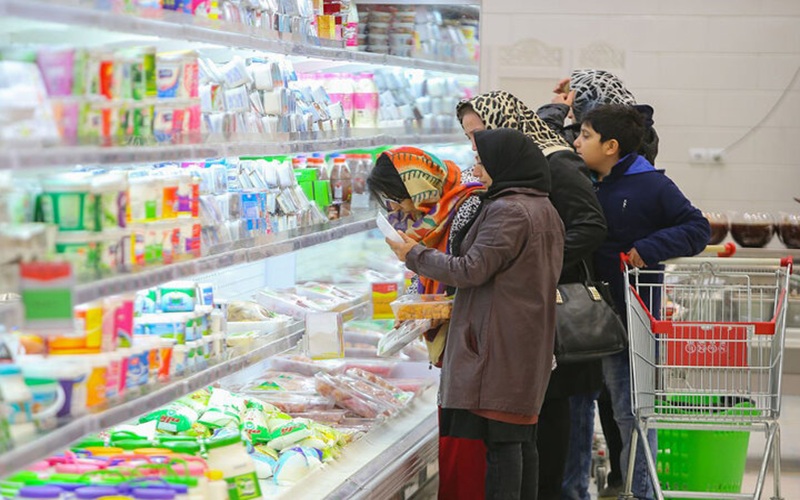

A sharp decline in retail transactions and consumer spending underscores the erosion of household purchasing power, exposing the growing economic hardship facing millions of Iranian families.
New economic data has revealed a dramatic decline in consumer spending across Iran, providing fresh evidence of the severe financial pressure confronting households. According to official statistics, the number of retail purchase transactions fell by 103 million in the Iranian month of Khordad 1405 (May–June 2026) compared with the previous month, while the total value of consumer purchases dropped by approximately 44 trillion tomans.
The figures paint a stark picture of shrinking purchasing power as inflation, declining real incomes, and persistent economic instability continue to force families to cut back on both discretionary and essential spending.
Regime Media Acknowledges the Scale of the Crisis
Even regime-affiliated media have begun acknowledging the seriousness of the downturn. In an article published on July 26 (4 Mordad 1405) titled “103 Million Missing Purchases,” the state-run newspaper Siasat-e Rooz argued that the decline represents far more than a routine statistical fluctuation.
The newspaper wrote:
“The decline of 103 million purchase transactions in Khordad is not merely a figure in an economic report. It is a clear reflection of changing consumer behavior and the declining purchasing power of households.”
It further noted that approximately 44 trillion tomans disappeared from consumer spending within just one month, arguing that such a sharp contraction points to structural economic problems rather than temporary seasonal factors.
The report also observed that the decline occurred even after much of the uncertainty created by recent regional tensions had eased—circumstances under which markets would normally be expected to recover.
Falling Purchasing Power Changes Consumer Behavior
The reduction in retail transactions reflects more than a decline in banking activity. It indicates that households are purchasing fewer goods and services as rising living costs continue to outpace income growth.
Faced with declining real purchasing power, many families have reportedly reduced non-essential expenditures and become increasingly cautious even when buying everyday necessities. Rather than increasing consumption after recent tensions subsided, consumers have continued to limit spending amid concerns about future economic conditions.
This cautious behavior suggests that many households are prioritizing financial survival over consumption, reflecting widespread uncertainty about employment, income, and inflation.
Weak Consumer Demand Ripples Across the Economy
Economists have long warned that household consumption is one of the principal drivers of economic activity. When consumers reduce spending, the effects extend far beyond retail businesses.
Every purchase that is postponed or canceled reduces revenue for retailers, wholesalers, manufacturers, transport companies, and workers throughout the supply chain. Prolonged weakness in consumer demand can ultimately lead to lower production, reduced business investment, and fewer employment opportunities.
The latest figures therefore suggest not only declining household welfare but also increasing pressure on Iran’s broader economy.
Consumer Spending Provides a Clear Measure of Living Standards
While official macroeconomic indicators may present mixed signals, many economists regard household purchasing power as one of the most reliable indicators of real economic conditions.
Less crowded markets, fewer shoppers, and declining retail transactions often reveal the reality experienced by ordinary citizens more accurately than headline economic statistics. Falling consumption typically signals deteriorating living standards and weaker domestic economic activity.
The decline of 103 million purchase transactions therefore represents more than a statistical change. It reflects a significant slowdown in the flow of money through Iran’s real economy and illustrates the growing financial strain facing millions of households.
As purchasing power continues to erode, the consequences are likely to extend beyond consumer spending, affecting production, employment, investment, and overall economic growth. The latest data offer another indication that Iran’s deepening cost-of-living crisis is becoming increasingly visible in the everyday lives of its citizens.