


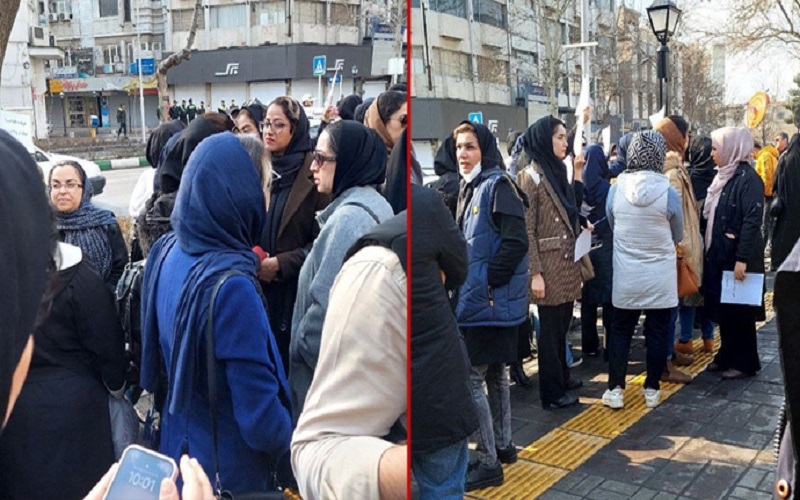

The skyrocketing cost of living in Iran has pushed many citizens to the brink, with online platforms now offering food staples like potatoes and onions on installment plans. A recent report by the Khabar Online website starkly illustrates the dire economic conditions affecting over 70% of Iran’s population.
By the end of autumn, the poverty line had surpassed 40 million tomans per month in smaller cities and 50 million tomans in larger urban areas, while the average household income remained below 25 million tomans. The situation has worsened with the sharp depreciation of the rial, as the U.S. dollar surged by 30,000 tomans in just three months, triggering rampant inflation. Prices of essential goods have skyrocketed, further eroding the purchasing power of workers, employees, and retirees.
Insufficient Government Aid
In response, Ahmad Meydari, the Minister of Welfare and Social Security, announced food vouchers worth 500,000 and 350,000 tomans for low-income groups before Nowruz. However, given current market prices, these amounts barely cover the cost of two to three kilograms of Iranian rice or three to five kilograms of potatoes.
At present, online platforms list the price of potatoes starting at 60,000 tomans per kilogram, depending on quality. Onions have surged by 150%, reaching at least 40,000 tomans per kilogram, while red apples are priced at 60,000 tomans per kilogram, tree cucumbers at 65,000 tomans, and oranges at 40,000 tomans. The installment purchase option raises these prices even further.
Meanwhile, the Iran Didban News Agency reported a recent 50,000-toman increase in the price of Iranian rice, bringing it to 172,000 tomans per kilogram, largely due to the rising exchange rate. The Etelaat newspaper, whose editor-in-chief is appointed by Supreme Leader Ali Khamenei, acknowledged the worsening crisis in an article marking the 46th anniversary of the 1979 Revolution: “The high cost of medicine on one hand and the shortage of essential drugs on the other have left many patients wandering from pharmacy to pharmacy.”
Healthcare in Crisis
Following the government’s decision to end currency support for medicine, drug prices have spiked by as much as 400%. Many doctors and pharmacists report that increasing numbers of patients have been forced to abandon treatment due to the unaffordable cost of essential medicines.
Despite these mounting hardships, President Masoud Pezeshkian recently dismissed concerns, asserting that economic pressure from renewed U.S. sanctions would not lead to starvation in Iran. Echoing this sentiment, Supreme Leader Ali Khamenei recently told Revolutionary Guards commanders: “We have crossed a large part of the path, despite the steep slope, and have approached the peaks. We know the value and importance of progress, but we should not become arrogant.” However, these statements contrast sharply with the realities faced by ordinary Iranians.
The Widening Wage Gap
On February 16, Mohsen Bagheri, a member of the Supreme Labor Council’s wage committee, announced that the monthly subsistence basket had risen to 38 million tomans, marking a dramatic increase from December 2024’s figure of 29.94 million tomans. According to ILNA news agency, essential goods like cooking oil have risen by 40%, rice has doubled in price, and staples such as potatoes and onions have also surged. Bagheri estimated an overall 30% increase in the cost of living over just two months.
Labor rights activists argue that wages remain woefully inadequate. The minimum monthly wage for a married worker with children is currently set at just 10.9 million tomans—far below the subsistence threshold. Additionally, many workers not covered by labor laws receive even less. Article 41 of Iran’s Labor Code stipulates that wages must be adjusted in line with inflation and the cost of living, yet labor representatives contend that the Supreme Labor Council routinely disregards this requirement.
Inflation and Worker Hardships
Despite government claims that inflation is declining, the economic reality tells a different story. On February 7, Tasnim News Agency reported: “Although official statistics indicate lower inflation, workers do not feel any relief. The decline in their purchasing power has been significant, forcing many families to cut back on essential items just to meet daily expenses.”
With March approaching, wage negotiations remain stalled. According to ILNA, “We are on the eve of the new year, yet no progress has been made in wage discussions. The calculation of the subsistence basket has not moved forward, and only one session of the Supreme Labor Council has been held under the new government. The Ministry of Labor has yet to schedule a session for February.”
Conclusion
As Iran grapples with economic turmoil, government intervention has proven insufficient to counteract the devastating effects of inflation and wage stagnation. With living costs soaring and wages failing to keep pace, millions of Iranians face mounting hardship. If the current trend continues, the struggle for economic survival will only deepen, leaving ordinary citizens to bear the brunt of a collapsing economy.